
Cat behavior · Everyday preferences
Many things cats love meet everyday needs: a safe hiding place, a high perch, a warm bed, a sturdy scratching surface, toys they can catch, simple food puzzles, fresh water, appealing scents, comfortable grooming, and time with familiar people. These activities and spaces help cats feel secure and express natural behaviors. Preferences vary with age, health, mobility, and personality.
Watch what your cat chooses and make those activities or resting places easy to use. A cat that sits beside you instead of climbing onto your lap may still enjoy being near you. A senior cat may still enjoy a high perch but need steps or a ramp to reach it.
The AAFP and ISFM feline environmental guidelines emphasize safe places, accessible food, water, and litter boxes, play, positive interaction with people, and respect for a cat’s sense of smell. These needs help explain what cats enjoy, but individual cats differ in the toys, places, and types of touch they prefer.
Comfort & security
1. A Safe Place to Hide
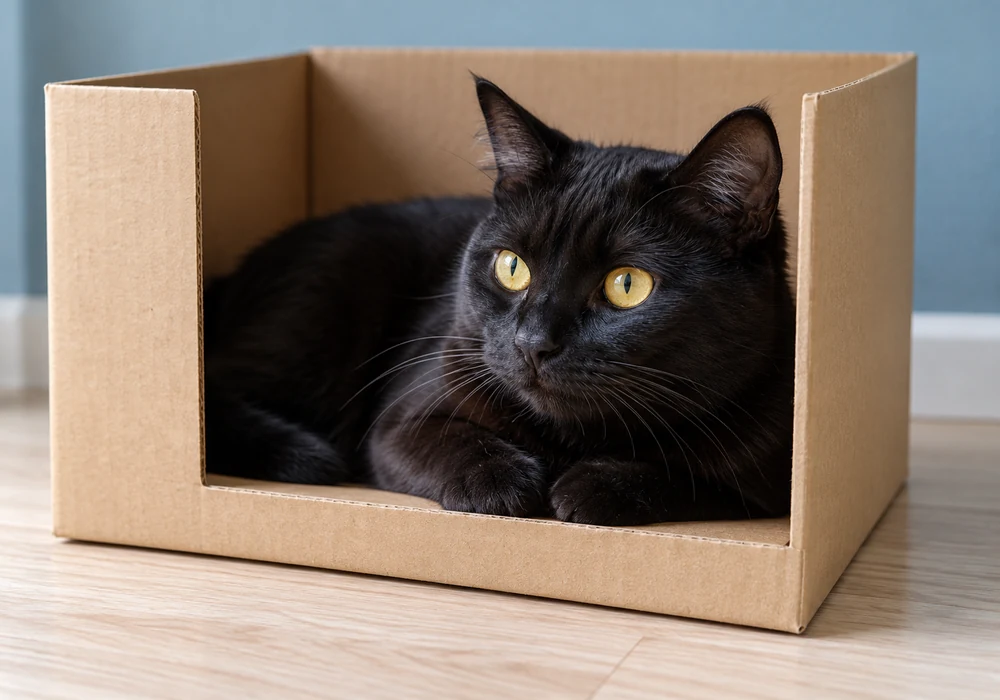
A box, covered bed, or open carrier gives a cat a sheltered place to rest and watch its surroundings without being exposed on all sides. Hiding can help cats cope with unfamiliar surroundings. Choosing a quiet hiding place does not necessarily mean a cat wants to avoid you; it may simply need privacy.
In a 2019 randomized study of shelter cats, cats given hiding boxes showed a faster decrease in stress scores based on their behavior. Because the study took place in a shelter, it does not show that every pet cat prefers a cardboard box to a bed.
Set up a safe hiding place: put a clean, stable box in a quiet spot and keep the entrance clear. Remove tape, staples, and loose packaging. Let your cat enter and leave freely, and avoid pulling them out. Replace the box if it becomes soiled. If your cat chews off and swallows cardboard, use a different type of shelter.
2. A High Perch With a View
A raised resting place lets a cat watch the room while staying above busy walkways. In a home with several cats, separate resting places can also help them avoid unwanted encounters. As with many things cats love, a high perch should be available without requiring the cat to use it.
Choose a sturdy cat tree or a securely attached perch with enough space for your cat to turn around and lie down. Check its supports, landing surfaces, and the route back to the floor. A perch beside a securely closed window provides something to watch. Notice whether your cat watches animals outside calmly or repeatedly becomes tense or agitated.
Match the height and route to your cat’s abilities. Give kittens low, stable surfaces to explore under supervision. Older cats may need nonslip steps or a ramp to reach a favorite perch. If your cat suddenly becomes reluctant to jump, arrange a veterinary check rather than assuming the preference has changed.
3. A Warm, Quiet Place to Rest
Warmth helps explain why a sunny patch, folded blanket, or sheltered bed can become a favorite resting spot. Bedding, location, familiar smells, and freedom from interruptions also affect comfort. A cat may prefer a firm surface one day and soft bedding the next.
Place a comfortable bed away from drafts and busy walkways, and make sure your cat can move to a cooler spot. Keep windows secure and blind cords out of reach. Your cat should always be able to leave a sunny resting place if it becomes too warm.
Provide warmth safely: start with ordinary bedding in a suitable location. If your cat needs extra warmth, ask your veterinarian about a pet-safe heating option and follow the product instructions. Leave an unheated resting place available. Take extra care with kittens and cats that have trouble moving, since they may find it harder to leave a spot that becomes too hot.
Movement & exploration
4. A Sturdy Surface to Scratch
Scratching is one of the things cats love, even when their chosen surface is your furniture. It lets them stretch, remove the outer layers of their claws, and leave visible marks and scent signals. Provide suitable scratching surfaces so your cat can perform this normal behavior.
The material, angle, stability, and location all matter. One cat may prefer an upright sisal post, while another chooses a flat cardboard scratcher. The surface should stay firmly in place and allow a comfortable stretch. A post in an unused corner may be less appealing than the sofa beside a favorite resting place.
If your cat ignores a new scratcher, choosing a scratching post that suits your cat can help. Watch whether your cat scratches upright or flat surfaces, then place a stable alternative nearby. Do not press their paws against it or force them to scratch.
5. Toys They Can Stalk, Chase, and Catch
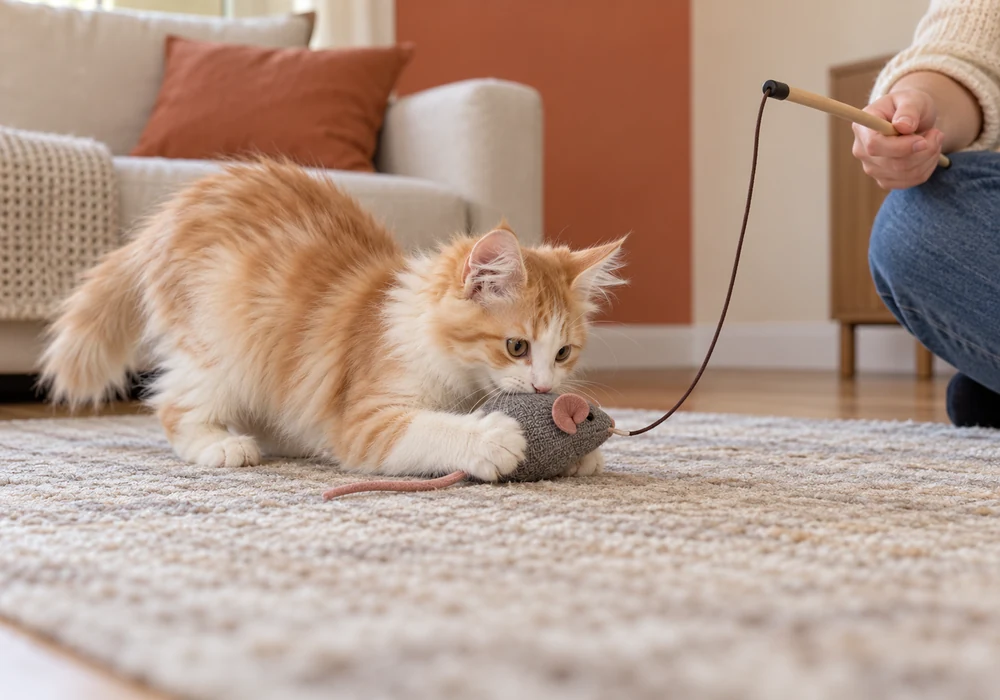
Toys encourage play when their movement gives a cat something to watch, stalk, chase, and catch. Move a wand toy along the floor and briefly behind an obstacle, rather than waving it constantly in your cat’s face. Pause occasionally so the cat has time to watch and prepare to pounce.
Let your cat catch and hold the toy regularly. If interest fades, try a different movement or toy. Stop if your cat seems uncomfortable. Play does not need to involve increasingly fast movements, long sessions, or high jumps to be enjoyable.
Adjust play to your cat’s abilities: a kitten may enjoy short bursts of running and pouncing, while a senior cat may prefer stalking and batting at a toy on the floor. These safe ways to play with a kitten provide ideas for younger cats. Use toys instead of your hands, supervise wand play, and put strings and detachable parts away afterward.
6. A Food Puzzle That Is Easy to Solve
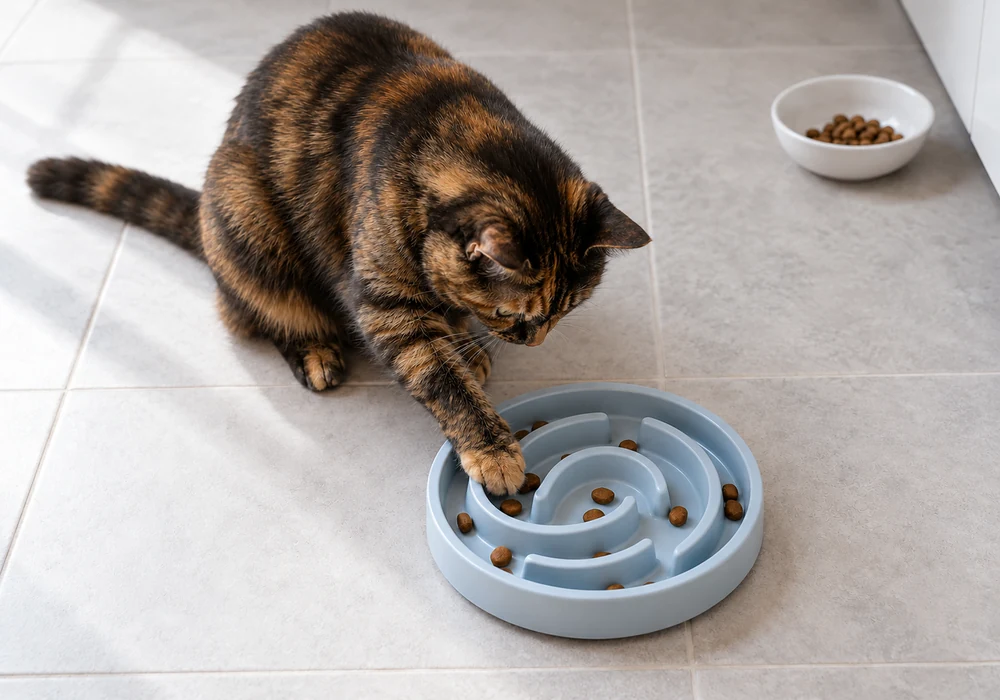
Some cats enjoy searching for food or reaching for it with a paw. A simple food puzzle gives them a way to do this during a meal, but the food should be easy to reach. Not every cat enjoys puzzles, and choosing an ordinary bowl does not mean a cat is less intelligent.
Start by placing a small portion of your cat’s usual food in a shallow, easy-to-use puzzle. Keep the food visible and within reach. Make the task harder only after your cat can retrieve the food comfortably and consistently. Continue offering readily accessible meals while they learn; do not withhold food to make them use the puzzle.
Choose a washable design with smooth edges and openings that cannot trap a paw. Clean puzzles promptly after use, especially those containing wet food. Use food from your cat’s daily allowance rather than adding extra food on top of regular meals. Simplify the puzzle or stop using it if your cat repeatedly walks away or becomes frustrated.
Care & interaction
7. Fresh Water in an Easily Accessible Spot
Cats differ in how they prefer to drink. Some are interested in running water, while others readily use a bowl. Cleanliness, location, easy access, and the behavior of other pets can matter as much as the type of water container. A fountain is worth trying if your cat likes it, but it is not essential.
Provide clean water in quiet, accessible places away from litter boxes. When introducing a fountain, keep a familiar bowl available as well. Watch which one your cat uses. Neither a new fountain nor colder water is automatically a better choice.
Keep drinking water easy to reach: wash and refill bowls, and clean fountain pumps and replace filters as directed by the manufacturer. Make sure another pet cannot block your cat’s access to water. Tell your veterinarian about a noticeable change in thirst or urination rather than treating it as a harmless new preference.
8. Catnip or Silver Vine, for Cats That Respond
Catnip often appears on lists of things cats love, but some cats show little interest in it. Its scent compounds can trigger sniffing, rubbing, rolling, and play. Silver vine contains other scent compounds that can produce similar responses. A cat may respond to one plant and ignore the other.
A 2017 study of catnip and other scent plants tested 100 domestic cats that were at least six months old. Some cats that did not respond to catnip responded to silver vine. The finding suggests that silver vine may be worth trying, but it does not mean every cat will respond or tell us how young kittens will react.
Choose a well-made toy designed for cats and supervise its use. Let your cat move away freely. Remove the toy if your cat becomes agitated or it causes tension between pets, and check it for damaged seams or loose parts. Scent toys are an optional activity; they do not replace care for fear, pain, or problems in the home environment.
9. Gentle Brushing They Find Comfortable
Cats groom themselves to care for their coats. Some also enjoy gentle brushing by a familiar person, depending on the brush, the area being touched, and the pressure used. Others need time to become comfortable with it. Enjoying a cheek scratch does not necessarily mean a cat will enjoy having its back combed.
Start when your cat is relaxed and able to leave. Give one or two gentle brush strokes on an area they already tolerate, then pause. Continue if their body stays relaxed and they move toward you for more. Stop if they turn sharply toward the brush, tense up, move away, or flick their tail sharply.
Regular coat care remains important even when brushing is not among the things your cat enjoys. The guide to gentle brushing and coat care explains how to introduce brushing and choose suitable tools. Seek professional advice for painful mats or a sudden change in grooming habits. An older cat that can no longer reach part of its body may need help with grooming and a veterinary check for pain or reduced mobility.
10. Spending Time With You
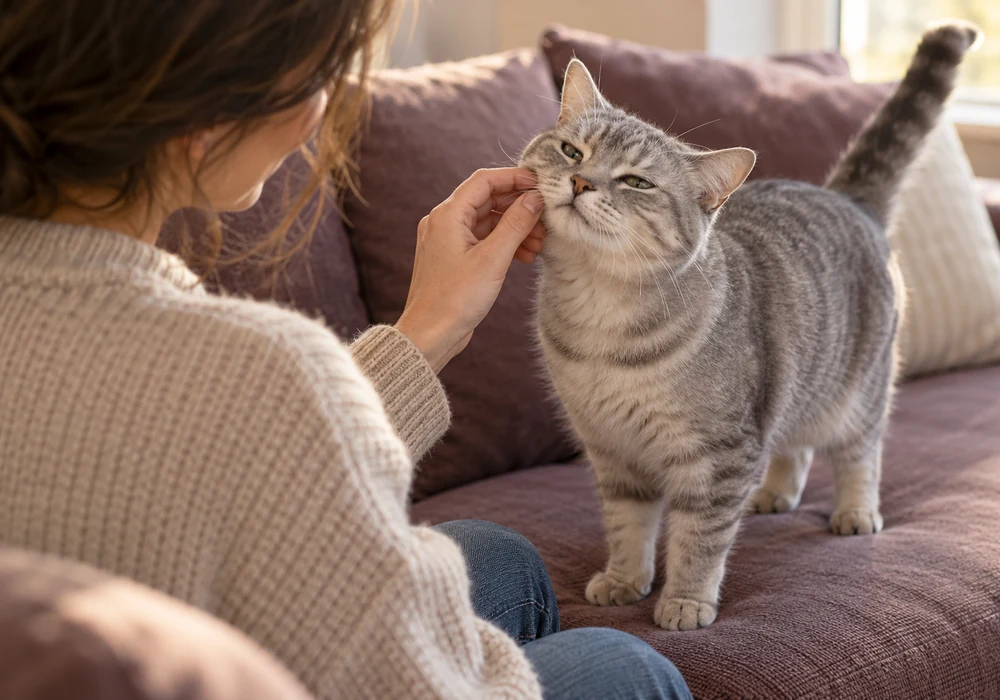
A cat may enjoy a cheek scratch, follow you from room to room, play with you, or simply rest nearby. Many cats prefer to choose when interaction starts and stops. Being close to you does not necessarily mean they want to be picked up or hugged.
In a 2021 study of interactions between people and cats, people received guidance on letting cats choose whether to interact, watching their behavior, and touching them appropriately. Cats showed more friendly behavior and fewer signs of conflict during these interactions. At home, the practical lesson is to watch how your cat responds and stop when they no longer want contact.
Pause during petting: sit nearby and let your cat approach. If they seek contact, gently stroke a cheek or the head, then pause and move your hand away. Continue if the cat leans toward you or otherwise seeks more touch. Some cats prefer sitting near you without being petted. Bringing home another cat does not guarantee companionship, since cats differ in how well they get along.
Make the Things Cats Love Accessible at Every Age
A cat may keep enjoying the same activities while needing a different way to take part. Consider age, physical ability, and individual preferences when choosing beds, toys, and other activities.
| Life stage | Activities and comforts to provide | Practical adjustments |
|---|---|---|
| Kittens | Safe exploration, play, and gentle contact with people. | Start with low, stable climbing surfaces and easy toys or puzzles. Supervise closely and introduce handling gradually. |
| Adult cats | Favorite activities and resting places, with occasional new choices. | Introduce one new activity at a time while keeping familiar beds, food, water, and other essentials available. |
| Senior cats | Gentle play, places to watch the room, comfortable rest, and time with familiar people. | Provide nonslip surfaces and easy routes to favorite places. Adjust play and grooming to their mobility and comfort. Ask a veterinarian if they develop trouble moving or begin avoiding people. |
Article disclaimer: This article provides general ideas for everyday enrichment and cat care. It does not guarantee that a particular activity or product will suit every cat and is not a substitute for veterinary assessment. Adjust suggestions to your cat’s age, health, and mobility, and stop if they cause pain or distress. Seek veterinary advice for sudden, persistent, or worsening changes in appetite, thirst, movement, grooming, or behavior rather than assuming that a new toy or routine will solve the problem.