
Kitten care & behavior
Kitten Calming: Help Your Kitten Feel Safe
Helping a kitten settle starts with understanding what they need. A kitten hiding from a loud noise needs a different response from one chasing your feet. Check for hunger, discomfort, fear, or a need to play, then respond to the situation. A quiet retreat, gentle handling, and short play sessions can help when they match the kitten’s needs.
These tips are mainly for kittens that are eating solid food and no longer depend on milk. If a kitten that still needs milk keeps crying, seek prompt veterinary advice about feeding, warmth, and health.
Start with the cause
Check What Happened Before the Behavior Changed
Think about what happened just before the behavior changed. Did a visitor arrive, or had petting gone on for a while? Has the kitten just woken up ready to play? Watch their posture, movement, and willingness to approach. Enlarged pupils alone cannot tell you whether a kitten is frightened or excited.
| What you notice | What it may mean | What to do |
| Chasing, pouncing, and returning willingly to a toy | The kitten may be ready to play. | Offer a supervised game with a toy they can catch. |
| Crouching, hiding, flattened ears, hissing, or trying to escape | The kitten may feel frightened or threatened. | Reduce noise and activity, stop approaching, and leave a safe hiding place available. |
| A tense body, repeated tail flicks, or turning toward your hand during petting | The kitten may want the touching to stop. | Take your hand away and let the kitten leave. |
Read these signals together rather than judging one on its own. A sudden behavior change, unusual crying, or reluctance to move may also signal pain or illness.
The six methods
Six Calming Methods at a Glance
Use this six-item checklist to find the approach that matches your kitten’s needs. Each item links to its full explanation below. Choose what is appropriate for the situation rather than trying every method at once.
Provide a Quiet, Safe Place to Hide
Give a frightened kitten a quiet, safe room with a bed and a hiding place, such as a cardboard box or open carrier. Place food, water, and an easy-to-reach litter box in different areas of the room, keeping the litter box away from food and water. For room setup and the first-night routine, see our guide to what to do when new kittens come home.
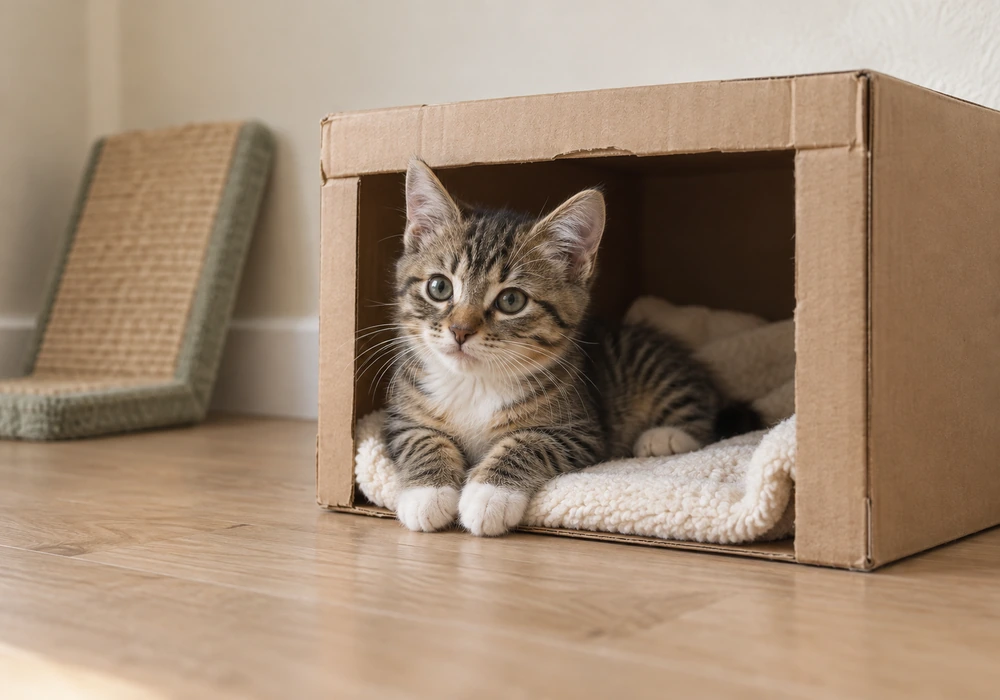
Block unsafe gaps behind appliances, but keep safe hiding places available. Let the kitten come out on their own, and avoid reaching inside to pull them out. A stable, low perch can also give them somewhere to watch the room.
Limit contact with visitors and unfamiliar pets while your kitten settles in. If you have several cats, spread out bowls, beds, and litter boxes so one cat cannot block another’s access. The FelineVMA caregiver guide explains how safe spaces, separate resources, and predictable interactions help cats feel secure.
If another cat chases the kitten or blocks access to food or litter, separate them and slow down introductions.
Let Your Kitten Approach You
Sit nearby, speak softly, and move slowly. Avoid leaning over the kitten or staring at them. Place a small food reward where they feel comfortable, but do not use food to draw them close enough to grab.
If the kitten approaches and rubs against you, try a brief stroke around the cheeks or head, then pause. Continue only if they seek more contact. Stop when they turn away, stiffen, flatten their ears, or sharply flick their tail.
Some kittens enjoy being held; others prefer company at floor level. If your kitten struggles to get down, lower them onto a safe surface rather than holding on more tightly. Do not force them to stay in your arms until they stop resisting, and do not punish hissing. Let them choose whether to approach and stay close. For help understanding common triggers, see our guide to why a cat may hiss unexpectedly.
Keep Play Sessions Short
If your kitten is eager to play, move a wand toy along the floor or around a corner so they can stalk, chase, and catch it. Let them catch the toy regularly. Offer several short sessions during the day and stop when they lose interest or need a rest.
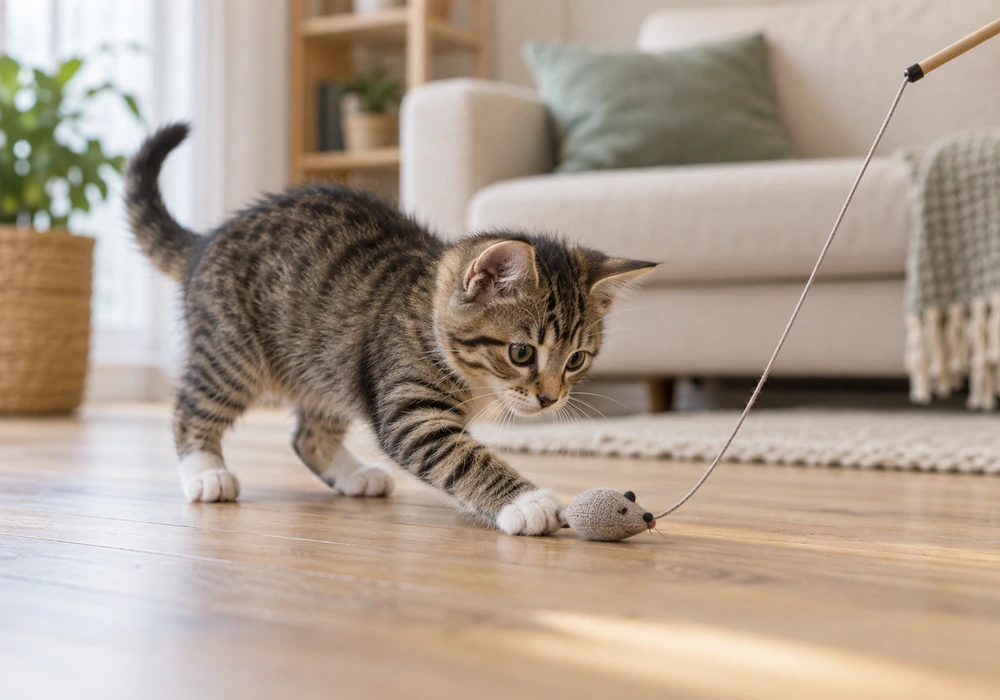
Use toys instead of hands and feet. If your kitten bites your skin during play, pause calmly. At the next session, use a toy that keeps your hands farther away. If biting begins during petting, stop petting; the kitten may need less handling rather than more exercise.
Put strings, ribbons, and wand toys away after play to prevent swallowing or entanglement. If your kitten hides from you, hisses, or tries to escape, give them space instead of starting another game.
Keep a Predictable Daily Routine
A predictable routine helps your kitten know what to expect. Offer meals and play at roughly the same times each day, and let them sleep without repeated interruptions. Keep familiar bedding in their resting area and avoid strong fragrances nearby. If bowls or litter boxes need to move, make the change gradually.
For a kitten that becomes active at bedtime, try an evening play session followed by a meal that fits their normal feeding schedule. Early-morning activity is common in cats, so sleeping through the night may take time.
If your kitten cries at night, check food, water, litter access, comfort, and signs of illness. Offer quiet company if they seek it. Do not keep them awake all day or withhold needed meals to make them sleep. New or persistent crying needs attention. Our guide to cat sounds and what they mean explains how sounds and body language work together.
Introduce New Experiences in Small Steps
Choose a time when your kitten is relaxed and introduce one new experience at a time. Keep new people, sounds, or objects far enough away or quiet enough that the kitten remains comfortable. For grooming, let them sniff the brush first; later, try one gentle stroke and offer a reward.
If the kitten stiffens, retreats, or tries to escape, stop and make the next attempt easier. For example, ask a visitor to sit farther away instead of continuing to reach toward the kitten. Reward calm responses promptly with food, play, or petting the kitten enjoys.
Kittens are especially receptive to learning about people and everyday experiences during an early socialization period, roughly two to nine weeks of age. Learning continues afterward. Older kittens can still learn to feel more comfortable, but progress depends on their background and the experiences they have. Move at your kitten’s pace rather than forcing contact.
Help Your Kitten Get Used to the Carrier
To help your kitten feel calmer before a trip, make the carrier familiar well in advance. Leave it open in a quiet room with bedding inside. Let your kitten explore freely, and reward them for going in. Begin this practice before the carrier is needed for a veterinary visit.
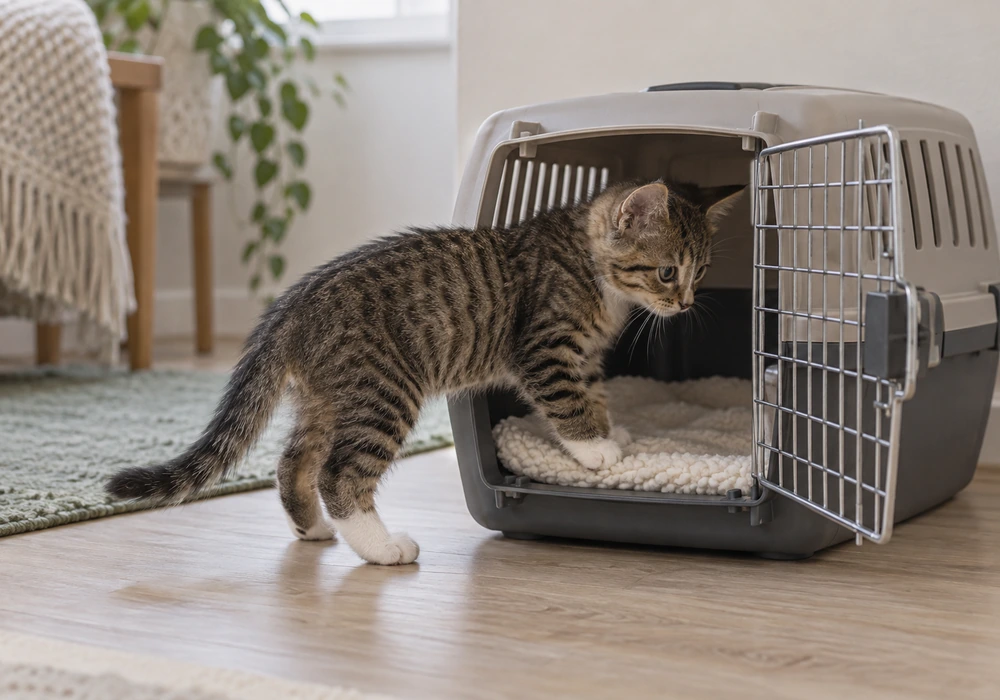
Once your kitten enters the carrier comfortably, close the door briefly, then reopen it while they are still relaxed. Gradually practice lifting the carrier, carrying it a short distance, and taking a short journey. If the kitten becomes frightened, return to an easier step. Progress may take days or weeks.
Support the carrier from underneath so it does not swing, and secure it so it cannot slide or tip during travel. VCA’s carrier training guide explains the process. If a veterinary visit is approaching and your kitten remains frightened, call the clinic for help; do not delay necessary care while waiting for training to work.
Optional support
Optional Calming Aids and Precautions
The products below are optional support for the six methods above, not additional numbered methods. Whether a product is suitable depends on your kitten’s age, health, and reason for distress.
Pheromone diffusers and sprays
Synthetic feline pheromones copy chemical signals cats naturally use to communicate. They are not sedatives. Some studies report improvements in stress-related behavior, while others find little benefit. A review of pheromone research discusses the mixed evidence.
Use them alongside changes that make the kitten feel safer. Follow the product label for diffuser placement and replacement. Never spray the kitten directly, and allow a treated carrier to dry for the time specified before use.
Food puzzles and lick mats
A simple food puzzle or shallow lick mat can give a weaned kitten something to do when they feel comfortable enough to eat. Start with an easy task and use some of their usual food. Supervise, remove damaged items, and clean them as the manufacturer directs. Do not assume that licking alone treats anxiety.
Catnip and silver vine
Catnip can cause excitement as well as relaxation, and young kittens may show little interest. Stop using it if your kitten becomes agitated.
Some cats that ignore catnip respond to silver vine. However, the study comparing these plants included only cats at least six months old and measured their attraction and behavioral responses. It did not show that either plant treats anxiety in young kittens.
Supplements and prescription medicine
Research on calming supplements needs to be interpreted carefully, especially for young kittens. A 2020 alpha-casozepine trial included 60 adult cats aged one to 18 years. The L-theanine study did not include a placebo group receiving an inactive product for comparison. These studies do not establish how well the products work in young kittens. Before giving a supplement, ask your veterinarian whether it is suitable for your kitten’s age and whether it could interact with other products or medicines.
A veterinarian may prescribe medication for a particularly stressful event. Gabapentin is sometimes used for fear associated with veterinary visits, but it can cause sleepiness and poor coordination. Use only the medication and dose prescribed for your kitten.
Do not give human sleep aids or use CBD as a home calming treatment. The FDA has not approved cannabis products for animals and cannot assure their safety or effectiveness.
Pressure wraps
Ask your veterinarian before trying a pressure wrap. Becoming still while wearing one does not show that a kitten feels relaxed. Avoid tight wrapping or weighted blankets as ways to make a kitten settle down.
Watch your kitten’s response
How to Tell Whether Your Kitten Feels More Comfortable
A kitten that feels safer may rest with a relaxed posture, explore by choice, or approach for play and contact. Eating and litter-box habits should remain normal. Freezing in place or becoming unusually sleepy or weak should not be mistaken for successful calming.
Keep brief notes about what happened, what you tried, and how your kitten responded. Change one optional aid at a time where practical. If fear persists, worsens, or disrupts eating, resting, or daily activity, contact your veterinarian. They can check for a medical cause and recommend qualified behavior support.