
New kitten care
New Kittens: What to Do During the First Week
When you bring new kittens home, start with the essentials: a quiet, secure room, familiar kitten food, fresh water, accessible litter boxes, and a veterinary appointment. During the first few days, check that each kitten eats, uses the litter box, and has a comfortable place to hide and sleep. A simple routine gives you time to spot problems while they settle in.
This guide is for kittens that are fully weaned and eating solid food. Kittens that still depend on milk need a different care plan, outlined below.
Before arrival
New Kittens: What to Do Before Arrival
Ask the previous caregiver for each kitten’s age, usual food and meal times, litter type, vaccination record, parasite treatments, and any known health problems. Keep a separate record for each kitten, even if they are littermates.
Kittens usually begin weaning at three to four weeks. Eating a little solid food does not mean they are ready to leave their mother; where possible, they should stay with her until at least eight weeks old.
Set up one quiet, secure room
Start with a room that is easy to check and keep safe. Put the bed and hiding place where the kittens can rest undisturbed. Keep food, water, and litter boxes in separate spots, with boxes well away from meals.
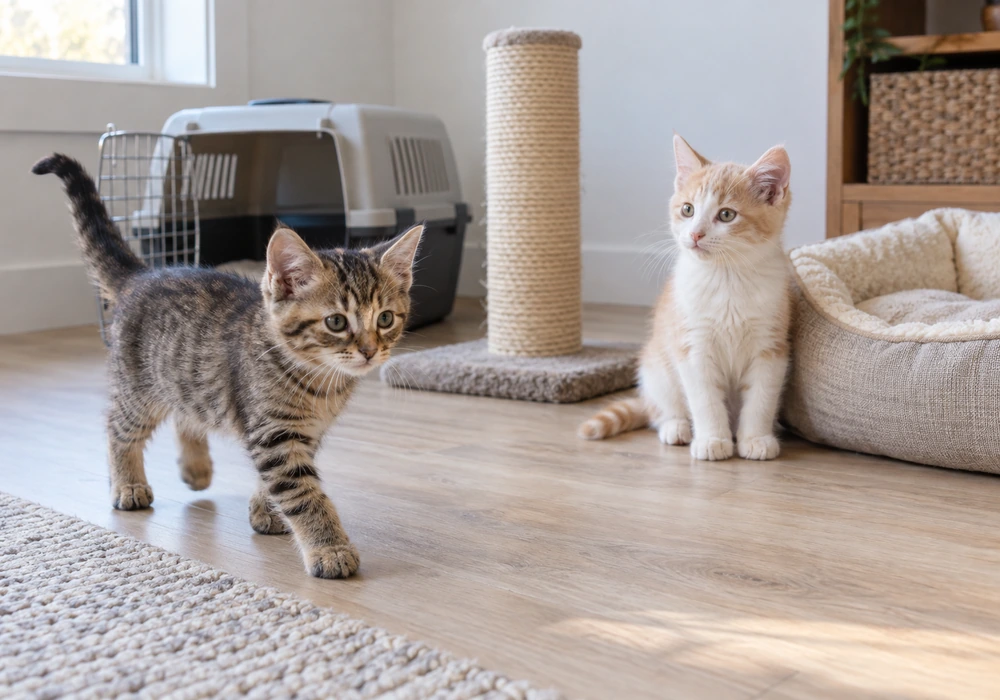
For two kittens, provide separate food bowls, more than one water station, and several resting and hiding places. Spread supplies around the room so that one kitten cannot block the other from reaching everything. If you are deciding what to buy first, our new kitten kit checklist separates essential supplies from extras that can wait.
Put a stable scratching post or board near a resting place, and reward each kitten when it chooses to scratch there. Do not move its paws across the surface. Our guide to helping a cat use a scratching post explains placement, surface preferences, and gentle training.
| Supply | What to look for |
| Carrier | Secure latches, good ventilation, and enough room to turn around. A sturdy plastic carrier with a removable top is easy to clean and can make examinations easier. |
| Food and water bowls | Stable, washable bowls. Stainless steel resists breakage; food-safe ceramic can work well but should be replaced if chipped or cracked. |
| Bed and hiding place | Washable bedding without loose threads and a hiding place with an easy entrance. Replace cardboard boxes when wet or damaged. |
| Litter boxes | Low entrances and enough room to turn comfortably. Place boxes where the kittens can reach them without passing another pet. |
| Scratcher and toys | A stable scratching surface and toys without loose parts. Check for frayed string, sharp edges, and exposed fasteners. |
Check the room for hazards
Secure windows and doors, protect electrical cables, and block gaps where a kitten could become trapped. Check washing machines, dryers, and other appliances before closing or using them. Put medicines, cleaners, sewing supplies, rubber bands, and small objects out of reach. Store wand toys and string after supervised play.
Keep true lilies and daylilies out of the home. Their leaves, flowers, pollen, and vase water can cause severe kidney injury in cats. If exposure is possible, contact a veterinarian immediately, even if the kitten seems well. See the FDA’s lily safety guidance.
The first day
New Kittens: What to Do on the First Day
Bring the kittens home in secure carriers. Open the carriers in their prepared room and let them come out when ready. Keep the first visits quiet and brief, and let the kittens sleep without being repeatedly picked up. Once they start exploring, gently show them their bowls, beds, and litter boxes without forcing them to stay.
Keep meals familiar
Continue their usual food at first if it is suitable for kittens. In the United States, choose cat food with a nutritional adequacy statement for growth or all life stages; adult-maintenance food, treats, and toppers should not be their main diet. Our guide to choosing prepared cat food for kittens explains label checks and portion calculations. Elsewhere, look for the local equivalent of a complete kitten food.
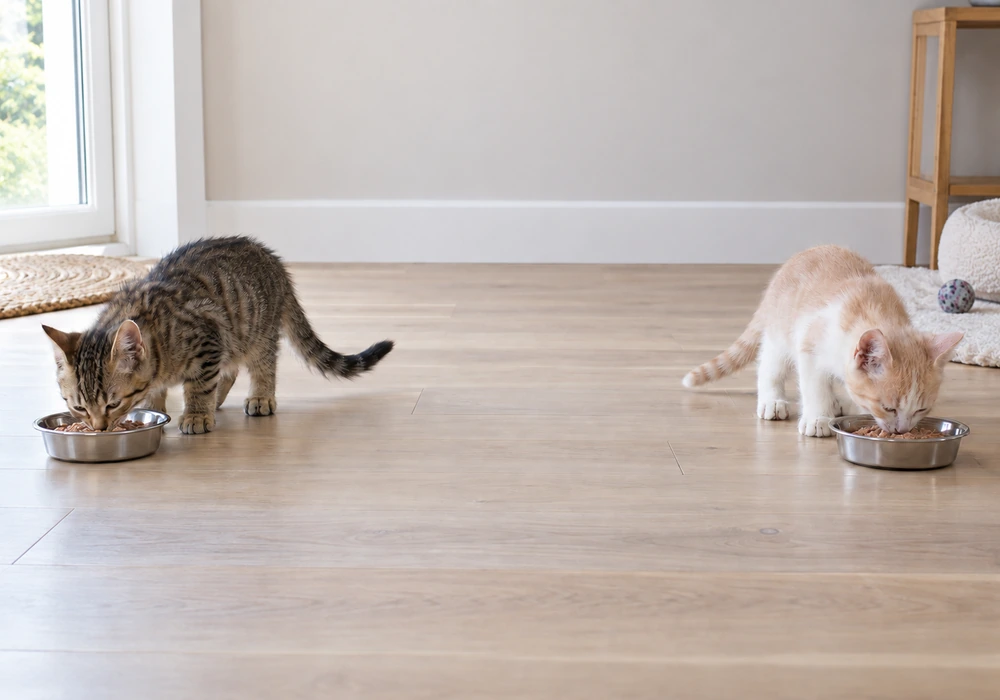
Cornell’s feline health guidance recommends three meals a day for most kittens under six months. Younger kittens often need smaller, more frequent meals, so confirm a schedule for each kitten’s age and health with your veterinarian. Set portions using the food’s directions and your veterinarian’s advice, then adjust as the kitten grows.
Wet food, dry food, or a combination can work when the foods are complete for growth. If you use both, count both toward the daily amount. Keep fresh water available, feed the kittens separately, and check what each actually eats. Weaned kittens do not need milk drinks.
Make food changes gradually. Avoid raw diets because of infection risks to kittens and people. A complete kitten diet normally needs no added supplements unless your veterinarian identifies a need.
Make litter boxes easy to find
A useful starting point is one box per cat, plus one extra, so provide three boxes for two kittens. Place them in separate, accessible locations rather than lining them up side by side.
Use a familiar, unscented litter when suitable. Our guide to choosing safe litter for kittens explains how development, litter-eating behavior, dust, and clumping affect the choice. Non-clumping litter is a sensible choice for young kittens that may taste or swallow litter. Choose low-sided boxes, keep the routes to them clear, and avoid sudden changes in litter while the kittens are settling in.
The first week
Plan First-Week Vet Care and Pet Introductions
Book a veterinary examination as soon as possible after adoption, ideally within the first few days. Seek help sooner if a kitten appears ill. Bring vaccination and treatment records, along with notes about appetite, stools, urination, and activity.
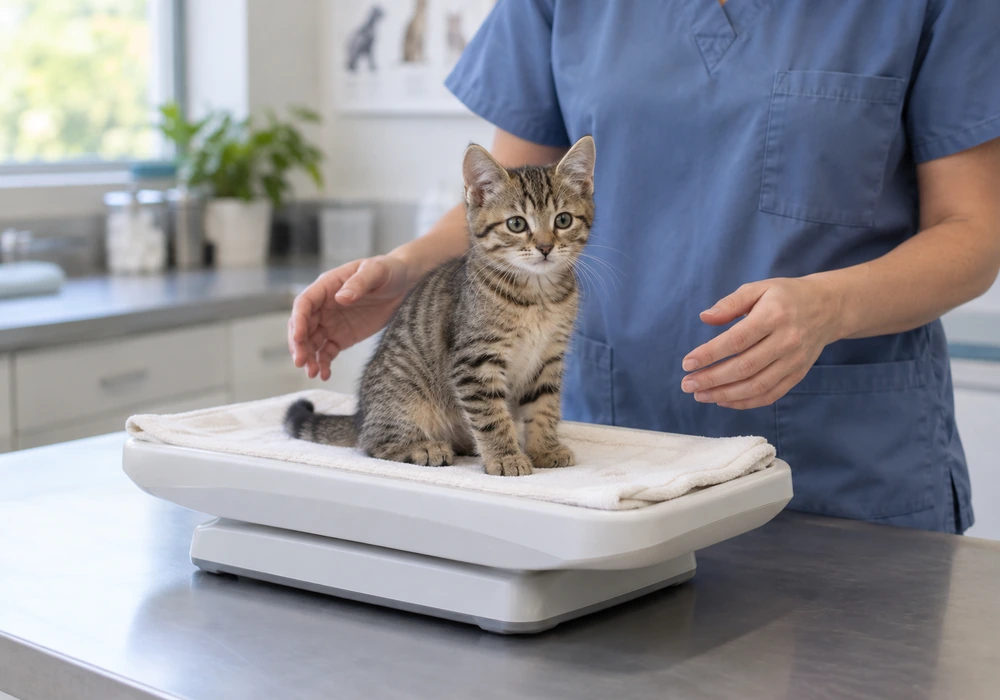
Agree on the next appointments and treatments
- Growth and feeding: Ask about weight, body condition, meal sizes, and when to weigh the kitten again.
- Parasites: Review flea and worm treatments and confirm which products are safe for the kitten’s age and weight. Never substitute a dog flea treatment.
- Infectious-disease testing: Discuss feline leukemia virus (FeLV) and feline immunodeficiency virus (FIV), especially if the kitten’s history is unknown.
- Vaccinations: Check which doses have been given and book the remaining ones.
The 2020 AAHA/AAFP vaccination guidelines describe an injectable kitten series against panleukopenia, feline herpesvirus-1, and feline calicivirus starting no earlier than six weeks, with doses every three to four weeks until 16–20 weeks of age. They also advise considering another dose at six months. Your veterinarian should set the schedule for the vaccine used and your kitten’s history and health.
Indoor kittens still need core vaccinations. Ask separately about rabies requirements and FeLV vaccination. The cited guidelines recommend FeLV vaccination for cats younger than one year; these vaccines have their own schedules.
Discuss spaying or neutering before your kitten reaches puberty. The FelineVMA position statement supports spaying or neutering cats not intended for breeding by five months of age, with individual timing decided by the veterinarian. Some kittens reach sexual maturity at four to five months.
Arrange microchipping and registration, and make sure the record has your current contact details. If you use a collar, choose a suitable quick-release design and check its fit regularly as the kitten grows.
Introduce resident pets gradually
Keep new kittens apart from resident cats until your veterinarian has assessed their health and advised on introductions. Then begin with scent exchange, followed by contact through a secure barrier and short supervised meetings. Use a barrier the kittens cannot squeeze through or climb over, and give each animal room to retreat.
If either animal stays frightened, chases the other, or blocks access to food or litter, return to an earlier stage. Introductions can take weeks. With dogs, prevent chasing and give the kittens a safe escape route. Supervise children, keep handling gentle, and let the kittens move away when they want to.
Caring for New Kittens: What to Do Each Day
Check each kitten’s appetite, activity, urine, and stool every day. Record vomiting, discharge, or changes in behavior. If a kitten eats noticeably less than usual or misses meals, contact your veterinarian promptly. Also check that another pet is not blocking access to its bowl.
| Item | Cleaning routine |
| Food bowls and scoops | Wash with soap and hot water after each use. |
| Water bowls | Wash daily and refill with fresh water; clean sooner if dirty. |
| Litter boxes | Remove waste twice a day, or more often if needed. Empty and wash with hot, soapy water at least weekly. |
| Bedding and toys | Wash bedding weekly or when soiled. Clean washable toys monthly or sooner if dirty, following their care instructions. Replace damaged items. |
These routines draw on FDA food-handling advice, the CDC’s pet-supply cleaning guidance, and Cats Protection’s litter-box guidance.
Follow cleaning-product instructions for dilution, contact time, rinsing, and drying. Keep kittens away while cleaning and until surfaces are safe to use again. Avoid phenol-containing disinfectants, which are toxic to cats, and never mix bleach with other cleaners. Wash your hands after handling litter. During pregnancy or if your immune system is weakened, ask someone else to clean litter boxes when possible; otherwise, wear gloves and wash your hands thoroughly.
Introduce grooming gently
Most healthy kittens do not need routine baths, and washing is not a first-day requirement. For a small dirty patch, a warm, damp cloth may be enough. If more cleaning is needed, our guide to washing a kitten safely explains when to wash, which products to use, and how to keep a kitten warm afterward.
Start nail-care practice with brief, gentle paw handling while the kitten is relaxed. Reward calm cooperation and stop if it pulls away or becomes upset. Trim only when needed; if you are unsure where to cut, ask your veterinarian to demonstrate. Our cat nail-trimming guide covers suitable tools, avoiding the quick, and taking breaks.
Everyday questions
More Kitten Care Questions, Answered
Can I leave my new kitten alone while I’m at work?
Do not plan a full workday without someone checking on a young kitten. Start with brief absences in the prepared room and arrange a reliable caregiver around its meals and care needs. Age, health, and feeding schedules matter more than a universal time limit. Cats Protection’s advice on leaving cats alone distinguishes kittens from adults. Having two kittens does not replace human care.
Is it normal for my kitten to hide even when I am being gentle?
An unfamiliar home can feel overwhelming, even when people are quiet and kind. Leave a safe hiding place available, sit nearby without reaching in, and let the kitten choose when to approach. Check that it eats, drinks, and uses the litter box. Hiding with poor appetite, weakness, or toileting changes needs veterinary advice rather than more time alone to “settle.”
Should I ignore my kitten crying at night?
Check its needs first: access to water, a clean litter box, comfortable bedding, and meals appropriate for its age. Offer quiet reassurance and keep the surroundings calm. Do not assume every cry is attention-seeking or turn every wake-up into an energetic game. Persistent crying, difficulty settling, or other changes in health or behavior warrant veterinary advice.
How do I stop my kitten from biting my hands and feet?
Keep hands and feet still, then calmly disengage when it is safe. Do not hit, spray, scruff, or pin the kitten down. Use suitable toys for chasing and grabbing, and plan play before its usual ankle-ambushing times. Keep the rule consistent: hands and feet are never toys, including under blankets.
How much should I play with my kitten each day?
Offer several short sessions while your kitten is awake and interested. Let it stalk and catch a suitable toy, pause when it needs a break, and stop when it walks away or becomes uncomfortable. Do not wake it or keep playing to meet a timer’s target. Our guide to playing with kitten toys offers simple games and signs that a session should end.
What should I do if my kitten has a litter-box accident?
Clean the area with an appropriate pet-urine cleaner and check the setup: a low entrance, a clear route, clean litter, and a familiar texture. Never punish the kitten or hold it in the box. Our litter-training guide for kittens explains how to troubleshoot accidents. Repeated accidents or painful toileting need a vet; straining with little or no urine is an emergency.
Are my two kittens playing or fighting?
Comfortable play usually includes pauses and opportunities for either kitten to leave. Watch for repeated pursuit when one tries to escape, persistent growling or screaming, injuries, or one kitten blocking the other’s food or litter access. Calmly give them separate space if the interaction becomes tense. Do not put your hands between fighting cats; use a barrier from a safe distance.
When can my kitten explore the rest of the house?
Wait until it is comfortable in its starting room, eating normally, finding the litter box, and showing interest in exploring. Introduce one kitten-proofed area at a time under supervision, with the original room available as a retreat. Expand according to its behavior, not a fixed day on the calendar. Introductions to resident pets still need their own gradual plan.
Can I let my kitten outside during the first week?
Keep new kittens indoors while they settle in. Before outdoor access, discuss vaccination protection, parasite prevention, identification, and neutering with your veterinarian. Plan a secure enclosure or an appropriate supervised outing rather than opening the door to free roaming. Our guide to introducing a kitten to the outside covers health checks, equipment, and gradual preparation.
Can I use treats to reward my kitten?
Yes, but rewards should not displace the complete kitten food needed for growth. You can use small portions of its usual food from the daily allowance. If you offer separate treats, check age suitability and count their calories. Our guide to working out a cat’s treat allowance explains the calculation; adult calorie examples are not feeding targets for growing kittens.
When to get help
New Kittens: What to Do When Something Seems Wrong
Seek emergency care
Get immediate help for difficulty breathing, collapse, unresponsiveness, a seizure, serious injury, suspected poisoning, or straining with little or no urine.
Contact your veterinarian promptly
Seek advice for reduced appetite, persistent diarrhea, eye or nose discharge, or unusual inactivity. Repeated vomiting, severe diarrhea, marked weakness, or an unweaned kitten refusing feeds needs urgent attention. Do not assume these changes are simply caused by moving home.
As the kittens settle in, gradually give them more space while keeping their familiar beds, food, water, and litter boxes available. Let their behavior guide the pace. Keep meals predictable, check each kitten rather than judging the pair as a whole, and follow through on their veterinary appointments.
For more help with grooming, litter boxes, and everyday routines as your kittens grow, explore our Cat Care guides.