
Cat behavior · Understanding the warning
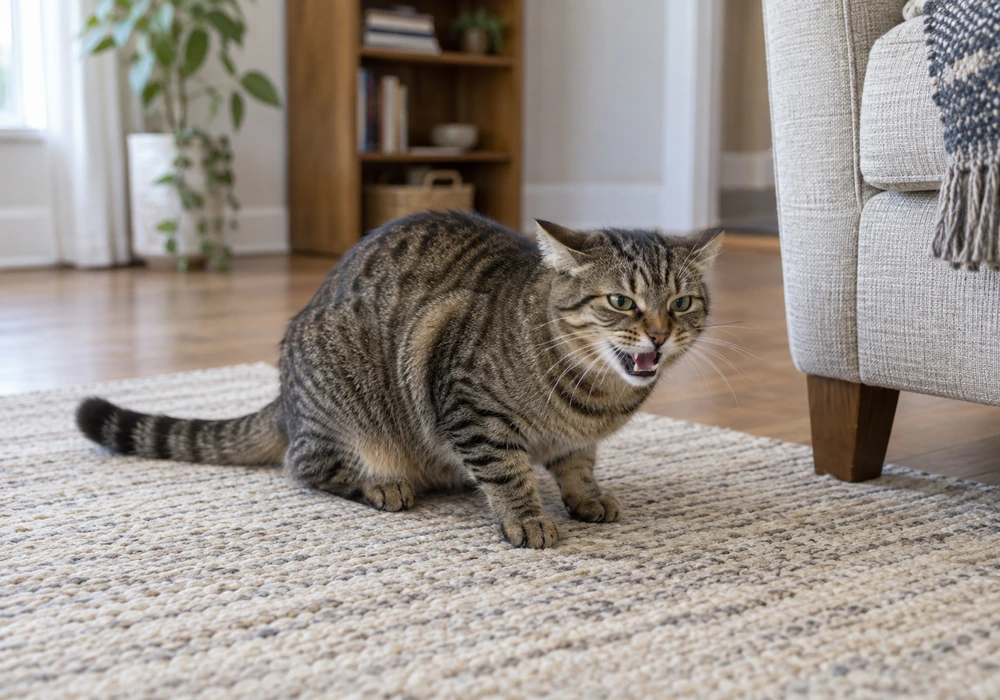
A familiar stroke or a quiet walk past your cat can suddenly bring a hiss. When your cat hisses for no reason you can identify, the trigger may be a sound, an unwanted touch, pain, or an earlier disturbance.
Hissing usually warns that a cat feels threatened or uncomfortable and needs more space. It does not, by itself, mean your cat dislikes you. The useful question is what made that particular moment difficult. These five explanations can help you investigate; more than one may apply.
In the moment: Stop reaching or moving closer, give your cat a clear route away, and keep children and other cats at a distance. Investigate the cause once everyone is safe.
Reason 01
Your Cat Noticed Something You Missed
A visitor’s unfamiliar scent, an appliance starting, a sudden movement, or someone leaning over a resting place can be enough to trigger a defensive response. You may notice only the hiss because the sound, movement, or approach seemed ordinary to you.
If your cat hisses for no reason you can identify, look at where they were and what happened just beforehand. Were they resting near a busy doorway? Did someone reach into their hiding place? A cat may feel trapped even when nobody is touching them, particularly if a person blocks the only easy way out. The quieter body-language changes that often come before a hiss are covered in signs of fear in cats.
A clue to look for: Your cat hisses when a visitor bends toward their bed, but remains comfortable when the visitor sits farther away. The approach may be the problem, rather than the visitor’s presence alone.
What helps: Ask visitors to let the cat approach. Provide a quiet retreat with an unobstructed exit, and reduce the particular disturbance where possible. Do not repeat a frightening sound or approach to test your theory.
Reason 02
Petting or Handling Is Uncomfortable
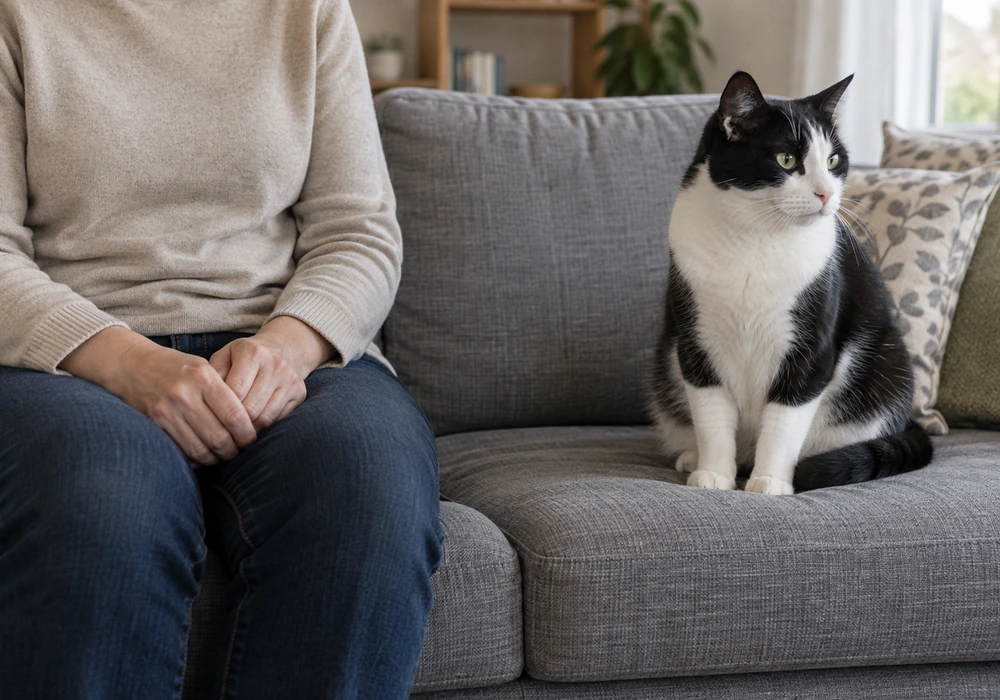
If your cat hisses for no reason during petting, the contact itself may have become uncomfortable. A cat can enjoy sitting beside you without wanting to be stroked or picked up. Brushing, lifting, or restraint can also become too much, especially after earlier signals have been missed.
Watch for a head turning toward your hand, a tightening body, ears moving back, tail flicking, or an attempt to leave. These changes matter more than a fixed number of strokes. Exposing the belly also does not necessarily invite belly rubbing.
As VCA’s guidance on petting-related aggression explains, being close to a person and wanting touch are not always the same thing. Pain can also reduce a cat’s tolerance, so a new reaction should not automatically be treated as a preference. The same applies to paws: a cat that flinches when a leg is lifted will usually object just as much to cat nail trimming.
What helps: End contact when your cat signals discomfort. During a later, relaxed interaction, keep touch brief and pause to see whether the cat seeks more. Do not hold them still until they stop resisting.
Reason 03
Could Pain Explain Why Your Cat Hisses for No Reason?
If a normally tolerant cat starts hissing when lifted, groomed, or approached, discomfort deserves consideration. Sore joints, painful skin, dental disease, or another medical problem can change how a cat responds to everyday contact.
Pain is not always accompanied by limping or crying. Look for less jumping, a different walking pattern, reduced grooming, hiding, appetite changes, or altered litter-box habits. VCA’s guide to signs of pain in cats emphasizes changes in ordinary behavior.
A clue to look for: Your cat begins hissing when you lift them and has also stopped jumping onto a favorite chair. That combination calls for veterinary assessment, even without an obvious injury.
What helps: Contact your veterinarian about a new or persistent change. Describe when it happens and what else has changed. Do not press a sensitive area, force a jump, or keep lifting the cat to locate the pain. A hiss alone cannot identify the diagnosis.
Reason 04
Another Cat Is Creating Pressure Without a Fight
When your cat hisses for no reason around a housemate, look for quieter forms of pressure. One cat may stare, follow another, sit across a narrow route, or make access to food and litter boxes difficult. The hiss you hear may be a response to that pressure.
Notice who approaches and who retreats. Does one cat wait until the other leaves before eating? Does a cat avoid a room they once used? The Feline Veterinary Medical Association’s 2024 guidelines on tension between cats explain why these subtle interactions matter.
Familiar cats may also react differently after a veterinary visit. Unfamiliar odors, discomfort, or changes in the returning cat’s movement can disrupt the usual greeting. This does not mean their relationship is permanently lost.
What helps: Provide separate, accessible feeding, resting, and litter areas. Two litter boxes beyond the same guarded doorway may both be difficult to reach. If introductions or a reunion cause escalating tension, separate the cats safely and resume contact gradually when both are comfortable. Follow any veterinary recovery instructions.
Reason 05
Your Cat Is Still Reacting to an Earlier Trigger
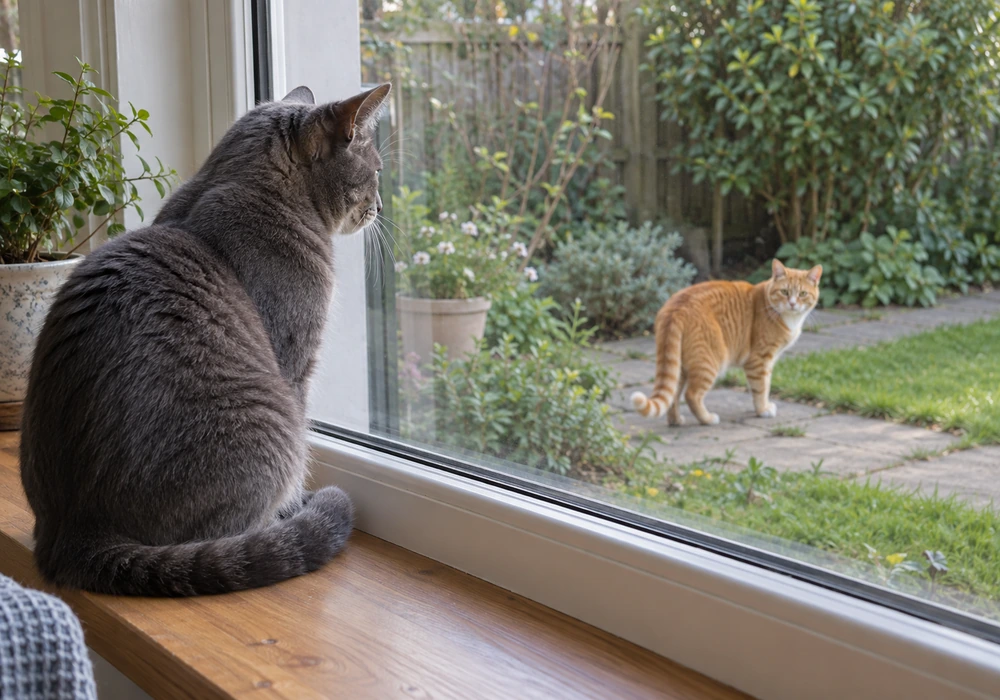
Imagine your cat watching an unfamiliar cat through a closed window. You enter the room and reach toward them, then receive a hiss or swat. You did not cause the original disturbance, but you approached while your cat was still highly agitated.
This can be part of redirected aggression: a reaction to an unreachable trigger is directed toward a nearby person or cat. The original trigger may already have disappeared. The ASPCA’s explanation of redirected aggression notes that the reaction can follow the initial event after a delay of hours.
This differs from direct conflict with a housemate. In direct conflict, the other cat is the source of pressure; in redirection, that cat may simply have been nearby.
What helps: Avoid touching or picking up an agitated cat. If a view outside is a trigger, screen that view when it is safe to do so. Allow recovery without repeated approaches to see whether the cat has calmed down. There is no fixed waiting period that makes contact safe.
What to Do When Your Cat Hisses for No Reason
Respond to the warning calmly. Shouting, spraying water, or hissing back can add fear without resolving the cause. If you need to separate cats, use a door or visual barrier only when you can do so without approaching closely or cornering them. Never put your hands between fighting cats.
Separating Cats Safely
A separated cat still needs food, water, litter, a resting place, and appropriate company once relaxed. If safe separation or necessary handling is difficult, contact your veterinarian for a plan. An injured or unwell cat should not be left without care while you wait for the behavior to settle.
Keep a Short Record
Once everyone is safe, make a short record. When your cat hisses for no reason you can identify, notes may reveal a pattern. Include ordinary encounters that went well, so you can see what differs.
| What to record | Useful details |
|---|---|
| Before the hiss | Location, people or cats nearby, touch, noises, unfamiliar scents, and activity outside. |
| During the episode | Posture, who approached, whether your cat retreated or pursued, and any contact or injury. |
| Afterward | Return to normal activity, eating, movement, grooming, litter use, and access to shared spaces. |
A brief video can help your veterinarian if it captures a naturally occurring episode from a safe distance. Do not provoke hissing to obtain one.
When to Contact a Veterinarian
Arrange a veterinary review if your cat hisses for no reason you can identify and the pattern is new, persistent, or worsening. Sensitivity to touch or changes in appetite, grooming, movement, or litter use make this especially important. Tell the clinic if transport or handling may be difficult. Do not give human painkillers or medication prescribed for another cat.
Seek Emergency Care Immediately
Seek emergency care immediately for:
- Labored breathing or open-mouth breathing at rest. A brief defensive hiss is different from ongoing breathing difficulty.
- Repeated straining with little or no urine. A urinary blockage is an emergency, especially in male cats. Do not assume hissing near the litter box is only a behavior issue.
Repeated attacks, injuries, or ongoing restrictions on another cat’s access to essentials also need professional help. Your veterinarian may recommend a qualified veterinary behaviorist.
How to Tell Whether Your Cat Is More Comfortable
To judge progress when your cat hisses for no reason you can see, watch their daily routine. Comfortable movement, meals, rest, and voluntary contact matter more than silence. A cat that stops hissing because they hide all day has not necessarily improved.
Adjusting the Household
Match the adjustment to the cause: shorter voluntary contact for handling discomfort, accessible retreats for fear, separate routes and resources for conflict, and veterinary treatment for pain. Practical household changes are set out in cat stress relief at home. A calming product cannot replace these steps or guarantee that a cat will never hiss.
An occasional hiss can still communicate a boundary. Respecting it and noticing the circumstances gives you a better chance of preventing the next uncomfortable encounter.
This guide reflects everyday experience living with cats and does not replace veterinary advice about a particular animal. A hiss that comes with labored breathing, repeated straining with little or no urine, a cat that stops eating, or a sudden change in movement needs a veterinary examination rather than another attempt to calm the cat at home.