
Cat stress relief often starts with a small change: a quiet place to rest, a meal without competition, or a clear route to the litter box.
Watch what interrupts your cat’s ordinary day. A washing machine starting beside the litter box, a visitor reaching into its bed, or another cat blocking a doorway can make familiar activities uncomfortable. The most useful adjustment addresses that specific problem and gives your cat a comfortable alternative.
Stress can develop when a cat feels threatened or has difficulty coping with its surroundings. Look for changes from your cat’s usual behavior, such as more hiding, reduced eating, excessive grooming, or avoiding familiar rooms; the body-language clues appear in subtle signs of fear in cats. Here, the focus is what to change at home.
Start With One Ordinary Trip Through the House
To find a useful starting point, watch one familiar activity: walking to water, using the litter box, or settling down for a nap. Observe from a comfortable distance. Notice where your cat pauses, turns back, or waits for another cat to move.
Getting there: Is the route noisy, slippery, or blocked? Does the cat have to pass another cat at close range?
Using the space: Is there enough room to turn, stretch, eat, or rest? Is the entrance or jump manageable?
Moving away: Can the cat leave without being cornered, chased, or reached for?
For example, adding a litter box beside an existing one may do little if both sit next to a washing machine. A quiet alternative elsewhere addresses the shared problem. Likewise, a taller perch is of little use to a cat that cannot comfortably reach its first step.
The AAFP/ISFM environmental needs guidelines describe five connected needs: a safe place, separated resources, opportunities for play and hunting behavior, positive human interaction, and respect for the cat’s sense of smell. Use them to look for a missing opportunity, rather than treating the house as a shopping checklist.
This walk-through checks the setup; it does not diagnose stress. New reluctance to jump or move needs a veterinary assessment.
A Quiet Retreat Your Cat Can Choose
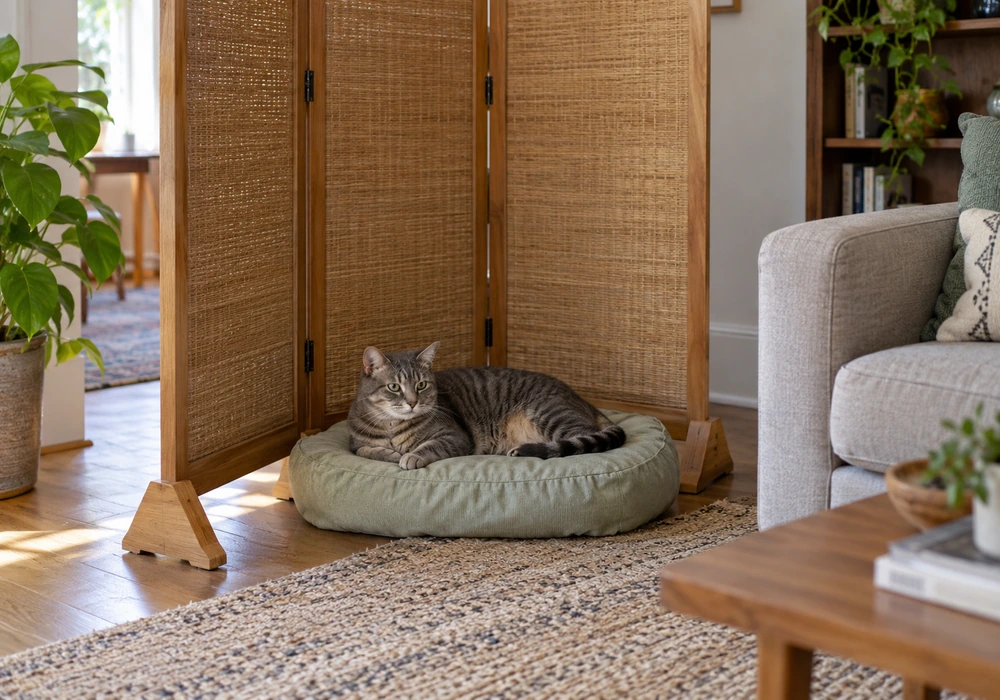
Hiding can be a normal way to rest or cope; it does not automatically mean something is wrong. A retreat works when your cat can choose it and rest there without being bothered. It might be a quiet room, a sheltered spot behind suitable furniture, an open carrier, or a safe covered bed. Keep a familiar option available while trying something new.
Choose a location away from busy doors and sudden noise. Check that the cat can enter, turn, and leave comfortably. In a shared space, consider whether another cat could guard the only entrance. A second exit or a better location may be more useful than extra cushioning.
If you use a cardboard box, remove staples, loose tape, and packing material. Keep it dry and stable, and replace it if damaged or soiled. Choose another option if your cat chews and swallows cardboard. A room divider must also be stable and leave clear routes around it.
Tell everyone that resting cats are left alone. Do not reach into the refuge for petting, pull the cat out to meet guests, or repeatedly put it inside to demonstrate the new bed.
Spread Out the Essentials in a Multi-Cat Home
A resource can be present but unavailable to a particular cat. One cat may stare from a doorway while another waits to eat or use the litter box. Watch each cat separately; a peaceful-looking household can still contain restricted access.
Distribute food, water, litter boxes, scratching surfaces, and resting places across useful locations. Separate toileting areas from food and water. For litter boxes, a common starting point is one per cat plus one extra, with accessible options on the floors the cats use. Several boxes side by side still require every cat to approach the same area.
Allow room to stand and turn in a litter box, with an entry height the cat can manage. Making a litter box walks through size, entry height, and placement. Many cats prefer fine-grained, unscented litter, but keep individual preference in mind. Avoid placing the only box beside an appliance that starts suddenly.
If one cat waits outside a room
Provide a suitable resource elsewhere and check whether that cat actually uses it. A stable visual barrier or furniture arrangement may reduce close encounters, provided it does not create a dead end. When food access is uncertain, feed separately and observe each cat’s intake.
Do not force shared beds or side-by-side meals to encourage friendship. Comfortable coexistence is a reasonable outcome. Persistent staring, blocking, or pursuit needs attention even without a fight; escalating conflict calls for safe separation and help with a gradual reintroduction plan.
Let Your Cat Choose When Contact Ends
Let your cat approach, then offer brief contact and pause. Does it seek more, remain comfortably nearby, or move away? Follow that response. Turning away is a reason to stop touching, not a challenge to win the cat over.
Ask visitors to sit quietly and allow investigation. Have one person invite contact at a time while others keep the route clear. Children need the same rule: a retreating or resting cat is not followed.
If your cat hisses during an interaction, stop and give it space. Why cats hiss when the cause is not obvious breaks down how pain, unwanted handling, or continued agitation after an upsetting event can contribute. Punishment or repeatedly approaching a frightened cat can add pressure without resolving the cause.
Simple play that asks for little
Move a suitable toy like prey, with pauses and chances to catch it. Adjust speed and reach to the cat’s mobility and interest. Rotate a few safe options rather than adding constant stimulation, and put string and wand toys away after supervised play.
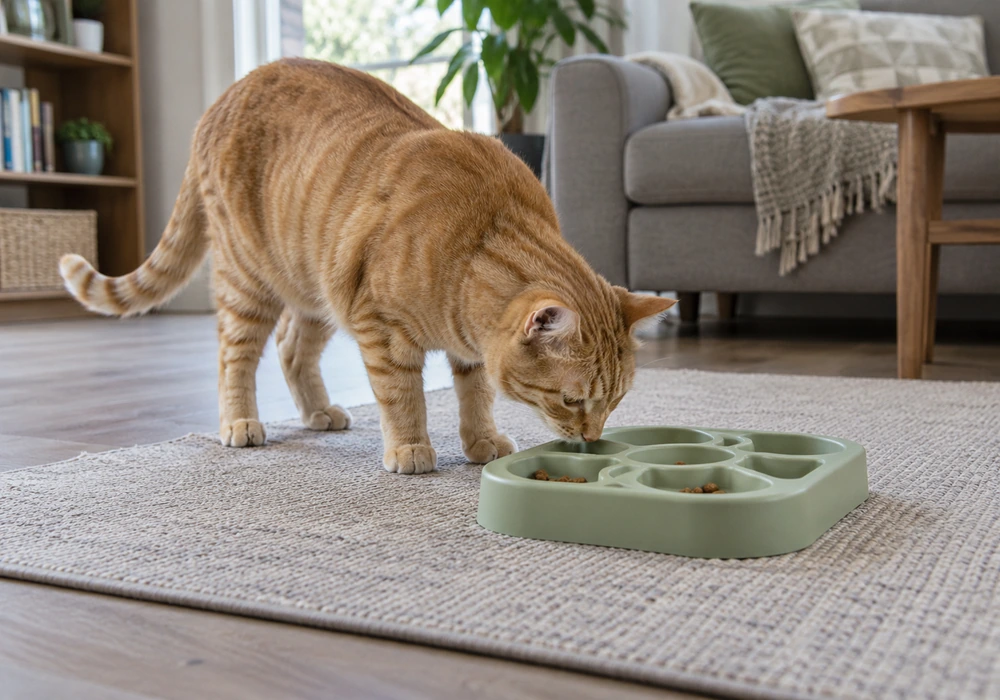
A simple food puzzle can provide an opportunity to explore and forage. Begin with easily accessible pieces from the normal daily ration. If the cat walks away or struggles, simplify it or offer another activity. Keep ordinary meals available; a frightened, weak, or inexperienced cat should not have to solve a puzzle to obtain necessary food.
A small suitable treat can reward a voluntary approach or exploration. Count it in the feeding plan, and do not use food to lure the cat into contact it cannot leave. Working out how many treats a cat can have shows how to keep those rewards inside the daily allowance.
A Routine a Cat Can Rely On
Predictability means your cat can rely on access to meals, rest, and gentle interaction. It does not require every activity to happen at the exact same minute. Aim for recognizable patterns that remain workable when the household schedule changes.
When practical, change one ordinary feature at a time. Offer a new resting place or scratching surface alongside an accepted one, and let the cat investigate voluntarily. Note whether it is used before removing the familiar option. Immediate hazards or serious conflict still need prompt action.
Familiar scent also matters. Keep bedding hygienic, but avoid unnecessarily replacing or washing everything in the resting area at once. Clean in stages where practical, preserve a safe familiar item, and avoid introducing strong fragrances. Remove contamination rather than masking urine with perfume.
Simple shared care notes help when several people feed or look after your cat. Basic cat care gathers the everyday feeding, litter, and cleaning steps that keep this consistent.
Choose Comfortable Objects That Stay Safe and Usable
Texture, stability, and placement affect whether an item is useful. A label such as “calming bed” does not tell you whether the shape, location, or fabric suits your cat. Choose something your cat uses comfortably and that you can keep clean and intact.
| Material or structure | Useful qualities and limits |
|---|---|
| Corrugated cardboard | Lightweight and easy to replace for hiding or scratching. Absorbs moisture and cannot be thoroughly washed. Replace it if wet or contaminated; choose another material if your cat chews and swallows it. |
| Washable fabric | Useful for bedding and removable covers. Inspect for loose loops, dangling ties, damaged seams, and exposed filling. |
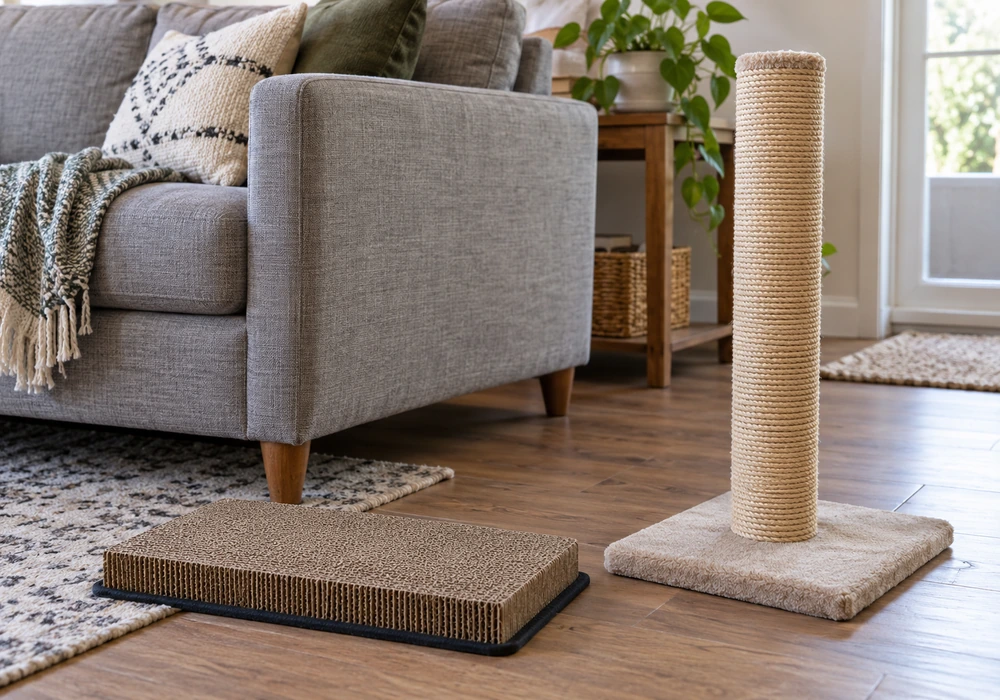
| Securely attached sisal | A coarse fiber used for scratching surfaces. Check for loose strands and detached wrapping; texture and orientation preferences vary. |
| Wood or rigid panels | Can support stable furniture and perches. Check joints, anchoring, edges, finishes, and traction on landing surfaces. |
| Intact molded plastic | Washable and useful for trays or food puzzles. Cracks and awkward seams complicate cleaning; openings and entry height must suit the cat. |
Scratching is normal: cats stretch, maintain their claws, and mark surfaces. Match the alternative to what your cat already chooses. A cat scratching a rug may prefer a horizontal surface; one stretching against a sofa corner may use a tall, stable upright post placed nearby. Getting your cat to use a scratching post lists the placements that tend to work.
For a perch, check the approach and descent as well as the resting surface. Follow mounting instructions; jumping places different demands on a structure than resting weight alone. Low, stable options may better suit a cat with limited mobility.
Inspect seams, scratcher bases, furniture fasteners, and toys regularly and after damage. Clean food-contact parts of puzzles after use. Scoop litter at least daily and wash trays as needed; Ohio State’s owner guidance suggests weekly washing with mild dish soap. Follow product directions, keep cats away from wet cleaning residues, rinse when instructed, and let items dry before reuse. For urine accidents, use an appropriate cleaner and avoid ammonia-based products on soiled areas.
Prepare for Guests, Repairs, and Moving
Guests, repairs, and open doors
Prepare a familiar quiet area before the doorbell rings or work begins. Provide a hiding place, fresh water, regular meals, and an accessible litter box kept apart from the feeding area. Assign one person to manage the door and explain that the cat must not be pursued.
During repairs involving open exterior doors, a securely separated room can also prevent escape. Check that the cat has suitable resources behind the closed door. Temporary event management should still allow appropriate care, enrichment, and interaction; it is different from routinely isolating a cat without those opportunities.
Moving or bringing home a cat
Begin with a manageable prepared area and familiar belongings when available. Expand access as the cat eats, uses the litter box, rests, and explores comfortably. Keep a recognizable retreat while the surroundings change. There is no fixed settling-in deadline for every cat.
For a newly adopted kitten, choose an area with age-appropriate supplies and arrange the recommended health checks. Introductions to resident cats need a separate, gradual plan. Give each cat time to become comfortable before increasing contact; Adding a kitten to a home that already has a cat looks at what to weigh first.
Use Calming Products Alongside Changes at Home
Synthetic feline pheromone products are designed to mimic specific chemical signals used in feline communication. They may have a supporting role, alongside changes to the environment and interactions. Evidence depends on the formulation and the problem being studied.
A small pilot trial in 45 multi-cat households found some evidence of benefit for one appeasing pheromone diffuser used alongside behavioral guidance. Aggression scores fell in both the treatment and placebo groups. The findings offer limited support for that product and situation; they do not establish that every diffuser treats every kind of stress. If you try one, identify the behavior you hope to change and follow the device instructions while continuing to address the trigger.
Catnip can cause rubbing, rolling, or active play in responsive cats; others show little interest. These responses do not establish that it treats anxiety. Use treats to reward voluntary behavior, and stop any optional addition if it causes avoidance or agitation.
Essential oils are not feline pheromones. Do not apply them to your cat or introduce aromatherapy as a stress treatment. Ingestion, coat contact, and respiratory exposure can create risks. Discuss oral supplements or medication with your veterinarian rather than using human sedatives or improvised mixtures.
How to Tell Whether the Change Is Helping
A cat sitting still may be resting comfortably, freezing, or avoiding an interaction. Judge a change by several ordinary activities, not silence alone. Keep a short dated note of the adjustment and what happens afterward, observing at comparable times without repeatedly disturbing the cat.
| What to follow | Useful observations |
|---|---|
| Eating and litter use | How much each cat eats compared with usual, normal urine and stool, and any straining or unsuccessful attempts. |
| Access and rest | Which routes and resting places each cat uses, and whether another cat interrupts or blocks access. |
| Voluntary activity | Comfortable exploration, play, scratching, and choosing to begin or end contact. |
| The surrounding event | What happened, what changed in the setup, and the cat’s response. Record each cat separately. |
If a new bed or scratcher is ignored, check location, stability, texture, entry, and the route to it. Keep an accepted safe option and try a suitable alternative; repeatedly placing the cat on the new item does not demonstrate acceptance.
If distress persists, worsens, or affects eating, movement, sleep, or elimination, arrange veterinary assessment. Bring the observation record and ask whether a qualified feline behavior professional should help with an individualized plan. Do not wait through poor appetite or urgent signs to finish a home trial.
Choose one change to start: Effective cat stress relief begins with a problem you can identify. Make it easier to reach the litter box, rest during visits, or end a petting session. Then watch whether your cat uses the new option comfortably.
Disclaimer: this article draws on our own experience of living with cats and on published veterinary and feline welfare guidance; it is not a diagnosis for your cat, and a home change is not a substitute for a veterinary examination. If your cat stops eating, strains without passing urine, breathes with effort, hides for days, or its behavior changes suddenly and stays changed, contact a veterinarian promptly rather than waiting to see whether a calmer room fixes it.