
Practical cat care · Nail trimming
If your cat’s claws keep catching on blankets, it may be time to check the tips. Safe cat nail trimming removes only a small amount of the free end, staying clear of the quick—the living tissue inside the claw that contains nerves and blood vessels.
Start with a comfortable cat, good lighting, and a clear view of one claw. Support the paw gently, identify a safe cutting point, make a small cut, then release and reward. One carefully trimmed claw can be enough for a session.
Does Your Cat Need a Nail Trim?
For cat nail trimming, inspect the claws before deciding to cut. Repeated snagging on fabric, noticeably overlong tips, or difficulty retracting a claw can mean it needs attention. Some young, active cats maintain their claws well through normal activity and scratching; older or less mobile cats often need more help.
Inspect the front and back paws separately. Most cats have five claws on each front paw, including a dewclaw on the inner side, and four on each back paw. Cats with extra toes may have additional claws that are easy to overlook. Ask your veterinary team to show you where they are.
Arrange veterinary care for a problem claw: A claw entering the paw pad, a torn nail, swelling, discharge, limping, or pain is more than routine grooming. Do not try to solve an embedded claw by cutting it out at home.
A hollow, claw-shaped shell found near a scratching post may simply be a shed outer sheath. A painful toe or a fragment still attached to living tissue is a different situation; do not pull on it.
Tools for Cat Nail Trimming at Home
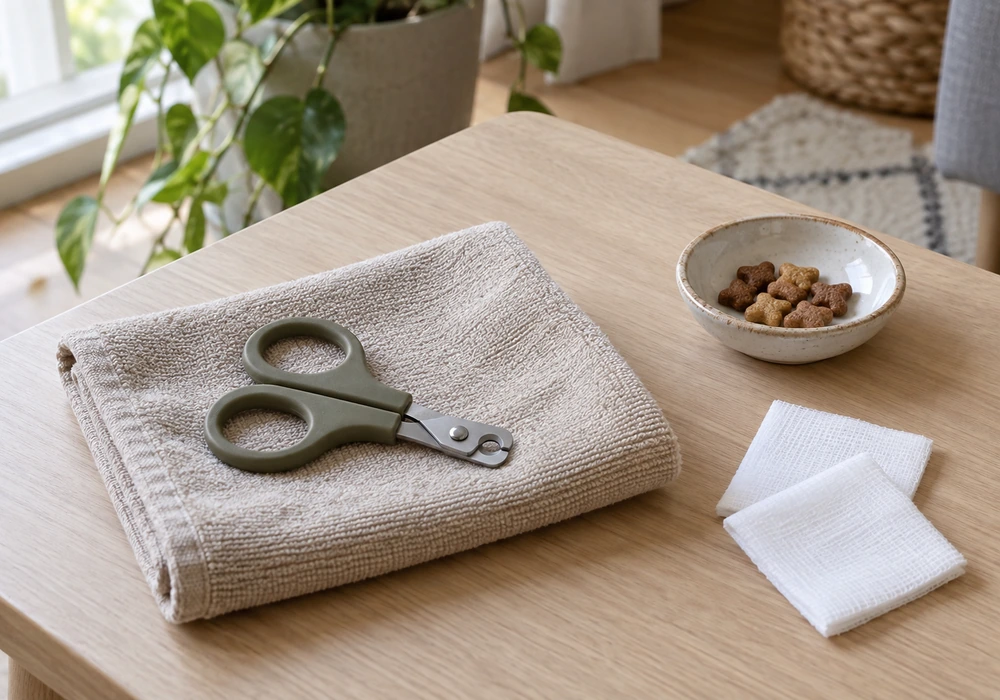
Choose a small cat nail trimmer that lets you see where its blades meet the claw. The blades should be sharp and aligned, the pivot steady, and the handles comfortable in your hand. A safety guard cannot locate the quick for you.
| Item | What to check |
|---|---|
| Cat nail clippers | A clear view of the tip, smooth movement, and clean, undamaged cutting edges. |
| Good light and a stable surface | A comfortable position and a nonslip towel or mat without loose loops that catch claws. |
| Small rewards | Treats or another reward your cat enjoys, ready to give during practice and after a trim. |
| Clean gauze and pet styptic powder | Supplies for a minor accidental nick. Read the product directions before starting. |
Can you use human nail clippers? Veterinary guidance differs: VCA allows suitable human clippers, while PDSA advises against them because they may crush or split a claw. A small, purpose-made cat trimmer is a sensible starting choice, especially for a beginner.
A powered grinder is optional. Noise and vibration may bother a cat, and grinding can still reach the quick. Whatever tool you use for cat nail trimming, introduce it gradually and keep a clear view of the cutting point.
Help Your Cat Get Comfortable With Paw Handling
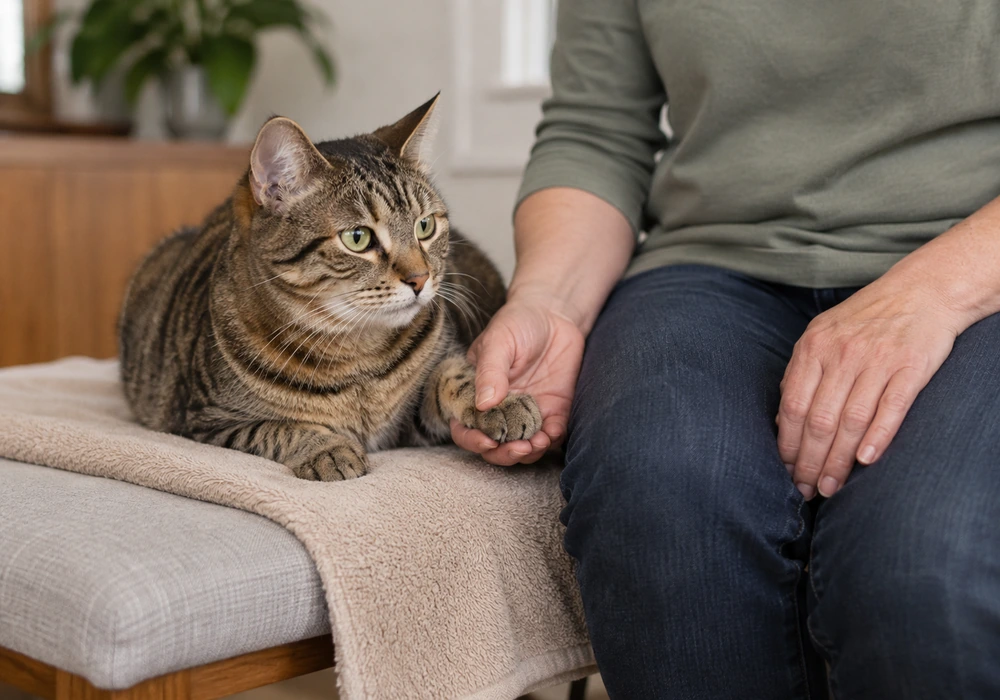
Before attempting cat nail trimming, help your cat get comfortable with paw handling. If your cat pulls away when you touch a paw, start with practice. Choose a quiet, familiar place and a time when your cat is relaxed. Keep sessions brief and progress only while your cat remains comfortable.
- Touch a paw lightly, release it, and offer a reward.
- Work toward briefly supporting the paw and exposing one claw, then release and reward again.
- Introduce the closed clippers at a comfortable distance. Gradually bring them closer without cutting.
- Try a single tip trim only when your cat accepts these earlier steps.
Pause for paw withdrawal, a tense body, ears moving back, repeated turning away, or tail twitching. Do not wait for hissing or biting; the early signs of fear in cats usually appear well before either. A helper can offer rewards or gentle support, but should not hold a struggling cat down.
The Feline Veterinary Medical Association’s respectful handling guidance rejects scruffing and tight restraint. If a towel is used, let it provide a comfortable surface or an accepted loose cover rather than a way to overpower resistance.
Sudden sensitivity in a cat that previously accepted paw handling warrants a pain assessment. For severe fear or necessary care that cannot wait, ask your veterinarian about a handling plan and whether prescribed medication is appropriate.
Cat Nail Trimming in Five Gentle Steps
Before your first cat nail trimming session, ask a veterinarian or veterinary technician to demonstrate the cutting point and tool position on your own cat.
1. Settle your cat in a supported position
Your cat may be comfortable on your lap, in a familiar bed, or on a low, stable surface. Support the body and keep the leg in a natural position. Avoid twisting a joint or stretching the limb to improve your view. Recheck for sore toes or damaged claws before opening the clippers.
2. Gently expose one claw
Support the paw in one hand, with a finger beneath the toe and your thumb above it. Apply light pressure to extend the claw. Keep fur clear of the blades and release the paw if your cat becomes uncomfortable.
3. Locate the quick and choose a small tip to remove
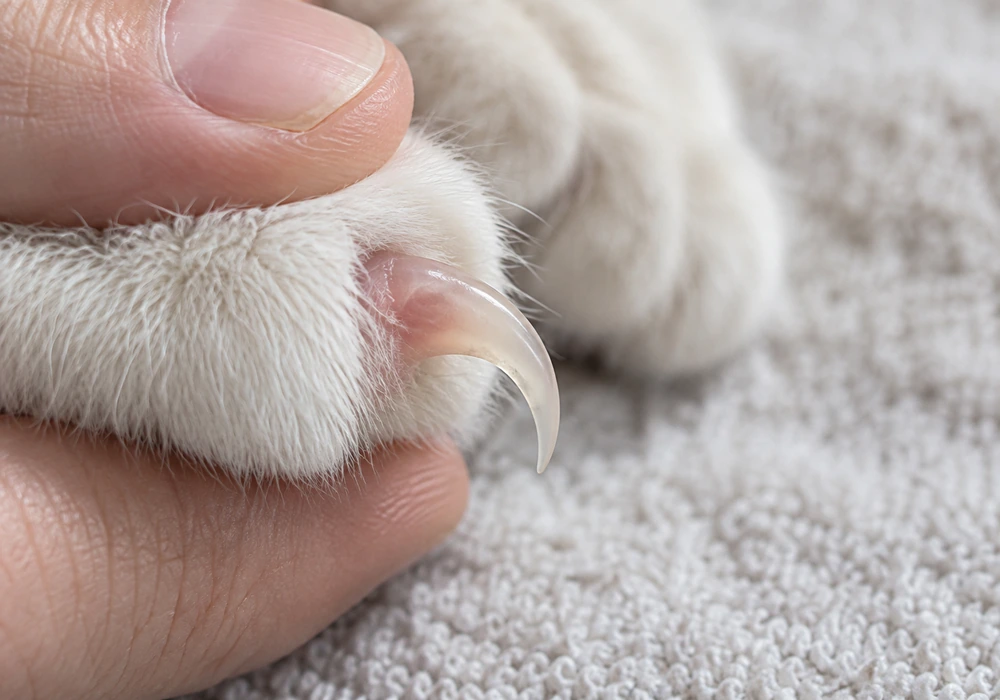
In a pale claw, the quick often appears pink inside the wider part near the base. The curved tip extends beyond it. Cut only within the clearly visible free end, leaving space between the cut and the quick.
PDSA recommends leaving a couple of millimeters of clearance. That is the distance from the quick, not an instruction to remove two millimeters from every claw. The amount you can safely remove varies.
If the claw is dark, unusually thick, or difficult to see, do not guess or cut farther back. A light may improve visibility, but it cannot guarantee a safe cutting point. Stop and ask for a demonstration or professional trim.
4. Make one controlled cut
Position the clippers around the small tip you have selected, keeping the cutting line visible. VCA’s trimming guide advises applying blade pressure from the top and bottom of the claw rather than squeezing its sides, to reduce splintering.
Close the blades for a small cut. If your cat moves, your view is lost, or the tool crushes or splits the claw, stop. Reassess before removing anything more; do not make a larger cut simply to finish faster.
5. Release, check, and reward
Let go of the paw, check the tip for bleeding or a rough edge, and reward your cat. Continue only if another claw needs attention and your cat remains comfortable. Healthy claws can be trimmed across several short sessions.
Note which claws you finished, including any dewclaws. Check the remaining paws later rather than shortening every claw to match or accidentally cutting the same one twice.
What If You Accidentally Cut the Quick?
If cat nail trimming causes bleeding, stop the session. If you can handle the paw safely, apply gentle, steady pressure with clean gauze. A pet styptic powder used according to its label can help stop a small nail-tip bleed; a little cornstarch is an alternative. Keep powders away from the eyes and mouth.
Contact your veterinarian if bleeding continues after several minutes of pressure, is substantial, starts again, or you cannot safely examine the paw. Do not keep clipping the other claws once the bleeding stops.
A torn or partly detached claw needs a different approach from a small quick nick. As VCA explains in its guide to broken nails in cats, exposed living tissue may need professional treatment, pain relief, and protection from infection. Do not pull off an attached fragment or cut above a deep break yourself.
Avoid tight home bandages and do not give human painkillers. A painful, infected, or embedded claw should be assessed by a veterinarian; a routine grooming appointment is not a substitute.
How Often Is Cat Nail Trimming Needed?
VCA gives a general interval of two to four weeks for many indoor cats, but the right timing depends on claw growth, wear, activity, and health. Some cats need less frequent clipping, and the front and back claws may not need attention at the same time. Ask your veterinarian what is appropriate for a cat with outdoor access, where claws also help with climbing and escape.
A weekly paw check, if comfortably tolerated, is a useful reminder to look for overgrowth or damage. It is not a weekly cutting requirement. Senior cats and cats with reduced mobility may need closer monitoring and more supportive positioning.
Nail care is one part of grooming your cat at home. Introduce brushing and other care tasks separately if combined handling makes a session too demanding.
Continue providing suitable scratching surfaces. Trimming can reduce snagging and damage, but it does not remove the normal need to scratch. A cat that ignores its post usually needs a different surface rather than shorter claws; getting a cat to use a scratching post covers what tends to work. Trimming is also not declawing, which removes the end bone of an affected toe.
After cat nail trimming: Remove clippings, clean the trimmer as its manufacturer directs, dry it thoroughly, and store it closed. Replace a tool that becomes dull, rusty, loose, or unreliable. If a claw infection is suspected, ask your veterinarian how to clean the equipment before using it on another cat.
This guide reflects everyday experience living with cats and does not replace veterinary advice about a particular animal. A claw that is torn, embedded in the pad, bleeding heavily or repeatedly, or a paw that stays swollen, painful, or lame needs a veterinary examination rather than another trim.