
A brush can glide over the surface while leaving tangles underneath. When grooming cats, start by checking the skin and coat, choose a suitable tool, and work gently in the direction the fur grows. Keep sessions short and stop when your cat needs a break.
Brushing removes loose hair and helps prevent tangles. It also gives you a chance to spot changes in the skin or coat that might otherwise go unnoticed. This guide explains how to brush and comb your cat, then covers when bathing, nail care, and other tasks are needed.
Tools for Grooming Cats at Home
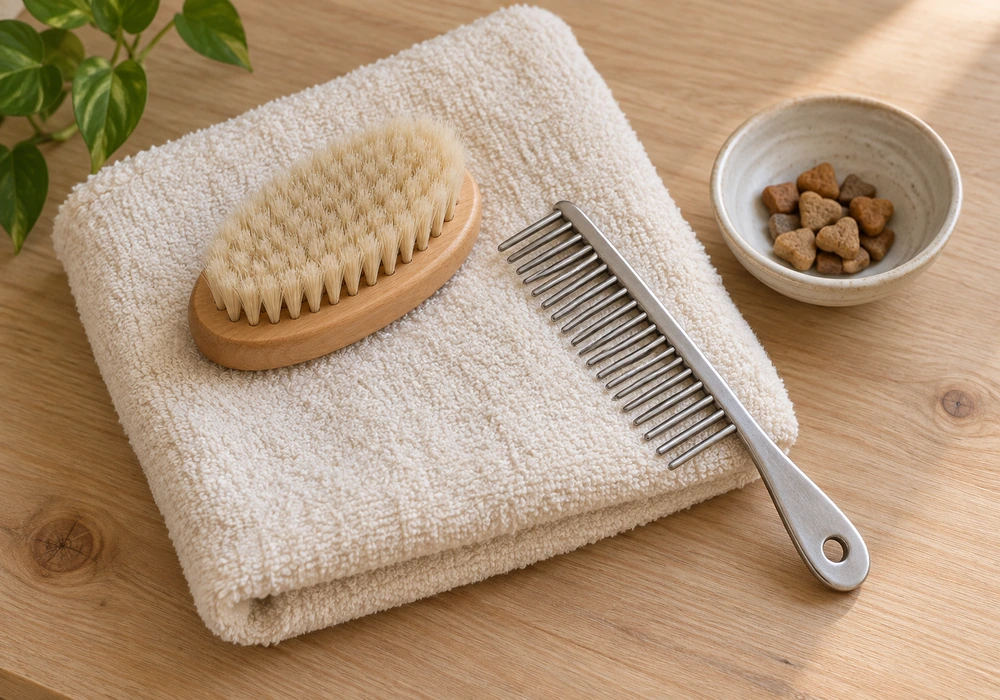
Start with a towel or nonslip mat, a few small cat treats, and a tool suited to your cat’s fur. You do not need a complete grooming kit to begin.
- For short fur: a soft bristle brush or flexible rubber grooming mitt can collect loose hair. Choose the texture your cat accepts comfortably.
- For long or thick fur: use a metal comb with smooth, rounded teeth long enough to reach through the fur. A suitable brush can help separate the hair, but brushing only the surface may leave tangles underneath.
- For every tool: check for rough edges, bent teeth, loose pins, or damaged bristles. Use light pressure and stop if the tool scratches the skin or pulls at the fur.
A fine-toothed flea comb has a different purpose from a wide-toothed grooming comb. It can help you inspect for fleas and debris, but it does not replace a veterinarian-recommended parasite treatment.
Grooming Cats in Six Gentle Steps
These steps cover brushing and combing. Introduce nail trimming, toothbrushing, and bathing separately so your cat does not have to cope with several unfamiliar procedures at once.
1. Choose a Comfortable Place and Time
Pick a quiet, familiar spot when your cat is awake, relaxed, and willing to interact. A low, stable surface with a nonslip towel works well. Have the tool and rewards within reach, and leave room for your cat to walk away.
Let your cat sit, stand, or lie in a comfortable position. Avoid stretching the legs or rolling your cat onto its back to reach the belly. An older cat may need extra support, especially if bending or turning is uncomfortable.
2. Check the Fur and Skin Before Brushing
Use your fingers to gently part the fur where your cat accepts touch. Look for loose debris, small knots, tightly tangled patches, redness, sores, or unusual tenderness. Check beneath thick fur rather than judging only how smooth it looks on top.
Do not brush across inflamed or injured skin. If your cat suddenly reacts to an area that was previously comfortable to touch, stop and arrange a veterinary check. A different brush will not resolve underlying pain.
3. Introduce the Brush Without Restraining Your Cat
When grooming cats that are unfamiliar with a brush, introduce the tool before trying to brush the coat. Hold it nearby and let your cat sniff it if interested. Reward calm investigation. Next, try one light stroke on an area your cat normally enjoys having petted, such as the shoulder or upper back. Lift the tool away and offer another reward.
Repeat only while your cat stays comfortable. If the tool itself causes your cat to hide or move away, put it down and return to an easier step later, such as letting your cat see the brush from a comfortable distance. Cats Protection’s grooming guidance recommends gradual practice with as little restraint as possible.
4. Brush Gently in the Direction the Fur Grows
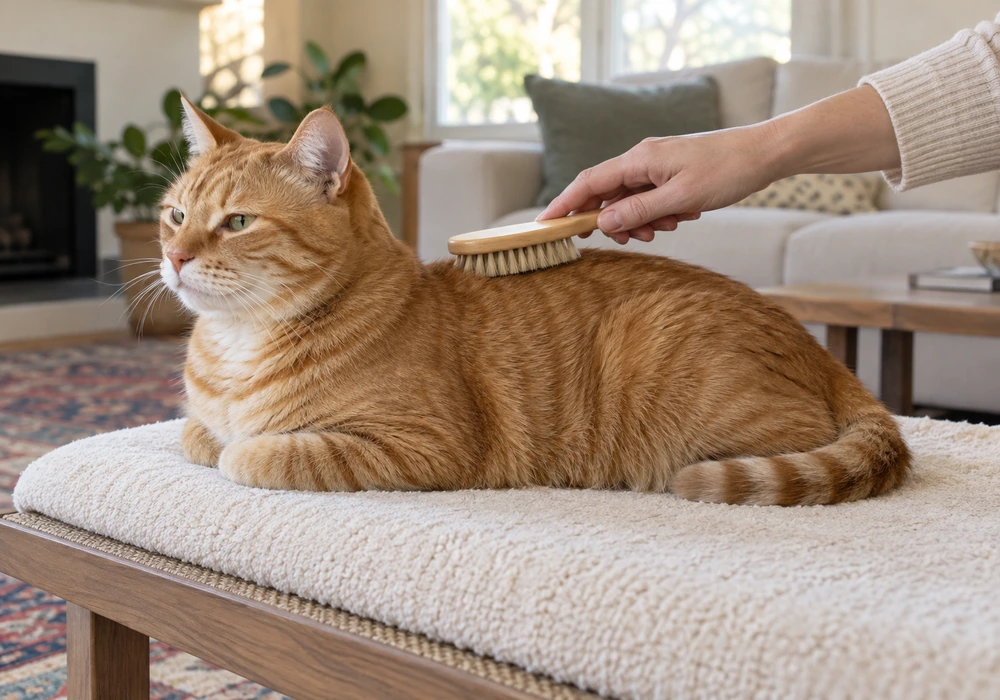
Use short, light strokes that follow the natural direction of the hair. Across the back, this generally means moving from the shoulders toward the tail. Work gradually along the sides, following the fur’s direction there. Keep the brush away from the eyes and avoid repeatedly brushing the same spot.
For a short-haired cat, a few gentle passes may be enough for one session. Stop periodically to clear the brush and check your cat’s response. More strokes and firmer pressure do not necessarily produce a better result.
5. Comb Small Sections of Longer Fur
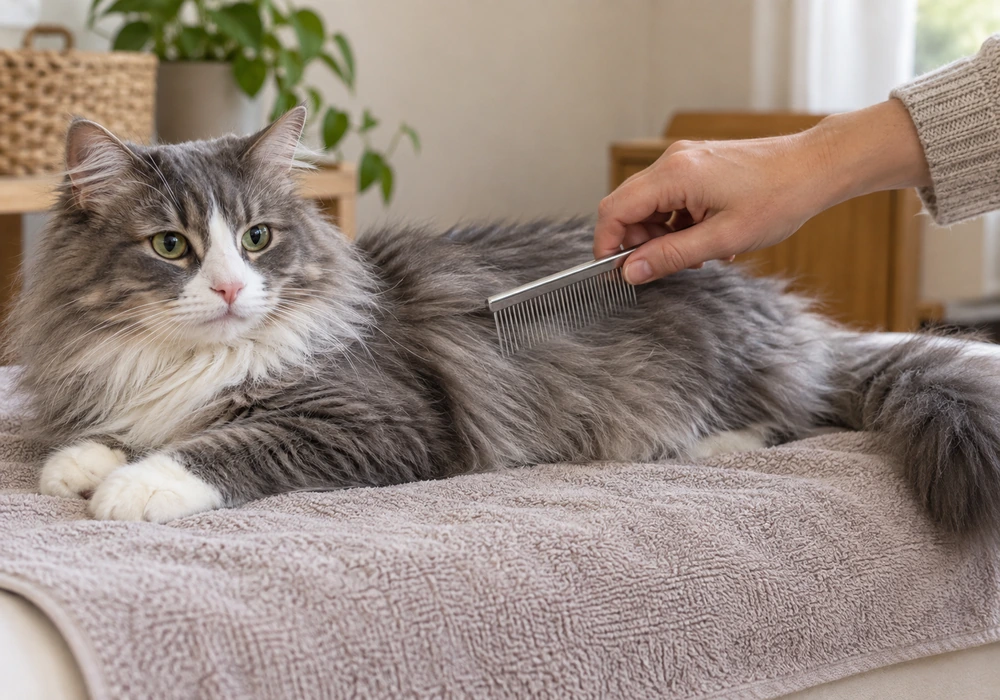
When grooming cats with long coats, work through small sections with a suitable comb. The teeth should move through the fur without scraping the skin. Pay attention to places where hair rubs together: behind the ears, under the front legs, and around the hind legs.
Check the belly only if your cat accepts it comfortably. Do not force access to a sensitive area. If the comb catches, stop and gently free it without tugging, then examine the tangle before continuing. A loose tangle and a tight mat need different handling, as explained below.
6. Finish Before Your Cat Becomes Upset
When grooming cats, pause if you notice new tail swishing, skin twitching, ears turning back, a tense body, or repeated turning toward the brush. Hissing, growling, biting, or attempts to escape mean the session has already become too difficult. Read posture and movement in context rather than judging one signal alone. Nails are handled in a separate session; the steps are in trimming a cat’s nails.
Set the tool aside and let your cat leave. Offer a reward if wanted, then note any areas that still need attention. For a cat learning to accept grooming, one or two gentle strokes may be enough at first. Several brief sessions are more useful than holding a cat down to finish the entire body.
If necessary grooming cannot be completed comfortably: ask your veterinarian or an experienced cat groomer for a plan. Do not grab the loose skin at the back of the neck (scruffing), restrain your cat tightly, or use clips to immobilize your cat.
What to Do When You Find a Tangle or Mat
A loose tangle is a small knot that may separate with gentle finger work and light combing. A mat is a compact clump of tangled fur, often close to the skin. Pulling on it can hurt, even when the skin underneath is not visible.
Try separating only a small, loose tangle that comes apart without tugging. Stop if the fur stays tightly packed, the skin moves with it, or your cat reacts. Repeatedly brushing over the same knot can make the area sore.
Never cut out a mat with scissors. Skin can be pulled into the tangled fur and accidentally cut. Tight, extensive, or painful mats need professional help; clipping also requires skill. VCA’s coat-care guidance recommends professional care for severe matting and warns against scissors.
Do not bathe a matted cat as a first attempt to loosen the fur; washing can make tangles harder to remove. A groomer can help with suitable coat care, while pain, sores, or other signs of illness need a veterinarian.
How Often Should You Groom Your Cat?
The right schedule for grooming cats depends on the condition of the fur. Hair length matters, but so do thickness, shedding, mobility, and how well your cat grooms itself. Checking the fur each day does not always mean completing a long brushing session.
| Your cat’s needs | A practical starting routine | When to adjust |
|---|---|---|
| Healthy short fur | Try a brief weekly brush if it helps remove loose hair; some cats need less assistance. | Increase gentle care during shedding if needed. |
| Long, thick, or easily tangled fur | Check daily and comb often enough to prevent knots. Many cats with long fur need daily combing. | New tangles mean the frequency, tool, or technique needs review. |
| An older cat or a cat with limited mobility | Provide comfortable support and help with areas the cat cannot reach. | New matting or reduced self-grooming calls for a veterinary check. |
| A kitten learning to accept grooming | Practice brief, rewarded contact with the tool and gradually add strokes. | Increase only while the kitten remains comfortable. |
If knots return despite regular care, get advice on the technique and underlying cause instead of simply brushing harder. A missed session is not a reason to force a longer one the next day.
Does Your Cat Need a Bath?
Bathing is a separate decision when grooming cats. Most healthy cats with fur do not need regular baths. A bath may be needed when dirt cannot be removed with a damp cloth or when your veterinarian prescribes a skin treatment. Hairless cats need an individual skin-care routine.
If you are caring for a kitten, read our kitten wash routine for advice on age, cleaning small areas, and keeping your kitten warm.
If a bath is needed and your cat tolerates it, use this sequence:
- Prepare the area. Set out towels, a nonslip mat, and shampoo formulated for cats. Gently remove loose tangles beforehand and seek professional help for tightly matted fur.
- Wet the body gently. Use shallow, lukewarm water and keep water away from the face and ears.
- Follow the shampoo directions. Mix the shampoo with water only if instructed. For medicated shampoo, follow the prescribed contact time—the time it must stay on the skin before rinsing. Do not substitute human shampoo.
- Rinse thoroughly and towel-dry. Keep your cat in a warm room while the fur dries. Stop if handling becomes unsafe or your cat becomes distressed.
If your cat uses a flea treatment applied to the skin, check its bathing instructions. For a potentially toxic substance on the fur, contact a veterinarian immediately and keep the packaging available. Prevent further licking if you can do so safely without delaying care, and follow the instructions for that substance. Do not apply a household cleaner or solvent.
Nails, Ears, Eyes, and Teeth: Separate Care Tasks
These checks can fit around the brushing routine, but cleaning or trimming should have a clear purpose. Introduce each type of handling separately.
Check the Claws Before Trimming
Look for overgrown tips, damage, or claws curling toward the paw pads, including the dewclaws on the inner side of the front paws. When a trim is needed, trim only the sharp tip, staying well clear of the quick—the tissue inside the claw that contains nerves and blood vessels. Get a demonstration if you cannot identify a safe cutting point.
An embedded or torn claw needs veterinary care. The full sequence is set out under cat nail trimming.
Inspect the Ears Without Cleaning Unnecessarily
Healthy ears usually do not need regular cleaning. Redness, an unusual odor, discharge, or pain should prompt veterinary advice. If cleaning is recommended, use the specified cat ear cleaner and demonstrated technique. Do not put cotton swabs into the ear canal or use alcohol or hydrogen peroxide.
Wipe Around the Eyes Gently
For a little dried discharge around an otherwise comfortable eye, use a clean, damp, soft pad on the surrounding fur. Use a separate pad for each eye and avoid rubbing the eyeball. Seek prompt veterinary attention for squinting, redness, cloudiness, or new or increased discharge.
Build a Daily Toothbrushing Habit
Start by helping your cat accept gentle lip handling. Gradually introduce a small, soft toothbrush and toothpaste made for cats. Lift the lip and brush a few outer tooth surfaces along the gumline, building up coverage over time without forcing the mouth open.
VCA’s feline toothbrushing guidance recommends daily brushing. Do not use human toothpaste or baking soda. If your cat has mouth pain, inflamed gums, or difficulty eating, arrange a veterinary assessment before continuing. Keep a separate toothbrush for each cat and replace it when worn.
Routine brushing is not the same as tooth shortening; cat teeth trimming explains the risks of home clipping and why a problem tooth needs veterinary assessment.
When to Get Help With Grooming Cats
Arrange a veterinary appointment for a sudden drop in self-grooming, persistent licking that causes bald patches, sore skin, new tenderness, or matting that appears unexpectedly. In an older cat, these changes can reflect pain or illness rather than age alone.
Removing loose hair may reduce the amount swallowed during licking, but it does not guarantee that hairballs or vomiting will stop. Repeated vomiting, especially with appetite or energy changes, needs veterinary assessment.
For an otherwise healthy cat with a difficult coat, an experienced cat groomer can demonstrate tools and technique. Explain where your cat dislikes being touched, any known medical problems, and what happened during previous sessions.
After Each Session
After each session, remove hair from the tools, clean them according to the manufacturer’s directions, and let them dry before storage. Check for damaged comb teeth or brush bristles before the next use. Keep a brief note of any knots, skin changes, or areas your cat found uncomfortable so you can adjust the routine or describe the problem clearly.
This article provides general guidance on routine grooming and does not replace veterinary advice tailored to your cat. The at-home steps are intended for cats that are comfortable being handled; they are not a treatment for painful mats, skin disease, or dental problems. Seek veterinary assessment for sore or broken skin, a sudden drop in self-grooming, persistent licking that causes bald patches, or unexplained matting. Contact a veterinarian promptly if your cat stops eating or seems weak.