
Do not cut, clip, or file your cat’s teeth at home. Healthy, correctly positioned teeth do not need routine shortening. However, a tooth that is damaged or injures the mouth because of its position may need veterinary treatment. That is different from routine grooming.
Cats’ teeth do not grow continuously and should not be clipped like claws. Cutting or filing a tooth can expose sensitive tissue, cause infection, and leave permanent damage. A veterinarian may recommend shortening a tooth to treat a diagnosed problem. This requires general anesthesia, pain control, and appropriate protection or treatment of exposed tissues, followed by a sealed restoration when needed.
Claw care is a separate task. Overgrown claw tips may need trimming, while healthy teeth do not need routine shortening. Our guide to cat nail trimming explains how to care for the claws.
Why You Should Not Trim Your Cat’s Teeth at Home
A healthy tooth contains living tissue. Enamel is the hard outer covering. Beneath it is dentin, which surrounds the pulp, the tissue containing nerves and blood vessels. Exposed dentin can be painful even when the pulp itself has not been exposed.
Cats have relatively thin enamel. Removing what looks like a tiny amount can expose dentin, and a deeper cut can open the pulp to bacteria. Clippers can also fracture the tooth beyond the area you intended to remove.
- Pain and sensitivity: exposed dentin can make pressure and temperature changes uncomfortable without visible bleeding.
- Infection: bacteria entering the pulp can cause disease inside the tooth and around its root.
- Permanent loss of tooth structure: a missing piece of an adult tooth’s crown will not regrow to restore its original shape.
You cannot judge a safe filing depth by looking at the tip. Fractured cat teeth need veterinary assessment, including small chips that may not look serious. A cat may continue eating despite dental pain.
If cat teeth trimming has already been attempted at home: stop and contact your veterinarian promptly. Explain which tooth was altered, when it happened, and what tool was used. Do not keep reshaping it, press on it to test for pain, or apply glue or a homemade filling.
Shortening Teeth Does Not Solve Biting
Shortening teeth does not address why a cat bites or guarantee that a bite cannot cause injury. Stop an uncomfortable interaction and give your cat space. New biting, especially when the face is touched, needs assessment for pain. Recognizing signs of fear in cats can also help you notice when handling has become unwelcome.
What If a Tooth Looks Too Long, Crooked, or Broken?
A cat’s canine teeth, often called fangs, are naturally long and pointed. Their appearance alone does not establish a need for treatment. The veterinarian checks whether the teeth are healthy, the mouth closes comfortably, and the bite causes injury to the lips, cheeks, gums, or palate—the roof of the mouth.
A newly noticed change deserves attention, but a longstanding problem can also be painful. Watch for a broken tip, discoloration, drooling, dropped food, chewing on one side, or pulling away when the face is touched.
| What you notice | What to do |
|---|---|
| A sharp or long-looking fang with no recent change or obvious discomfort | Ask your veterinarian to check its position and health. Do not shorten it for appearance alone. |
| A new chip, color change, loose tooth, or tooth pressing into soft tissue | Contact the clinic promptly, even if your cat still eats. Describe when you first noticed the change. |
| Facial swelling, inability to eat or drink, or marked weakness | Seek urgent veterinary advice and assessment. |
| Difficulty breathing, uncontrolled bleeding, or a major facial injury | Go to an emergency veterinary service immediately. |
Do not force the mouth open for a closer look. A photograph may help the clinic if you can take it without distressing your cat, but it cannot show the roots or establish how deep an injury goes.
When a Veterinarian May Recommend Tooth Shortening
“Trimming” is not a precise dental diagnosis or procedure name. Crown reduction means deliberately shortening the crown, the visible part of a tooth. A tooth can be structurally intact yet injure the lip, gum, or palate because of its position. In selected cases, a veterinarian with advanced dental training may recommend crown reduction to relieve that injury. This is treatment for a diagnosed problem, not routine grooming. It requires a dental assessment, general anesthesia, pain control, and appropriate treatment and protection of the remaining tooth.
When a Tooth Injures the Mouth
Malocclusion means that the teeth or jaws do not meet in their usual alignment. Some unusual positions cause no injury. Others make a tooth press into the lip, gum, cheek, or palate.
Depending on the diagnosis, treatment may include extraction, specialist care to reposition a tooth, or crown reduction with appropriate pulp treatment and a sealed restoration. The aim is a comfortable, functional bite. Teeth that are healthy and do not cause injury should not be shortened for cosmetic reasons. VCA’s guide to treating misaligned teeth in cats explains these treatment options.
A Tooth Is Fractured
A broken tooth needs assessment of the fracture, pulp, roots, and surrounding bone. Smoothing a sharp edge alone will not treat exposed or infected pulp. Depending on the findings, the veterinarian may recommend:
- Vital pulp therapy: treatment intended to preserve living pulp in a suitable tooth, followed by a protective dressing and sealed restoration.
- Root canal treatment: removal of damaged or infected pulp, followed by cleaning, filling, and sealing the space inside the tooth.
- Extraction: removal of the affected tooth when that is the appropriate treatment for pain and disease.
The time since injury, stage of tooth development, contamination, remaining tooth structure, and root health affect the choice. An apparently small defect may still need treatment. Monitoring is appropriate only after the veterinarian has assessed the tooth.
Shortening alone is not a complete treatment plan. When a procedure exposes dentin or pulp, the veterinarian must address those tissues appropriately. Treated teeth also need follow-up; a smooth surface and comfortable eating do not confirm that the tooth is healthy internally.
Dental Cleaning Does Not Shorten Healthy Teeth
Professional scaling removes plaque and tartar from tooth surfaces, including below the gumline. Polishing smooths the cleaned surfaces. These procedures do not aim to shorten healthy fangs.
If a clinic describes the proposed work as cat teeth trimming, ask for the exact diagnosis and procedure. Cleaning, crown reduction, root canal treatment, and extraction address different problems.
What to Expect at the Veterinary Dental Visit
The first visit usually includes a discussion of symptoms and an awake examination that your cat can tolerate. Bring details of any injury, changes in eating, current medications, previous dental work, and past problems with anesthesia.
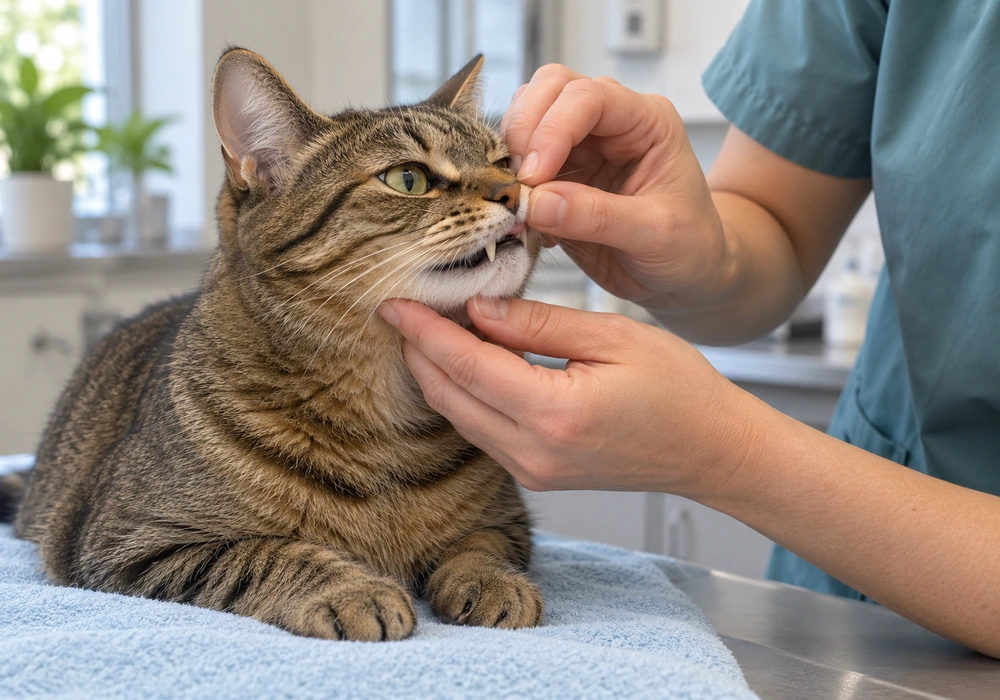
A complete dental assessment requires an examination under general anesthesia and dental X-rays to evaluate the roots and supporting bone. The 2025 FelineVMA oral health guidelines address assessment, anesthesia, pain control, treatment, and recovery as connected parts of feline dental care.
For dental procedures, a breathing tube helps protect the airway, and the team monitors anesthesia and recovery. Local dental nerve blocks help control pain. An awake cleaning or sedation alone does not provide an equivalent examination and treatment.
The anesthesia plan should reflect your cat’s examination, medical history, and appropriate test results. Older cats may need additional precautions, but age alone does not determine whether treatment is suitable.
Questions to Ask Before Agreeing to Treatment
- Which tooth is affected, and what do the examination and X-rays show?
- What is the exact procedure, and how will it relieve the problem?
- Can this tooth be preserved, and what are the alternatives?
- Would a veterinary dental specialist be helpful?
- What might change the plan during the procedure, and how will you contact me?
- Does the estimate include imaging, anesthesia, pain relief, restoration work, and follow-up?
Ask the clinic to explain any restrictions and the planned recheck schedule before your cat goes home. The instructions should match the procedure performed and your cat’s health.
Caring for Your Cat After Dental Treatment
Ask for written instructions about food texture, medication, mouth handling, and rechecks. Recovery after a filling or root canal treatment may differ from recovery after an extraction, so there is no single feeding or brushing schedule for every cat.

- Track eating and drinking. Follow the clinic’s feeding plan and contact the team if your cat refuses food, eats much less than expected, or appears increasingly uncomfortable.
- Give only medication prescribed for your cat. Do not substitute human pain relievers. Acetaminophen can be fatal to cats.
- Protect the treated area. Follow restrictions on chewing and brushing. Report a damaged or missing filling or other dental restoration.
- Keep recheck appointments. Comfortable eating does not prove that the tissues inside or around a treated tooth are healthy.
A preserved tooth may need follow-up dental X-rays. Ask when these should be taken and what changes warrant an earlier visit. Antibiotics, when prescribed, do not replace treatment of a damaged, infected tooth.
Resume Home Dental Care When Your Veterinarian Advises
Home dental care focuses on controlling plaque, not changing tooth length. Cat teeth trimming is not part of a normal grooming routine. Once your veterinarian says brushing is safe, use a small, soft toothbrush and toothpaste made for cats. Introduce handling gradually, aim for daily brushing, and stop if it causes discomfort.
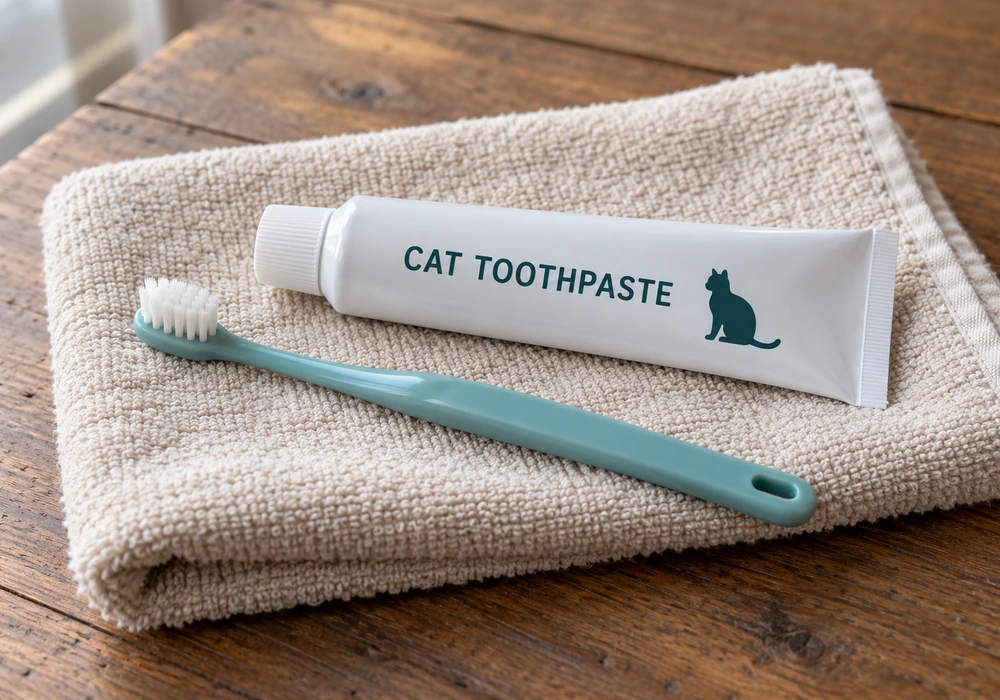
Keep sessions brief and comfortable, and build up gradually rather than restraining your cat to finish. The same patient approach helps when grooming cats.
Do not brush a painful or recently treated area until the veterinarian says it is appropriate. A new reluctance to accept mouth handling should prompt a check for pain.
Products on the Veterinary Oral Health Council’s accepted list for cats have evidence for the plaque or tartar claim listed. They may support a home-care plan, but they cannot repair a fracture or treat an infected root.
Ordinary kibble is not automatically a dental-care product. Choose a diet that is nutritionally appropriate for your cat’s age and health. Our guide to prepared cat food for kittens explains how to check whether a kitten food is complete for growth.
More Questions About Your Cat’s Teeth
Do Long-Looking Fangs Need to Be Trimmed?
Not simply because they look long. A cat’s canine teeth are naturally pointed, and healthy, correctly positioned adult teeth do not need routine shortening. A tooth that changes position, prevents comfortable mouth closure, or injures the lip or palate needs a veterinary examination. The veterinarian will decide whether treatment is needed and which option is appropriate.
Is Filing a Tooth Safer Than Clipping It?
Neither is appropriate at home. Filing removes tooth structure and can expose dentin or, with deeper damage, the pulp. A tooth that seems unusually sharp or catches the lip needs an examination of the tooth and bite, not home reshaping.
My Kitten Has Two Fangs Side by Side. What Should I Do?
One may be a baby tooth still in place after the permanent tooth has erupted. Arrange a veterinary examination promptly. A retained baby tooth can crowd or displace the adult tooth and may need extraction. Do not clip or pull either tooth yourself.
Is It Normal for a Cat to Lose a Tooth?
Kittens normally lose baby teeth as their permanent teeth come in. Losing an adult tooth or finding a broken tooth fragment needs veterinary assessment. A visible gap does not show whether roots remain below the gumline, and a missing permanent tooth will not be replaced naturally.
Can Shortening My Cat’s Teeth Prevent Biting Injuries?
Shortening teeth does not address why a cat bites and cannot guarantee that a bite will cause no injury. Do not attempt it at home. New or persistent biting needs assessment for pain and other causes. For a kitten that bites during play, keep hands and feet out of games, offer suitable toys, and set aside regular play sessions.
Does Every Broken Tooth Need to Be Removed?
No. Some damaged teeth can be preserved, while others need extraction. The decision depends on the fracture, pulp health, remaining tooth structure, and dental X-rays. A veterinarian may recommend repair or treatment inside the tooth rather than removal; appearance alone cannot determine the right option.
Does Normal Eating Mean My Cat’s Teeth Are Healthy?
No. Cats can continue eating despite oral pain. A chipped tooth, drooling, dropped food, facial swelling, or a change in chewing still needs veterinary attention. Do not wait for your cat to stop eating before arranging an examination.
Can a Senior Cat Have Dental Treatment Under Anesthesia?
Many senior cats can, but the plan must be based on the individual cat’s health. Your veterinarian will review the examination, medical history, medications, and appropriate test results before discussing benefits and risks. Age alone is not a reason to rule out needed dental treatment.
Can Dental Treats Replace Brushing?
Some cat dental treats help reduce plaque or tartar, but they do not provide the same cleaning action as brushing. Choose a product with evidence for its stated benefit, and ask your veterinarian about alternatives if brushing is not possible. Follow the product’s directions and include its calories when deciding how many treats a cat can have.
What Should My Cat Eat After a Tooth Extraction?
Soft food is commonly recommended while extraction sites heal. Use the food texture and recovery period specified by the treating clinic rather than switching back to dry food on a fixed schedule. Contact the clinic if your cat refuses food, eats much less than expected, or has difficulty eating.
For an everyday checklist covering meals, litter care, grooming, and preventive veterinary visits, see the basic cat care routine.
More information on nutrition, preventive care, and common health concerns is available in Cat Health.
This article provides general information about feline dental care and does not replace a veterinary examination, diagnosis, or treatment plan. Home care does not include cutting, clipping, or filing teeth. Contact a veterinarian promptly for a broken or discolored tooth, persistent drooling, facial swelling, or difficulty eating or drinking. Difficulty breathing, uncontrolled bleeding, or a major facial injury requires emergency veterinary care.