
Large cat breeds · seven breeds by size and temperament
Large cat breeds offer very different kinds of companionship. A long, shaggy Maine Coon may join whatever you are doing, while a compact British Shorthair may prefer its own comfortable seat nearby. The best comparison starts with adult build and everyday behavior, then asks whether the coat, activity level and care requirements fit your home.
The seven breeds below are the Maine Coon, Ragdoll, Norwegian Forest Cat, Siberian, RagaMuffin, Turkish Van and British Shorthair. They are large and medium-to-large domestic breeds, not a scientifically ranked list of the world’s seven biggest cats.
Start your shortlist: Ragdolls, RagaMuffins and British Shorthairs are often described as companions for quieter shared time. Turkish Vans and Siberians have more active reputations. Maine Coons and Norwegian Forest Cats combine social interest with play. These descriptions guide questions about an individual cat; they do not promise a personality.
Compare These Large Cat Breeds by Adult Weight
Every figure below is a published registry description, not a measured population average and not an ideal weight to feed toward. Females and males are listed separately, because one combined range hides differences that matter.
| Breed and weight source | Adult female | Adult male |
|---|---|---|
| Maine Coon TICA, detailed profile |
9–13 lb 4.1–5.9 kg |
13–18 lb 5.9–8.2 kg |
| Ragdoll TICA |
Approximately 10–15 lb 4.5–6.8 kg |
15–20 lb 6.8–9.1 kg |
| Norwegian Forest Cat TICA |
8–12 lb 3.6–5.4 kg |
12–18 lb 5.4–8.2 kg |
| Siberian CFA |
8–12 lb 3.6–5.4 kg |
12–18 lb 5.4–8.2 kg |
| RagaMuffin CFA, upper examples |
Up to about 15 lb 6.8 kg |
Up to about 20 lb 9.1 kg |
| Turkish Van TICA |
7–12 lb 3.2–5.4 kg |
10–20 lb 4.5–9.1 kg |
| British Shorthair TICA |
8–11 lb 3.6–5.0 kg |
10–16 lb 4.5–7.3 kg |
Why the Weight Ranges Need Context
The TICA Maine Coon profile contradicts itself: the summary gives females at 12–15 lb and males at 18–22 lb, while the detailed breed text gives the lower bands used here. So merging both sections into one wider range would hide that disagreement.
TICA’s wording for the female Ragdoll is approximate, quoted as “up to 10–15 pounds.” RagaMuffin figures, meanwhile, are upper examples rather than complete ranges. Kilogram values are converted from pounds and rounded to one decimal place.
And published weights for large cat breeds overlap. Several male descriptions reach about 20 lb, yet these data cannot crown one universal winner. A small female from a large breed may weigh less than a large non-pedigree adult, and a long body is not the same as a compact, broad one. Because the ranges overlap, the sharper question is whether a cat stays on its own curve, and the age-by-age weight chart shows those bands from birth onward.
1. Maine Coon: Long-Framed, Social, and Playful
The Maine Coon’s rectangular body, substantial bone, broad chest and long tail create an especially lengthy outline. Its shaggy coat is uneven in length, and texture varies enough to change the grooming workload.
Many enjoy following household activity and joining games without needing constant lap time. That makes the breed worth considering if you like an involved companion and can offer regular interaction. Ask how a particular cat seeks contact instead of relying on the “gentle giant” nickname.
The practical tradeoff: a long frame needs usable turning space in a carrier and a litter box. Our guide to Maine Coon cats explores the breed’s biology and health in more detail.
2. Ragdoll: Substantial Size With a Relaxed Reputation
Blue eyes, darker points, a silky semi-long coat and a substantial body distinguish the Ragdoll. Many are described as affectionate and relatively relaxed, which may appeal to someone seeking gentle shared time.
A quiet reputation does not guarantee that a cat enjoys being carried, though, or that it will go limp when lifted. Indeed, some prefer following you or resting nearby. Young cats can also be lively, and adults still need play and exploration.
The practical tradeoff: plan for comfortable grooming and full-body support during necessary lifting. The full profile of Ragdoll appearance and personality explains the breed’s coat patterns and individual preferences.
3. Norwegian Forest Cat: Social Interest With Independence
A strong, relatively long body, triangular head, full tail and layered coat give the Norwegian Forest Cat a rugged outline. The woolly undercoat can also become a substantial grooming task during seasonal shedding.
Among large cat breeds, this is an appealing description for someone who enjoys an observant, playful companion that also chooses its own resting place. Sociable does not have to mean constant physical contact.
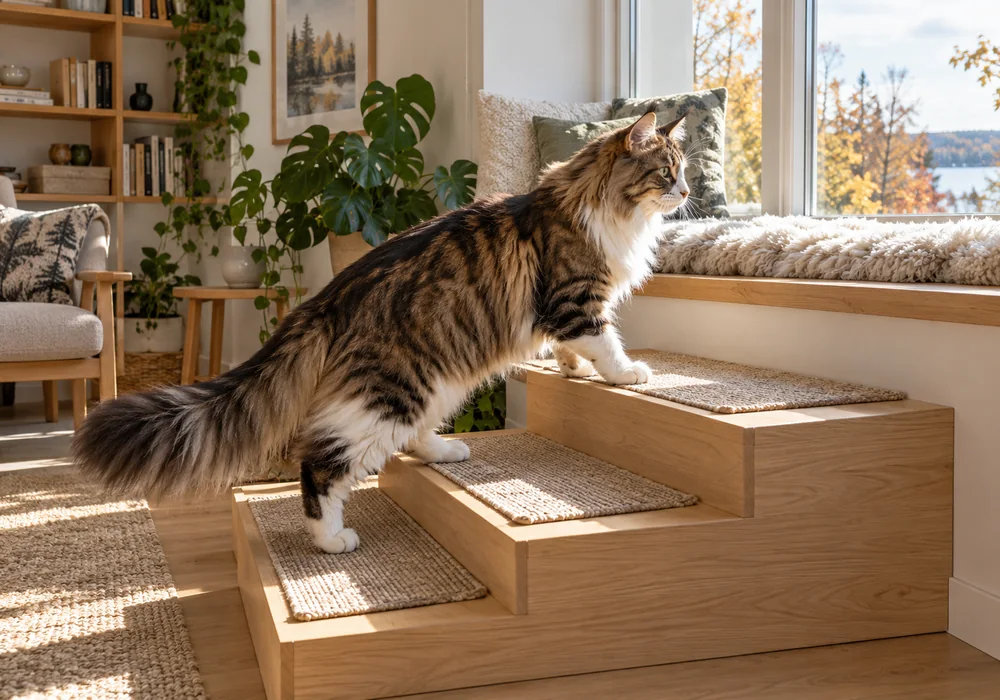
The practical tradeoff: provide broad, stable elevated resting areas with manageable routes up and down. A tall tower with cramped platforms is less useful than furniture the cat can comfortably occupy. A thick coat does not make unrestricted outdoor access safe.
4. Siberian: Powerful Build and Active Curiosity
The Siberian combines a rounded, muscular build with a dense seasonal coat. Registry descriptions emphasize curiosity, play and interaction. A household that enjoys regular games and safe exploration may find those tendencies appealing.
The practical tradeoff: allow time for both activity and undercoat care. Check the underside and hindquarters for tangles rather than judging the coat by its smooth outer surface.
Still, do not choose a Siberian on an allergy-safe promise. The American Academy of Allergy, Asthma & Immunology states that no cat breed is truly hypoallergenic. Allergen sources include skin and saliva, and hair length does not guarantee tolerance. Discuss significant cat allergy or asthma with an allergy specialist before acquiring a cat.
5. RagaMuffin: A Strong Interest in Close Company
The CFA RagaMuffin profile describes substantial bone, rounded features, a full silky coat and a people-oriented temperament. It is still a separate breed from the Ragdoll, despite the similar names.
A RagaMuffin may suit someone hoping for frequent interaction and close companionship. Confirm what that means for the individual cat: does it choose lap time, greet visitors, or prefer quiet contact with familiar people?
The practical tradeoff: a coat described as relatively tangle-resistant still needs checks and combing. Ask about the current routine and how the cat copes with ordinary absences. Yet affectionate does not mean maintenance-free, or comfortable with every household.
6. Turkish Van: Substantial, Agile, and Engaged
The Turkish Van has a powerful body and a seasonal semi-long coat. Its familiar coloring concentrates darker patches around the head and tail, although a van-pattern coat alone cannot prove breed identity.
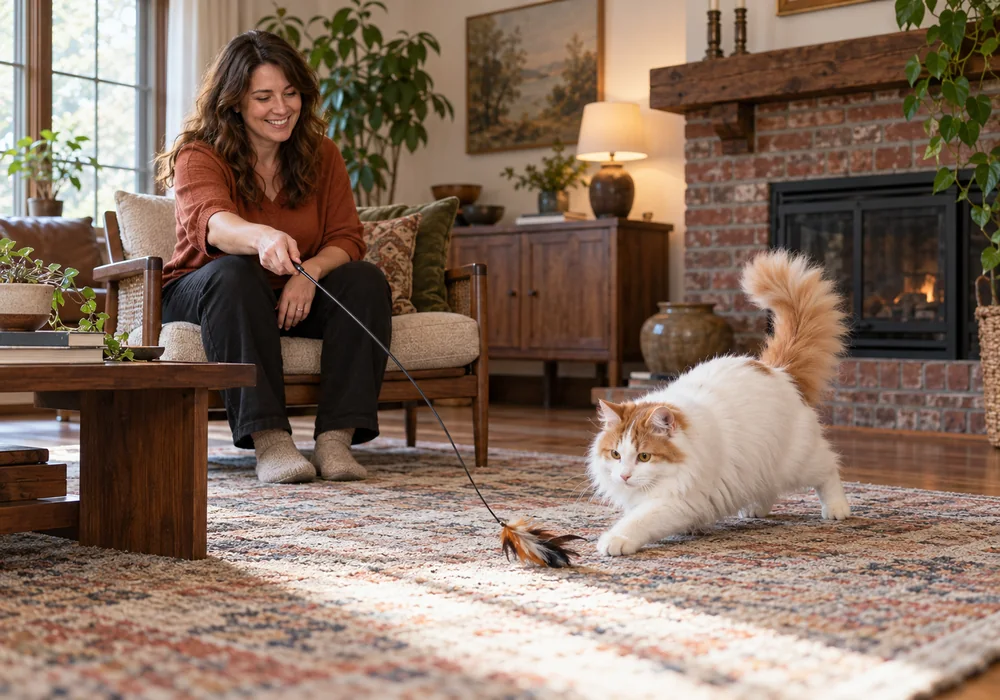
Registry descriptions emphasize active interaction and curiosity. A Turkish Van may enjoy games and settle close to you afterward while still disliking being picked up, and that distinction matters for anyone equating affection with prolonged holding.
The practical tradeoff: provide open play space and stable furniture that stays secure during a turn or a landing. Respect handling preferences. The breed’s reputation for interest in water is not a reason to force swimming or allow unattended access to deep water.
7. British Shorthair: Compact Build and Quiet Companionship
The British Shorthair belongs in this comparison through its broad chest, substantial musculature, rounded head and dense plush coat. It is generally medium to large, with a more compact outline than a long-bodied Maine Coon.
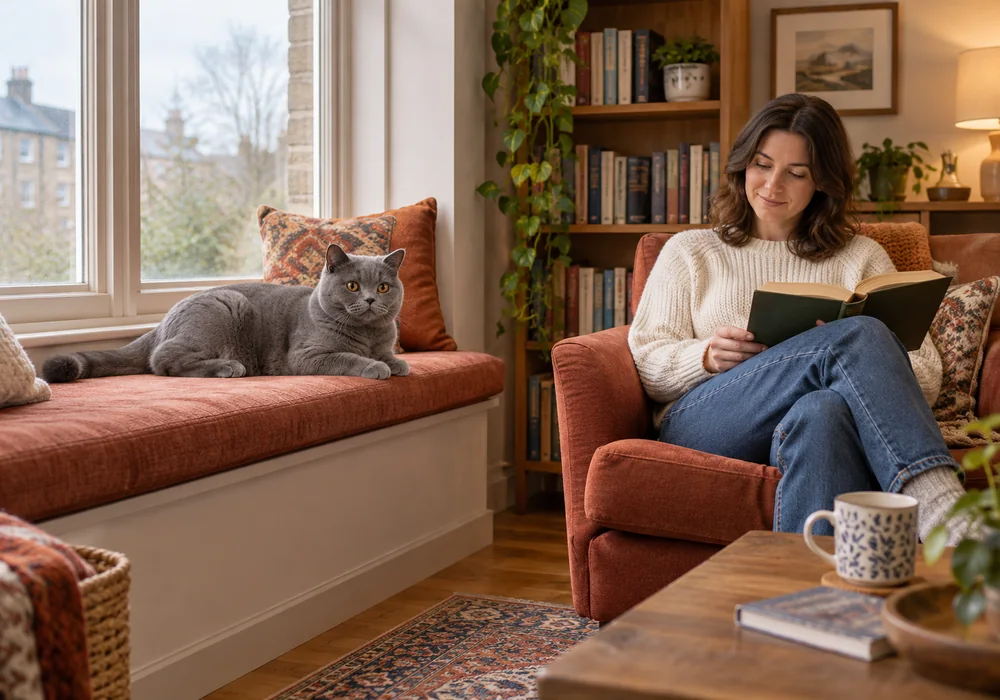
Often described as quiet and steady, it may enjoy sharing a room or sitting beside someone without seeking constant lap contact. That can suit a calmer routine, provided the individual still has play, choice and places to retreat.
The practical tradeoff: short hair usually makes coat care simpler than a dense long coat, but it still sheds. A rounded face is not a reason to maintain excess body fat, and a calm cat still needs opportunities to move.
Which Large Cat Breeds Fit Your Routine?
Use the descriptions to build a shortlist, then check your expectations against the cat’s ordinary behavior.
- For quieter company: consider meeting relaxed Ragdolls, RagaMuffins or British Shorthairs. Ask whether the cat seeks touch, rests nearby, or prefers brief interaction.
- For an engaged playmate: explore Turkish Vans and Siberians, as well as playful Maine Coons and Norwegian Forest Cats. Ask what games the individual enjoys and how it settles afterward.
- For a simpler coat routine: a British Shorthair usually offers less coat work than a dense longhaired cat. Compare the actual grooming schedule in the coat breakdown for longhaired breeds.
With children or resident cats, demonstrated experience matters more than a breed’s tolerant reputation. Arrange gentle supervised contact, gradual introductions, separate resources and a clear retreat. So no breed guarantees compatibility.
Make Room for Large Cat Breeds
A smaller home can work when the cat has usable, well-arranged resources. Instead, check the equipment against the actual body rather than against a “large cat” label.
Equipment measured against the cat
- Litter boxes: feline house-soiling guidelines recommend a rectangular box about 1.5 times the cat’s nose-to-tail-base length, which means roughly 30 inches for a 20-inch cat. That is a starting calculation, so check internal width, turning room and entrance height too.
- Carriers: confirm room to stand, turn and lie comfortably, along with ventilation and secure closures. Include the carrier’s own weight when checking whether you can lift it.
- Climbing and scratching equipment: look for broad platforms, stable supports, suitable load limits, sound fasteners and anchoring as directed. Provide easier routes when jumping becomes difficult.
These are fit checks, not breed-specific engineering specifications. Recheck furniture after assembly or a move, and replace damaged components.
Health Records to Request for Large Cat Breeds
Ask for identified reports with test names, dates, results and recommended follow-up. “Health tested” is too vague to establish what was actually checked.
Cardiac screening worth asking about
For Maine Coons and Ragdolls, discuss breed-relevant hypertrophic cardiomyopathy screening. HCM involves abnormal thickening of heart muscle, and Cornell’s cardiomyopathy guidance explains the role of heart ultrasound. A negative DNA result does not exclude all HCM, and a normal scan describes the examination day only. British Shorthairs also merit a discussion of family cardiac history.
Other inherited conditions to ask about
Useful records include Maine Coon hip screening and spinal muscular atrophy testing, plus Norwegian Forest Cat glycogen storage disease type IV testing. For those last two recessive conditions, a healthy-looking carrier can still transmit the variant, so have the veterinary team interpret the actual reports.
For every breed, review veterinary care, family illness, socialization and support after placement. Different levels of testing and research do not justify a reliable “healthiest breed” ranking.
Daily Care for Large Cat Breeds
Feed a complete diet appropriate to life stage and health, measure portions, and follow weight alongside fat and muscle condition. A long coat can hide weight gain or muscle loss. Several breeds fill out over years, but that does not mean feeding kitten food for four or five years.
Weight, coat and routine checks
Check coats frequently and adjust combing to shedding, tangles and comfort. Tight mats need professional help rather than scissors close to the skin. Maintain routine veterinary, dental and claw care, and investigate new reluctance to jump, groom or interact.
Breathing difficulty, collapse or sudden painful hind-leg weakness requires immediate veterinary attention. Still, a familiar quiet temperament should not explain away an abrupt change. The checklist for routine cat care basics covers the rest of the weekly rhythm.
Meet the Cat Before You Decide
What to ask, and what to watch
Ask the caregiver about normal play, grooming, visitors and recovery from household noise. Observe voluntary approaches and opportunities to leave, instead of testing tolerance through restraint. One brief meeting in an unfamiliar room may show stress rather than the usual personality.
An adult cat with an established history offers clearer information about size and daily behavior than a kitten’s pedigree alone, and a large non-pedigree adult may be equally suitable. Choose the companion whose needs and preferences you can accommodate over time.
This article draws on published registry descriptions and the veterinary sources linked above, not on a hands-on assessment of your cat. Breed ranges describe typical adults, and they cannot confirm a healthy weight for an individual, a diagnosis, or a safe activity plan. Ask a veterinarian before choosing a breed with a known cardiac or inherited condition in its line, and contact one promptly if a cat struggles to breathe, collapses, suddenly loses the use of its hind legs, stops eating, or shows a painful or swollen abdomen.