
Quick answer
After your cat’s first hairball, work through a short sequence instead of reaching for a product: let the episode finish, look at what came up, check breathing and behavior, then offer water and a small portion of the usual food. A healthy adult cat that settles down usually needs only that and a day of watching. Call your veterinarian if retching continues, vomiting repeats, or your cat stops eating. Breathing through an open mouth, or any visible effort to breathe, is a reason to go now. Kittens, cats under a year, and cats already under treatment for another condition all need a phone call sooner than a healthy adult does.
Before you start: this page is general information drawn from our own time with cats and from published veterinary guidance. It is not a diagnosis and cannot replace a hands-on examination. If your cat is breathing with an open mouth, has collapsed, or keeps vomiting, call a veterinarian or an emergency hospital now rather than reading on.
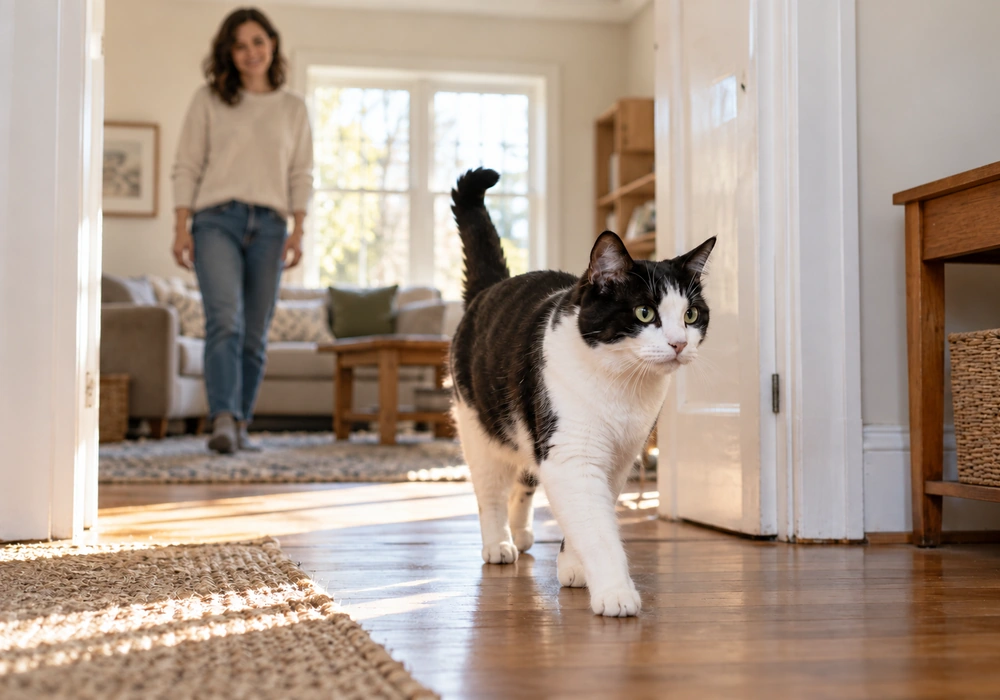
The First Ten Minutes Decide What Comes Next
In our own cats, the whole episode has usually been over in under two minutes. The useful work starts afterward, so resist the urge to help while your cat is still heaving. Three steps cover every decision that matters in that window, and they go in this order for a reason.
Step 1: Let the Retching Finish Without Help
Give your cat room and keep your hands away from its mouth. Anything that reaches the throat during a retch can end up in the lungs, and that includes water, oil, and paste. Hold all of them until the episode is clearly over. Send children and other pets out of the room, and switch off anything loud. A cat bringing up a hairball normally settles within a minute or two on its own.
Watch where the effort starts while you wait. Vomiting begins in the abdomen and ends with a wet, productive heave. Coughing comes from the chest, often with the neck stretched low and nothing produced at the end. That single observation settles half of what follows, and the section on coughing below picks up the rest.
Step 2: Look at What Came Up Before You Clean It
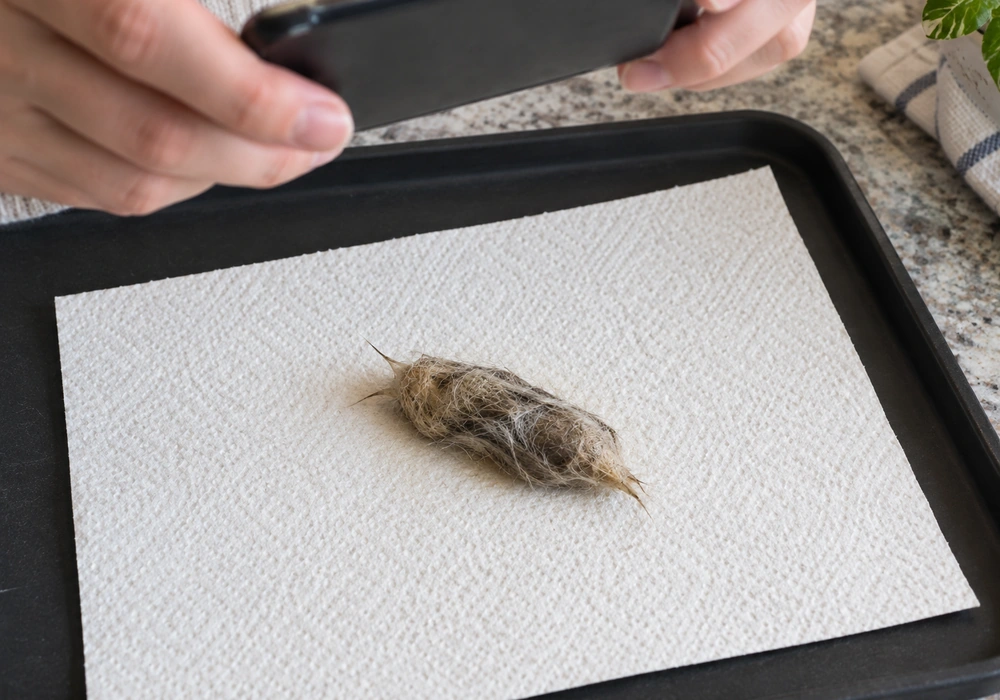
What comes up is a mat of fur the stomach could not shift along. Vets call it a trichobezoar. It usually arrives as an elongated lump rather than a sphere, molded by the esophagus on its way out; the Cornell Feline Health Center records disgorged hairballs at roughly an inch long, and occasionally as long as five inches. Take a photo, and note whether you see packed hair, recognizable food, or only fluid. Clean up with gloves or paper towels, and wash your hands after. Loose strands sitting in vomit are not proof that fur triggered the event.
Frequency counts as much as appearance. The same Cornell guidance treats a hairball once every week or two as unremarkable in an otherwise healthy cat, which makes one episode in an otherwise healthy young cat a normal finding rather than a warning. Two episodes inside a week is a different picture. Check the contents before anything goes in the bin either way: undigested food, coffee-ground material, fresh blood, or a length of string each change the plan, and a photo answers questions later that memory cannot.
Step 3: Choose One of Three Paths
Your decision rests on how your cat looks now, not on how dramatic the noise sounded. Read the table, then continue to the 24-hour plan only if you land in the bottom row.
| What you notice | What to do |
|---|---|
| Mouth hanging open, ribs working hard, gums grayish or blue, sudden collapse, or frantic distress | Drive to the nearest emergency hospital. Lift your cat gently, skip the food bowl, and ring the clinic from the car so staff can prepare. |
| Heaving that brings nothing up, vomiting in runs, blood or dark granular material, a tender belly, wobbliness, or turning down food | Phone your clinic before the day is out. Say what you saw and let them decide how soon your cat needs to come in. Fur arriving later does not cancel the call. |
| One clump of fur, retching stopped, and an otherwise healthy adult cat comfortable and behaving normally | Follow the 24-hour plan below. Phone the clinic if eating, breathing, or behavior changes. |
Two situations sit outside that table and still need a call. A missing piece of string, ribbon, tinsel, or toy means a possible linear foreign body, and nothing protruding from the mouth or anus should ever be pulled. One episode in a kitten, a cat over ten, or a cat treated for kidney disease, diabetes, or thyroid trouble also warrants a conversation rather than a wait. The Cornell Feline Health Center states the same threshold directly: a cat that is lethargic, refuses food for more than a day or two, or has repeated unproductive retching should be examined without delay. The PDSA page on vomiting in cats draws the same line. A cat that looks well after a single episode can be watched. One that keeps vomiting needs help quickly.
What to Do Over the Next 24 Hours
Vomiting empties the stomach, and a cat often feels better before it feels hungry. The first day is about refilling slowly and catching a second episode early.
Offer Water First, Then a Small Meal
Fresh water goes down straight away, in a bowl your cat already uses. Wait an hour, then offer a third to a half of the usual portion of the usual food. Eating a full portion right after vomiting tends to bring it straight back, and a brand-new food adds a variable you cannot interpret later. Skip the fast, the extra treats, and the new supplement for now. If your cat sniffs the bowl and walks away twice, ring the clinic instead of coaxing harder.
Watch Five Things and Write Them Down
Five checks cover almost everything a veterinarian will ask about tomorrow.
- Appetite: eating at least half the usual amount by the next morning
- Water: drinking normally, and keeping it down
- Litter box: normal stool, and urine in the usual amount
- Breathing: quiet and effortless while your cat rests
- Behavior: sleeping in usual spots, greeting you, grooming as normal
Repeated trips to the litter box with little or no urine is an emergency, especially in a male cat. Straining with no stool for more than a day needs a call as well. Both look nothing like a hairball problem, which is exactly why they get missed.
Know the Difference Between Waiting and Delaying
Waiting is reasonable while each check improves. Delaying is what happens when you restart the clock after every small setback. Set two review points, that evening and the next morning, and hold yourself to them. A cat that is worse at either point has earned a phone call. So has one that is simply no better.
What to Do in the First Week
One hairball is an event. A second one inside the same week is a pattern. The first seven days show you which one you face, and if you want the background on why fur accumulates in the first place, our guide to hairball problems in cats covers causes and prevention.
Start Grooming at a Pace Your Cat Accepts
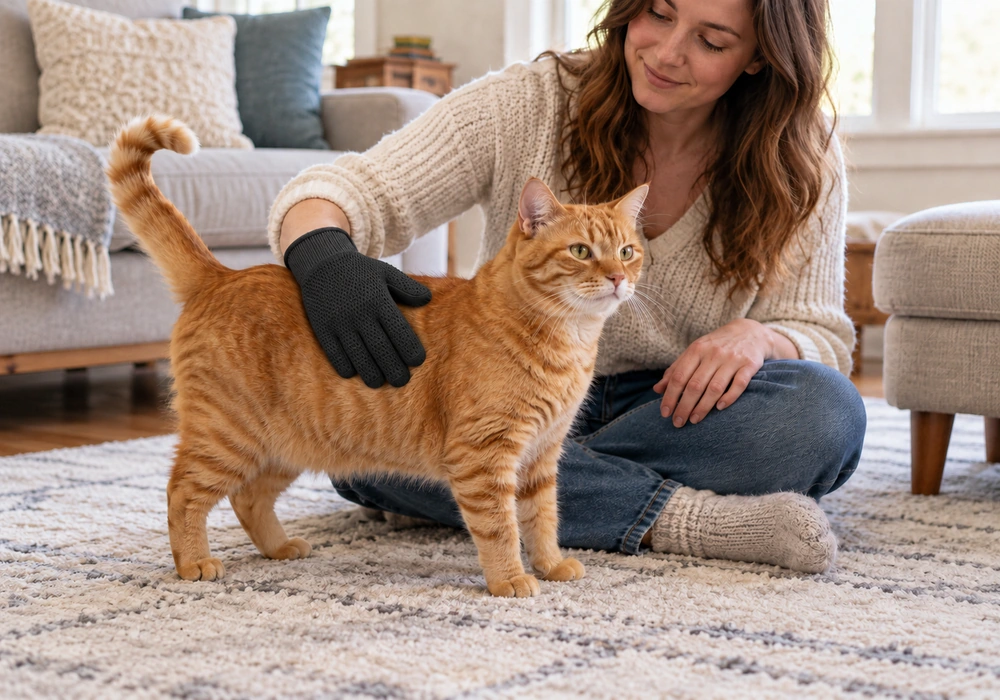
Begin with two or three sessions of a few minutes each. Use a comb with smooth rounded teeth that reaches the undercoat. Work along the back and flanks first, then behind the hind legs and under the belly, where mats start without notice. Long or dense coats need daily attention, and the breeds built for that kind of coat are worth knowing before you buy a second comb; most short coats do not. End the session when your cat walks away, and never cut a mat out with scissors. Our guide to brushing and combing your cat covers tool choice and handling, and our round-up of long-haired cat breeds explains which coats need the most of your time.
Change One Thing at a Time
Owners often answer a first hairball with four changes in one week: new food, a supplement, a new brush, and a gel. If the episodes stop, you have learned nothing about which one did the work. Pick the least invasive step, hold it for two weeks, then judge the result. Nothing sold for hairballs is required on day one. A cat that stops vomiting on its own has already told you something useful.
Build a Two-Line Log a Vet Can Use
Record the date, what came up, and whether your cat ate normally afterward. Two lines per event is enough. Six weeks of that record tells a veterinarian more than a memory of “it happens a lot”, and it takes less time than reading a product label. Add the photo you took after the first episode, because owners routinely underestimate what a hairball actually looked like once the floor is clean.
What to Do If It Was Not a Hairball
Cats never cough a hairball up. Vomiting is what brings the mass to the mouth, driven by stomach contractions rather than the airway. The phrase persists because the two look nearly identical from across a room. That resemblance keeps asthmatic cats mislabelled for months, and it is not a rare mistake: the Cornell Feline Health Center puts feline asthma at one to five percent of the cat population, with coughing, wheezing, and open-mouth breathing as its standard signs.
If Your Cat Is Coughing, Not Vomiting
Film a thirty-second clip the next time it happens, with the phone steady and the whole body in frame. Count breaths while your cat sleeps, because the figure is the one objective measure you can take at home. Cornell’s feline health center gives a normal resting rate of 15 to 30 breaths a minute for cats, and advises consulting a veterinarian once the rate stays above 35 while the cat is relaxed or asleep. Open-mouth breathing is an emergency regardless of the number. The same Cornell explainer covers the airway conditions that produce these sounds and why they rarely involve fur.
If You Saw Foam or Bile but No Fur
Foam, yellow fluid, or a little bile with no hair clump neither confirms a hairball nor rules out a blockage. A single episode in a cat that then eats and behaves normally can be watched at home. Repeat episodes inside one day belong on the phone with the clinic. So does any episode with belly pain or a tense abdomen.
If String or a Toy Is Missing
Never pull string, ribbon, or thread visible at the mouth or anus. One end may be anchored in the gut, and traction can cut tissue. Do not induce vomiting either. Phone the clinic with what is missing and when you last saw it, then follow their advice about bringing your cat in. Speed matters more here than in any other section of this page.

What Changes for a Kitten, an Adult, or a Senior Cat
The steps stay the same at every age. What moves is the point at which you pick up the phone. It shifts earlier at both ends of a cat’s life.
A Kitten’s First Hairball
Call before you decide to wait. A kitten’s coat is short and its grooming is still developing. Hairballs are also uncommon enough that vomiting usually has another explanation, and parasites, a recent diet change, an infection, or something swallowed while exploring all fit the picture better. Small bodies lose fluid fast, so one day of vomiting costs a kitten more than it costs an adult. Do not borrow an adult cat’s hairball product in the meantime. Our guide for anyone bringing new kittens home covers the first days in more detail.
An Adult Cat’s First Hairball
Follow the 24-hour plan and expect a normal appetite by the next morning. An isolated episode in a healthy cat between one and eight years old needs grooming and nothing else. Book a check when a second episode arrives inside the same week, and again once a seasonal habit turns monthly.
A Senior Cat’s First Hairball
Phone the clinic for a first hairball in a cat over ten, even when the cat looks fine an hour later. Mention weight, appetite, thirst, stool, medication, and any change in grooming, because those details steer the visit. Ask for bloodwork rather than another tube of paste. New vomiting in an older cat is a diagnostic question long before it is a hairball question, which is the ground our cat health section covers.
What Not to Do After a First Hairball
Nearly all the harm after a first hairball comes from well-meant intervention rather than from the hairball itself.
Skip the Remedies That Cause Harm
- Mineral oil, liquid paraffin, or any oil syringed into the mouth, because inhaled oil causes lipid pneumonia
- Butter, cooking oil, or greasy table food, which add fat without moving hair
- Human laxatives or stool softeners, which are not dosed for cats
- Anything given to make a cat vomit
- A fast, which does nothing for hair and costs a cat fluid and energy
- Forcing a paste into a cat that refuses it, or holding a cat down to dose it
Wipe a dab of gel onto the cat’s nose rather than syringing it in. The back of a front paw works as a second option, since the cat licks it off. If your cat refuses both, skip the product entirely. Cornell’s own guidance goes further than most product labels admit: neither a laxative nor a hairball diet should be used without a veterinarian’s approval and supervision.
Do Not Treat Every Episode Alike
A hairball in a healthy two-year-old in April is not the same event as one in a fifteen-year-old in November. The floor looks identical either way. Age, coat, season, and that cat’s own history set the response. Answering both with the same tube of gel is how a treatable problem gets a year’s head start.
A First-Hairball Checklist to Keep
Keep it somewhere you can reach in a hurry at night, when most of these episodes happen.
- Retching stopped without help
- One clump of fur, photographed before cleanup
- Gums pink, breathing quiet, no open-mouth effort
- Water offered, small meal an hour later
- Litter box checked for urine and stool
- Appetite and behavior normal by the next morning
- Two-line note written for the file
Any box left unchecked is a reason to call rather than to keep watching. That single rule holds whether the hairball is the first one or the fifth. Knowing what normal looks like makes the check faster, and a steady daily cat-care routine gives you a baseline for appetite, water, and litter-box habits.
Disclaimer: this article shares our own experience and general veterinary information; it is not a diagnosis. If your cat is breathing through an open mouth, has collapsed, or keeps vomiting, contact a veterinarian or an emergency hospital right away.