
A practical guide to choosing kitten food
To choose prepared cat food for a new kitten, first check that the recipe provides complete nutrition for growth. Then compare the foods your kitten will eat, the information the manufacturer provides, and the cost of feeding them each day.
Prepared cat food includes commercial dry, wet, refrigerated, and frozen products. Some are complete meals; others are treats or toppers. The name on the front of the package does not tell you which one you are buying.
This guide is for weaned kittens eating solid food. For help with their first days at home, see New Kittens: What to Do When You Bring Them Home.
01 / Life stage
Check Prepared Cat Food Labels for Growth
Look for the nutritional adequacy statement, usually on the back or side of the package. In the United States, it tells you whether the food is complete and balanced and which life stage it is intended for. The FDA explains that this claim is supported by meeting an AAFCO nutrient profile or passing a feeding trial using AAFCO procedures.
| Label wording | What it means |
|---|---|
| Growth or growth and reproduction | The food is intended to meet the nutritional needs of growing kittens. |
| All life stages | Includes growth. Follow the feeding directions for kittens. |
| Adult maintenance | Do not choose it as a kitten’s main diet; it is formulated for adult needs. |
| Intermittent or supplemental feeding only | Not a complete everyday diet. Use only as an extra or as directed by a veterinarian. |
The claim is on one recipe, not on the brand
Check the specific recipe, even if you already know the brand. A pouch of chicken in broth may be a topper rather than a complete kitten meal. Outside the US, look for the local equivalent of a complete food suitable for kittens.
AAFCO does not approve or certify individual pet foods. Look for the adequacy statement rather than an “AAFCO-approved” claim.
Most kittens need a growth diet until about one year of age. Your veterinarian can help decide when to change to adult food based on your kitten’s development.
02 / Food type
Wet or Dry Prepared Cat Food: What Fits Your Kitten?
Both wet and dry foods can provide complete nutrition for growth. Once that requirement is met, consider texture, moisture, portion size, and storage. Buy a small amount first to see whether your kitten will eat it. For bowls and other feeding essentials, see our new kitten kit checklist.
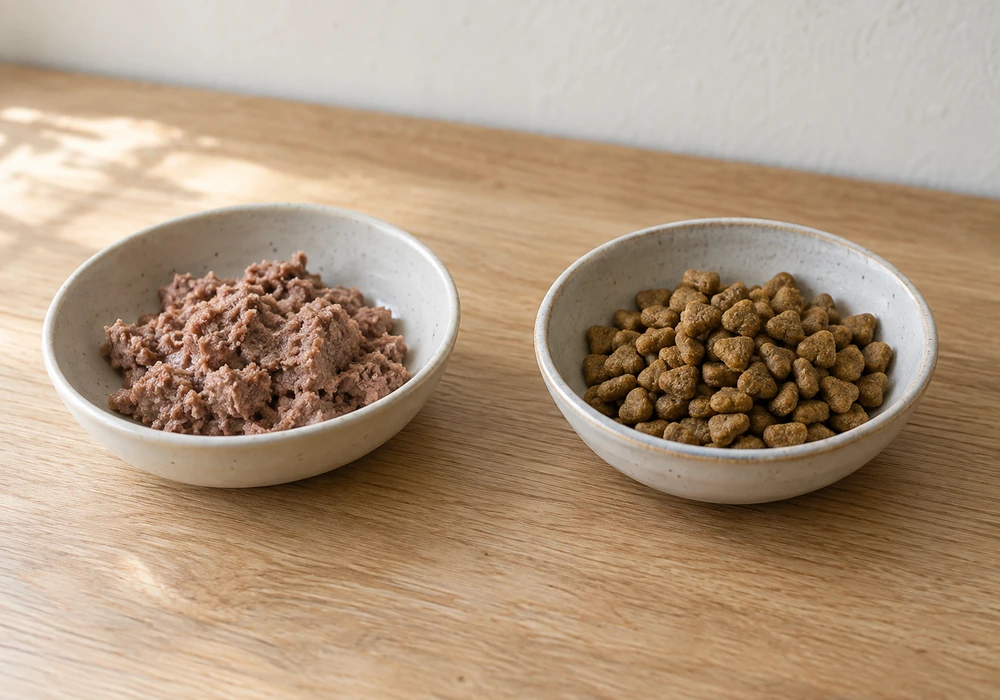
| Food type | Practical advantages | What to check |
|---|---|---|
| Dry kibble | Easy to weigh and store; often less expensive per calorie. | Calories per gram and whether your kitten eats the pieces comfortably. |
| Canned or pouched wet food | Provides water with the meal and offers soft textures. | Calories per container and refrigeration instructions after opening. |
| Cooked refrigerated or frozen food | Offers another option for kittens that prefer a soft meal. | Suitability for growth, reliable cold storage, and use-by instructions. |
| Semi-moist food | Offers a softer alternative to dry kibble. | Whether it is a complete food or a treat, and how to store it after opening. |
Moisture and dental claims
Dry food typically contains 6–10% water, while canned food contains at least 75%. Check the individual product’s moisture level. Wet food supplies more water through meals, but fresh drinking water should be available with any diet.
Ordinary kibble is not automatically a dental-care product. For a specific plaque or tartar-control claim, check the Veterinary Oral Health Council’s accepted products and confirm that the product is suitable for your kitten’s age.
Check whether the food is cooked or raw. Refrigerated, frozen, and freeze-dried describe how food is stored or preserved; they do not mean it has been cooked. The FDA recommends avoiding raw pet food because of the risk of foodborne infection.
03 / Manufacturer information
Find Out Who Formulates and Tests the Food
A prepared cat food manufacturer should be able to explain how it develops its recipes and checks the finished food. The WSAVA food-selection guide suggests asking about:
- Nutrition expertise: Who formulates the recipes, and what qualifications and experience do they have in animal nutrition?
- Manufacturing: Where is the food made, and who makes it?
- Quality control: How does the company check ingredients, nutrient levels, contamination, packaging, and shelf life?
- Product information: Can it provide calorie content, a typical nutrient analysis, and evidence for specific health claims?
What clear answers look like
Cooking and packaging affect the finished food, so the manufacturer needs to account for them when formulating and testing a recipe. Clear answers to these questions are more useful than descriptions such as “premium” or “holistic.”
04 / Nutrition labels
Compare Nutrients Without Being Misled by Percentages
When comparing prepared cat food, start with the guaranteed analysis. It usually lists minimum protein and fat and maximum fiber and moisture. “Crude protein” refers to the method of measurement; it does not mean poor-quality protein. A high protein percentage alone does not tell you whether a food supplies all the nutrients a kitten needs.
Why ingredient order can mislead
Ingredients are listed by weight, including their water content. Fresh meat contains more water than a concentrated meat meal, so their positions in an ingredient list are not a fair comparison of nutritional value. AAFCO’s label guide explains how to interpret these details.
Account for water when comparing wet and dry food
A wet food can show a lower protein percentage simply because it contains more water. A dry-matter calculation compares the protein in the portion left after excluding water.
Dry-matter protein % = label protein % ÷ (100 − moisture %) × 100
| Example label | Calculation | Estimated dry-matter protein |
|---|---|---|
| Wet food: 10% protein, 78% moisture | 10 ÷ 22 × 100 | 45.5% |
| Dry food: 32% protein, 10% moisture | 32 ÷ 90 × 100 | 35.6% |
These are hypothetical examples. Label guarantees are minimum or maximum values, so the calculations are approximate. They account for water but do not rank food quality or show how much protein your kitten eats each day. Ask the manufacturer for typical nutrient values if you need a closer comparison.
Do not let marketing terms decide for you
- By-products can include nutritious organ tissues. The term does not automatically mean an inferior ingredient.
- Natural does not mean uncooked or unprocessed. AAFCO’s definition allows processes such as heating and rendering.
- Human grade concerns ingredient and manufacturing requirements. It does not establish that a food meets a kitten’s nutritional needs.
- Grain-free is not, by itself, a reason to choose a food. Cats can digest properly processed carbohydrates. A grain-free label also does not show that a food is suitable for investigating a suspected allergy.
A complete kitten diet normally needs no added taurine, calcium, or vitamins unless your veterinarian recommends them. Unnecessary supplements can upset its nutrient balance. Plain cooked meat is not a complete replacement either; a home-prepared diet should be formulated for your kitten by a board-certified veterinary nutritionist.
05 / Feeding amounts and budget
Compare Calories, Portions, and Daily Cost
Use the kitten feeding directions on the prepared cat food package as a starting point, then review the amount with your veterinarian as your kitten grows. Measure portions and keep track of what is actually eaten, especially if several cats share your home.
Food requests alone do not establish how much a kitten needs. Our guide to increased appetite in cats explains how eating, weight, and thirst changes can be assessed together.
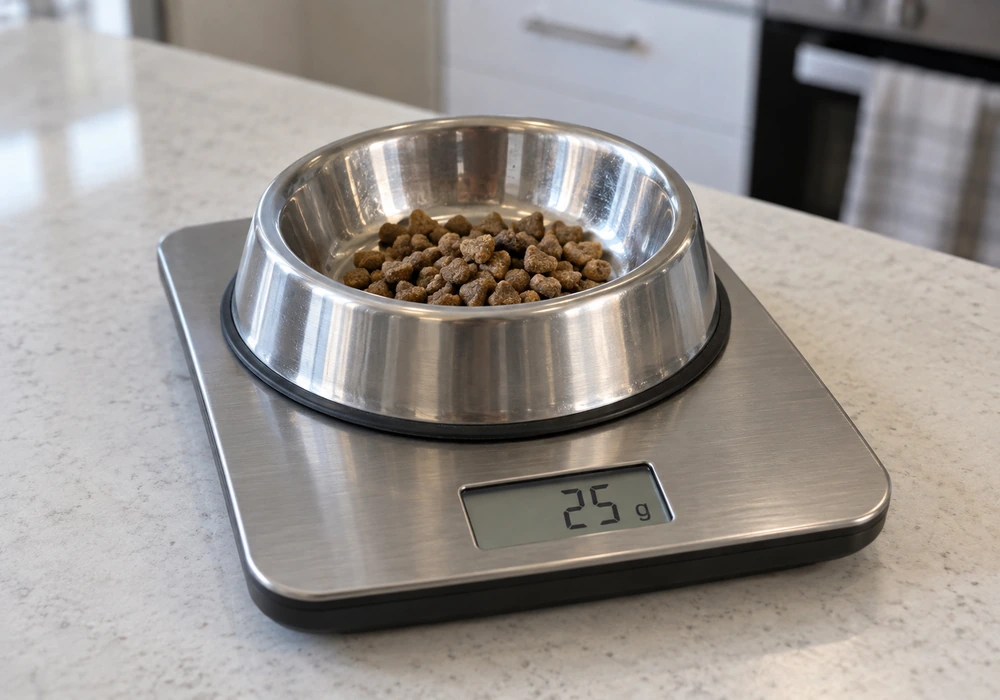
Measure portions, not scoops
Calories are often listed as kcal per kilogram, can, pouch, or cup. For example, a food containing 4,000 kcal/kg supplies 4 kcal/g, so 25 g supplies 100 kcal. This is a calculation example, not a daily feeding recommendation.
If you feed both wet and dry food, include both in the daily total. Adding a pouch without reducing an existing full allowance of kibble increases calorie intake. Keep treats and other foods that are not complete diets to no more than 10% of daily calories; a prescribed diet may require stricter limits.
Compare cost per calorie
A bag and a pouch contain very different amounts of water, so price per kilogram can be misleading. Use the price and calories for the same quantity of food:
Cost per 100 kcal = price ÷ calories in that quantity × 100
| Hypothetical purchase | Calculation | Cost per 100 kcal |
|---|---|---|
| A $2.00 wet-food portion containing 100 kcal | $2.00 ÷ 100 × 100 | $2.00 |
| Dry food costing $24.00/kg and containing 4,000 kcal/kg | $24.00 ÷ 4,000 × 100 | $0.60 |
These prices are examples, not current market prices. Multiply the cost per 100 kcal by the daily calories supplied by that food, then divide by 100 to estimate the daily cost. Include delivery charges and food you are likely to discard. A larger pack saves money only if you can use it before it spoils.
06 / Safe storage
Store Prepared Cat Food Safely After Opening
Dry food, canned food, and the freezer
Check storage instructions before buying, particularly for large bags, refrigerated meals, and frozen deliveries. Follow the product’s opening and thawing limits; there is no single storage period that applies to every recipe.
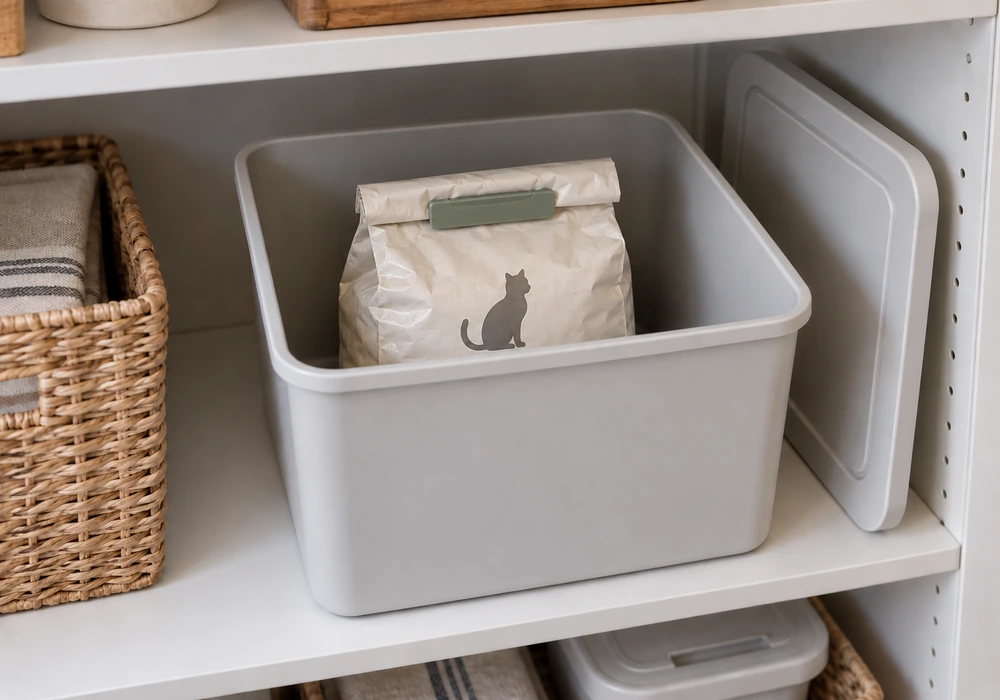
- Dry food and unopened cans: Store in a cool, dry place below 80°F, about 27°C, unless the package specifies a lower temperature.
- Dry food in a storage bin: Keep it inside its original bag. Wash and dry the bin between bags, and retain the lot number and best-by date.
- Opened wet food: Cover and promptly refrigerate the unused portion at 40°F, about 4°C, or below. Follow the manufacturer’s time limit after opening.
- Frozen food: Thaw in the refrigerator and follow the instructions for use after thawing. Follow preparation and storage directions for rehydrated foods as well.
- Damaged or spoiled food: Do not feed food from swollen or leaking packages, or food with an unusual smell or foreign material.
The FDA’s storage guidance explains these temperature and packaging precautions. Wash your hands before and after handling food, and clean bowls and measuring utensils with soap and hot water after each use.
07 / Changing food
Introduce New Food Gradually
When switching prepared cat food for an otherwise healthy kitten, allow about four to seven days: begin with a small amount of the new food and gradually increase it while reducing the old food. The pace can be adjusted to the kitten’s response.
What to watch during the switch
Watch how much your kitten eats, whether stools change, and whether vomiting occurs. Keep track of weight gain and ask your veterinarian to assess growth and body condition. Persistent digestive problems need an examination, rather than repeated switches between foods labeled “sensitive.”
Do not withhold food to make a kitten accept a new diet. If your kitten stops eating, contact your veterinarian promptly, especially if it is weak, vomiting, or has diarrhea.
This guide reflects everyday experience feeding cats at home and does not replace veterinary advice about your own kitten. A kitten that refuses food for more than a day, is weak, vomits repeatedly, has diarrhoea, or stops gaining weight needs a veterinary examination rather than a different bag of food.