
Before your kitten comes home
Your new kitten kit should cover transport, meals, water, toileting, rest, scratching, play, and routine care. Choose items that fit a small kitten, stay stable during use, and are easy to clean.
The ten essentials below group related supplies together: a litter box, litter, and scoop form one item on the list. You can buy them separately rather than choosing a prepackaged bundle.
This checklist is for weaned kittens eating independently. An unweaned or medically fragile kitten needs an individual care plan from a veterinarian or experienced rescue team.
Transport
1. A Secure, Well-Ventilated Carrier
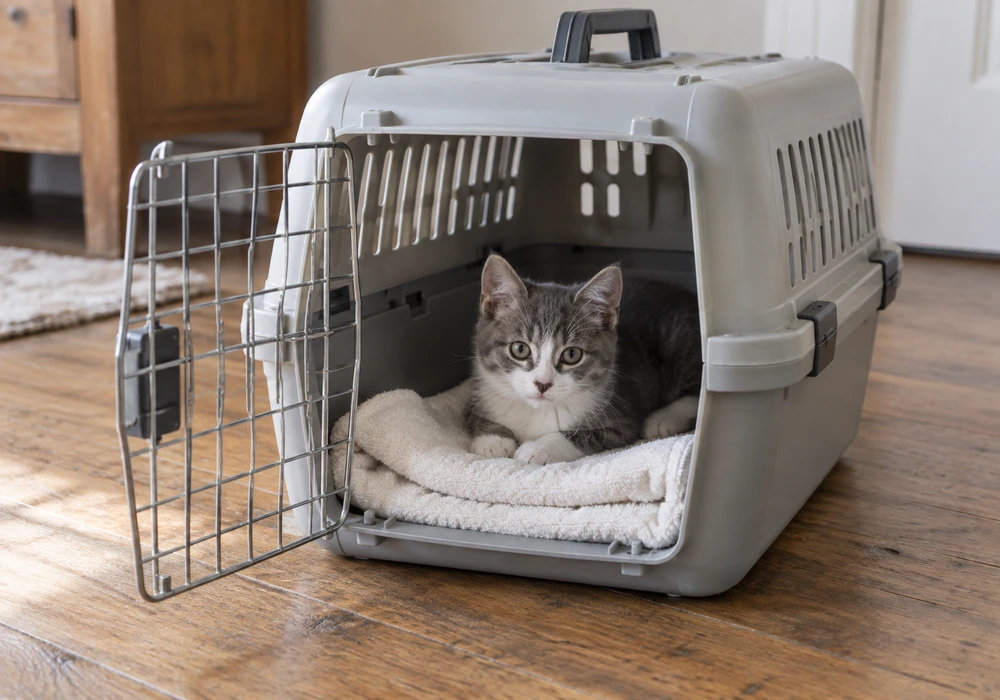
Put a carrier at the top of your new kitten kit checklist and have it ready before pickup. Look for reliable latches, good ventilation, a washable base, and enough room for your kitten to turn around and rest. A removable top or an additional top opening can make veterinary examinations easier.
Rigid plastic is easy to wipe clean; fabric carriers need closer checks of mesh, seams, and zippers. Inspect the handle, door, and connections between the upper and lower sections before every trip. Choose for secure construction and fit, allowing for growth.
Car Travel and Restraint
Leave the carrier open at home with washable bedding so your kitten can explore it. For car travel, check the manufacturer’s tested restraint instructions; a carrying handle is not automatically a seat-belt attachment, and secure containment does not establish crash protection.
Nutrition
2. Complete Food Formulated for Kittens
Ask the previous caregiver which food your kitten eats and buy a starter supply. In the United States, check the nutritional adequacy statement for growth or all life stages. Adult-maintenance food, treats, and complementary toppers should not replace a complete kitten diet. Elsewhere, look for the local equivalent of a complete food suitable for kittens.
Wet food, dry food, or a combination can work when the diet meets growth needs. Keep changes gradual, follow storage instructions, and retain the original packaging and batch details. A complete diet normally needs no added vitamins or minerals unless your veterinarian recommends them.
Labels and feeding costs are compared in choosing prepared cat food for kittens.
Food and water access
3. Separate Food and Water Bowls
For bowls in your new kitten kit, choose stable dishes with rims your kitten can reach comfortably. Stainless steel is durable; glazed ceramic adds weight but must be replaced if chipped or cracked. Plastic can also be used when intended for food contact, though scratched or damaged dishes become harder to clean.
Place water separately from food and keep both away from the litter area. For two kittens, provide separate feeding bowls and watch what each actually eats. Avoid arranging supplies where another cat can block access to all of them.
A fountain is optional. Its pump, reservoir, and filter need regular attention, and it does not guarantee better drinking. Keep a simple water bowl available if you use one.
Toileting
4. A Litter Box, Familiar Litter, and a Scoop
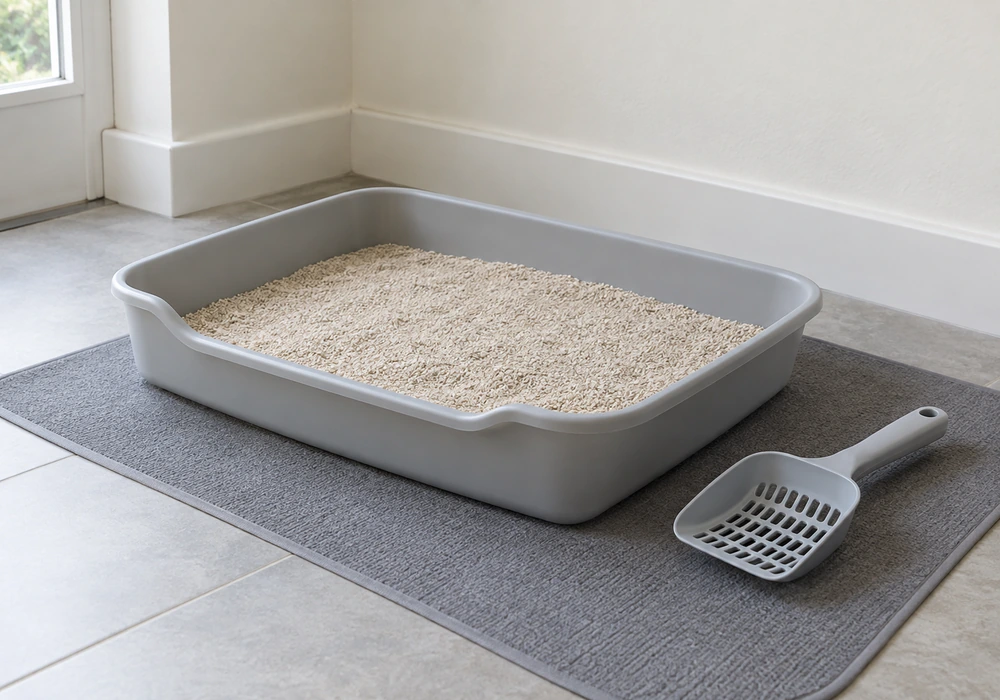
The litter box in your new kitten kit should have a low entrance and enough room to turn, dig, and squat. A useful sizing guide is about 1.5 times your cat’s length from nose to tail base; reassess the box as your kitten grows.
Begin with the litter your kitten already uses, choosing an unscented option when suitable. Texture and individual preference matter. If your kitten eats litter, strains, or repeatedly avoids the box, get veterinary advice rather than repeatedly changing products; the settling-in period is described in litter training kittens.
How Many Boxes You Need
Plan for one box per cat, plus one extra, in separate accessible locations. Scoop at least daily. An automatic litter box is not a starter-kit requirement: moving parts and model-specific age, weight, and sensor limits may make it unsuitable for a small kitten.
Rest and retreat
5. A Hiding Place and Washable Bedding
A clean, sturdy cardboard box with an unobstructed entrance can be a useful retreat. Remove staples, loose tape, and handles, and put it somewhere quiet. An open carrier can also provide a familiar resting place.
Add a washable blanket or liner without loose threads, large loops, or exposed filling. Cardboard absorbs moisture and is difficult to disinfect, so replace it when wet, heavily soiled, or chewed apart. A washable hide lasts longer if its entrance and ventilation suit the kitten.
Let your kitten leave the hiding place voluntarily. A comfortable retreat does not have to be an expensive bed.
Scratching and stretching
6. A Stable Scratching Post or Pad
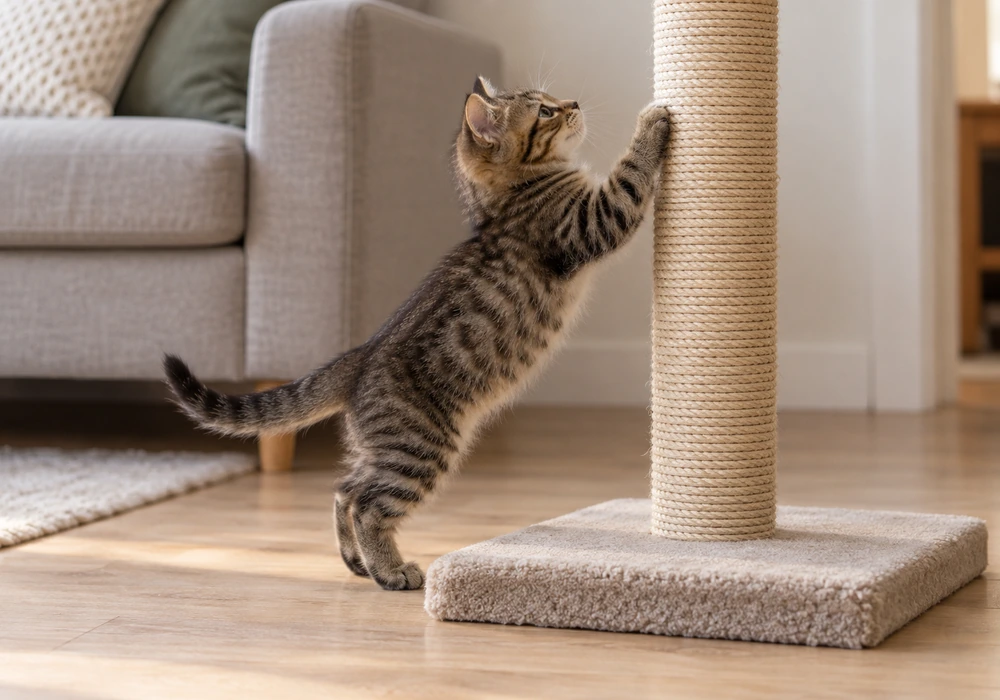
Choose a post that stays upright when pulled and is tall enough for a full stretch. A horizontal cardboard pad is another option, especially if your kitten prefers scratching along the floor. Position it near a resting place or somewhere your kitten already tries to scratch.
Look beyond the covering. Sisal can loosen, cardboard can break down, and a good surface on a rocking base may go unused. Check for long strands, protruding staples, exposed screws, and loose joints.
Replace worn surfaces before the kitten reaches the fixings underneath. In a new kitten kit, start with a stable scratching surface; a tall climbing tower can wait.
Play
7. A Few Safe Toys and an Easy Food Puzzle
Stock your new kitten kit with a small selection, such as a wand toy for supervised play and a lightweight toy your kitten can chase. Check seams, attachments, and battery compartments before use. Put away strings, ribbons, and wand toys afterward, and keep hands and feet out of the game.
A simple food puzzle can add variety once the kitten is eating comfortably. Use a small part of the usual ration and make the food easy to reach. If the kitten struggles, simplify the puzzle or use a normal bowl. A growing kitten should never have to go hungry because a puzzle is too difficult.
Rotate toys according to interest instead of buying a large collection at once. Remove damaged toys promptly.
Routine care
8. Grooming and Oral-Care Tools
Choose a soft brush or comb suited to the coat. Long hair usually needs more frequent attention, but every tool should have smooth, undamaged teeth or bristles. Begin with short, gentle sessions and stop before your kitten becomes distressed.
A flea comb helps you inspect the coat; it does not replace a parasite-prevention plan. Ask for a demonstration before trimming nails, and seek help with mats close to the skin.
Dental Care, Slowly
Include a small toothbrush and toothpaste made for cats for gradual dental-care training. Introduce mouth handling first, then brushing as tolerated. Do not use human toothpaste, and have painful or inflamed gums assessed before brushing, including when teething seems uncomfortable.
Identification
9. Microchip Registration and Care Records
Ask whether your kitten is already microchipped. Confirm that the registration lists your current contact details, or arrange microchipping with your veterinarian; the process itself is explained in getting a cat microchipped. A microchip provides an identification number when scanned; it is not a GPS tracker.
If you use a collar, choose a cat-specific quick-release design suitable for the kitten’s size. Check the fit frequently during growth. Avoid elastic collars, improvised ribbon collars, and attachments that interfere with the release mechanism.
Keep adoption records, vaccination and treatment details, the microchip number, diet information, clinic contacts, and a recent photograph together. Make them accessible to anyone who may care for your kitten.
Hygiene
10. Dedicated Cleaning and Waste Supplies
Set aside waste bags, absorbent cloths, detergent, and separate cleaning tools for feeding equipment and the litter area. Keep products in their labeled containers, out of your kitten’s reach.
Cleaning removes dirt; disinfection is a separate step. Follow instructions for dilution, contact time, rinsing, and drying. Keep the kitten away during cleaning, never mix cleaners, and avoid disinfectants containing phenols. An odor-removal claim alone does not mean a product disinfects.
Wash your hands after handling litter. If someone in the household is pregnant or immunocompromised, another person should handle litter cleaning when possible.
Keep the kit useful
Keep Your New Kitten Kit Clean and Ready to Use
Use the schedule below as a starting point and clean sooner whenever something is soiled. Follow each item’s care instructions; illness may require a different cleaning plan from your veterinarian.
| When | What to do |
|---|---|
| After wet-food meals | Wash dishes and feeding puzzles; store or discard leftovers promptly. |
| Daily | Refresh water, wash water and dry-food bowls, and scoop litter. |
| Before travel or play | Check carrier closures and toy parts; remove damaged items. |
| Weekly, or sooner if dirty | Wash bedding and inspect hiding places. |
| As your kitten grows | Recheck collar fit, carrier space, box size, and scratching height. |
Non-food toys also need periodic cleaning. Wash litter boxes regularly, beyond daily scooping, and replace supplies that can no longer be cleaned or used safely.
Before pickup
Prepare the Room and the Care Plan, Too
Set up your new kitten kit before pickup, confirm the kitten’s current food and litter, and arrange an early veterinary appointment. Keep food, water, and toileting areas apart. With two kittens, provide separate feeding access and enough distributed resources for both to use comfortably.
Secure escape routes, put away medicines and cleaners, and keep true lilies and daylilies out of the home. Suspected lily exposure needs immediate veterinary advice. Choose parasite products with your veterinarian according to the kitten’s age and weight.
The First Veterinary Visit
Bringing new kittens home covers the arrival routine and the first veterinary visit. Once your kitten arrives, check that the equipment is actually being used. Contact your veterinarian promptly if your kitten eats poorly, develops diarrhea, or becomes unusually weak.
Sources and Further Reading
This guide reflects everyday experience living with cats and does not replace veterinary advice about a particular animal. A kitten that stops eating, develops diarrhea, becomes unusually weak or quiet, has difficulty breathing, or cannot pass urine needs a veterinary examination rather than another change of bedding or food.