
A guide to feline communication
A meow at a closed door may be a request to enter; a hiss during handling warns you to pause. Understanding cat sounds and what they mean depends on the call, the cat’s body language, and what is happening around them.
These seven sound types are starting points, rather than exact translations of a cat’s thoughts. Purring often accompanies contentment but can also occur during stress or pain, and a familiar meow may serve several purposes.
How to Read Cat Sounds and What They Mean
- Notice the situation. Did the sound begin when you arrived, a bird landed outside, or another cat approached?
- Look at the whole body. Loose posture and a friendly approach tell a different story from a tense crouch, flattened ears, or an attempt to retreat.
- Compare with your cat’s usual behavior. A familiar greeting and a new, repeated cry deserve different responses.
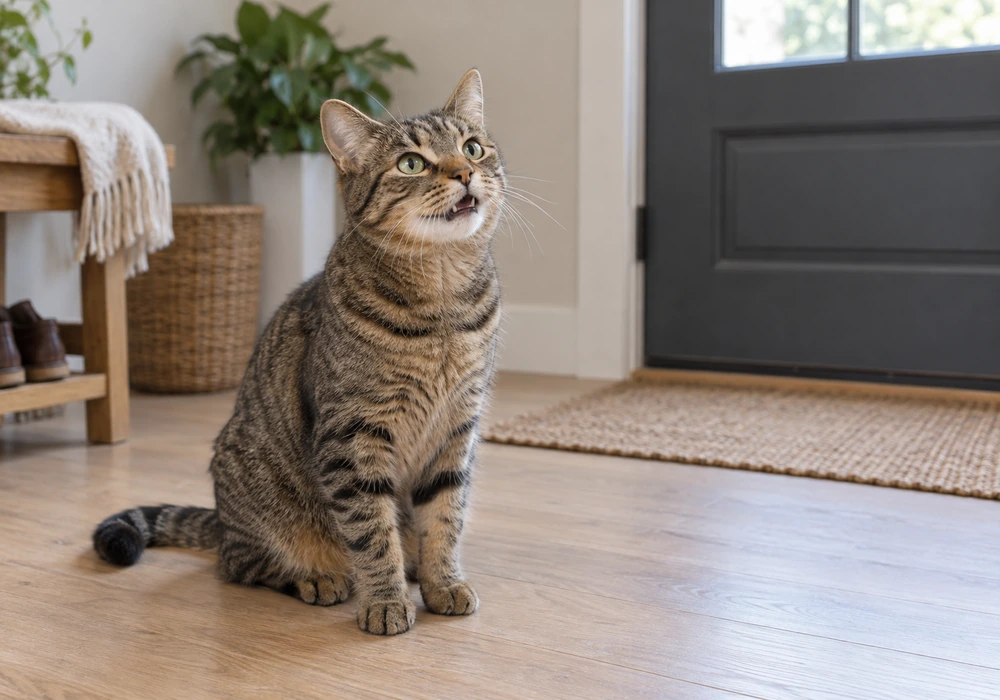
1. Meow: A Greeting, Request, or Complaint
Listen for: a recognizable “me-ow,” ranging from a small squeak to a longer, insistent call.
Adult cats often meow to people. They may greet you, ask for access through a closed door, anticipate food, or seek interaction. Kittens also mew to their mother. Meowing is therefore not a sound used exclusively with humans.
The setting usually tells you more than the pitch alone. A brief meow as your cat walks toward you with a relaxed body may be a greeting. Repeated meows beside a closed door may be a request to enter. A cat calling while trying to escape handling may be protesting.
Pitch alone cannot reliably tell you whether a cat is happy or angry. As you learn cat sounds and what they mean, compare the call with the setting and your cat’s usual behavior.
How to respond: Check what your cat is approaching or reacting to. Offer appropriate attention or access when safe, rather than assuming every meow means hunger.
2. Purr: Often Contentment, Sometimes Discomfort
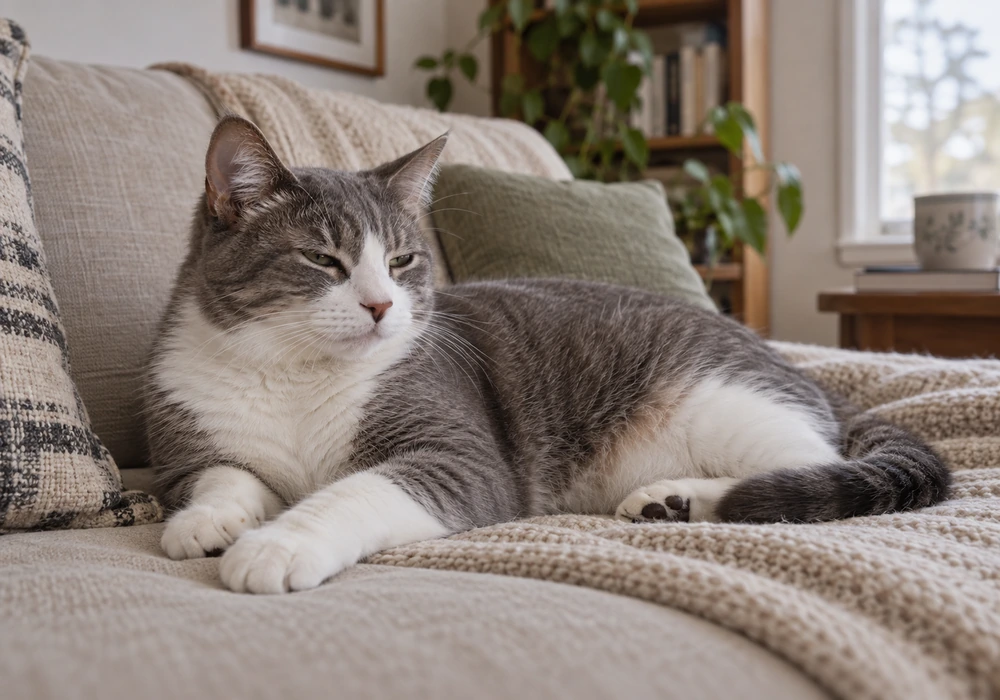
Listen for: a low, rhythmic rumble, usually with the mouth closed, continuing as the cat breathes in and out.
A purring cat resting loosely beside you, with relaxed ears and soft or half-closed eyes, is often comfortable. Purring also occurs between mothers and kittens and when some cats solicit food or contact.
However, purring does not rule out pain or fear. A cat may purr during a stressful veterinary visit or while unwell. If the cat is hunched, hiding, eating less, or resisting movement, those signs deserve attention even when you hear a purr. Purring appears in more contexts than contentment alone, and cats and purring covers those differences in detail.
How to respond: Let a relaxed cat choose whether to continue contact. Pause if their body tightens or they turn away. Seek veterinary advice when purring accompanies signs of illness or pain.
3. Trill or Chirrup: A Friendly Call for Contact
Listen for: a short, rolled “mrrp” or “brrp,” generally made with the mouth closed.
A trill is commonly heard during a friendly approach. Your cat might make it while walking toward you, rubbing against your legs, or acknowledging your arrival. Mother cats also use these calls with kittens.
It is usually shorter and more clearly pitched than a sustained purr. Some cats blend a trill into a meow, so you may hear a rolling start followed by an open-mouthed call. When learning cat sounds and what they mean, focus on the sound and situation: labels such as “chirrup” and “chirp” are sometimes used loosely.
How to respond: Acknowledge the approach and let your cat decide how close to come. A friendly trill is not automatically an invitation to pick the cat up.
4. Chirps and Chatter: Attention Fixed on Prey
Listen for: short, high-pitched chirps or a rapid series of clicking sounds with small, repeated jaw movements.
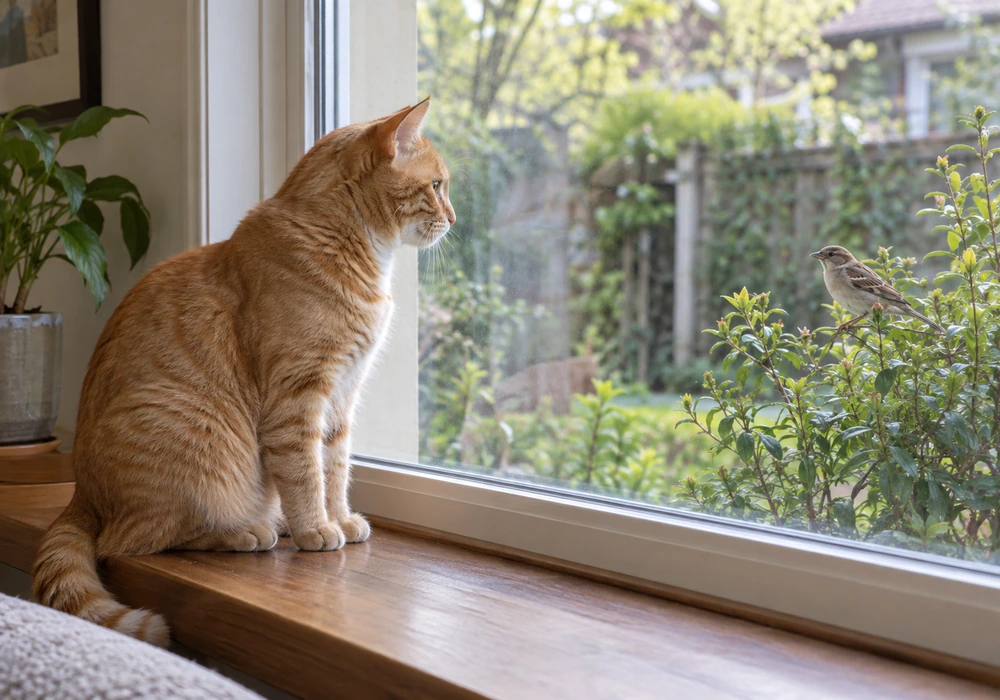
These sounds often appear when a cat watches birds or insects, especially through a window. Chirps are voiced calls; chatter is more of a quick, stuttering click. A cat may combine them while staring intently at the movement outside.
Excitement and frustration are possible explanations, but the precise function is not settled. Claims that a cat is definitely imitating a bird or rehearsing a killing bite go beyond what has been established. Cats Protection’s explanation of chirping and chattering distinguishes observations from theories.
How to respond: Ordinary bird-watching chatter does not need to be stopped. Keep the window secure. If your cat becomes agitated, offer a break from the view and a supervised game with a toy they can catch.
5. Hiss: A Warning to Give Space
Listen for: a sharp, breathy “sssss,” usually with the mouth open and lips drawn back.
A hiss is primarily a warning. A frightened, startled, cornered, or uncomfortable cat may hiss to discourage further approach. It can happen during an unfamiliar encounter or when handling becomes too much. A brief, explosive spit can accompany the warning.
Hissing does not mean a cat is “bad,” and it does not prove they want to start a fight. A cat crouching with ears flattened and trying to retreat is asking for distance; the signals that usually come first are described in signs of fear in cats. Pain can also make a normally tolerant cat hiss when touched, and the less obvious triggers are set out in why a cat may seem to hiss for no reason.
How to respond: Stop reaching toward the cat, step back, and leave a clear escape route. Do not punish, corner, or pick them up to force reassurance. New sensitivity to touch warrants a veterinary check.
6. Growl: A Low Warning During Tension
Listen for: a deep, rough “grrr,” often sustained and sometimes mixed with hisses or yowls.
A growl is a voiced rumble, unlike the rush of air in a hiss. It may occur when another cat comes too close, a cat feels threatened, or an interaction is uncomfortable. It is a signal to take the tension seriously.
When comparing cat sounds and what they mean, pay attention to rhythm as well as posture. A stiff body, fixed stare, ears held back, and efforts to keep another cat away point toward a warning. A purr is usually more regular and rhythmic than a growl, although body language still matters.
How to respond: Give the cat distance and reduce the disturbance. If cats are confronting each other, allow separation without putting your hands between them. Do not force them to stay together to “work it out.”
7. Yowl: A Long Call That Needs Context
Listen for: a drawn-out, often loud “owww” or wavering call that lasts longer than an ordinary meow.
Yowling can occur during confrontations between cats, mating-related calling, frustration, or distress. An unspayed female may call repeatedly while in heat. A cat facing an unfamiliar cat outdoors may combine yowls with growls.
Stress-related calling, and the household changes that reduce it, are covered in cat stress relief.
Night Calling in Older Cats
The sound alone cannot identify the cause. A new pattern of nighttime yowling, especially in an older cat, should not be dismissed as personality or assumed to be dementia. Pain, illness, sensory changes, and cognitive changes can all affect vocal behavior.
How to respond: Look for an immediate trigger without approaching a tense cat. Arrange a veterinary examination for new, persistent, or unexplained calling. An ongoing pattern of calling is examined in my cat meows all the time.
Comparing Cat Sounds and What They Mean
| Sounds you may confuse | The useful distinction |
|---|---|
| Purr and growl | A purr has a regular, repeating rhythm. A growl sounds rougher and often accompanies a tense posture or warning display. |
| Trill and prey-focused chirp | A trill has a rolled quality and often accompanies an approach. A sharper chirp or clicking chatter may occur while watching birds or insects. |
| Meow and yowl | A yowl is more drawn out and often rises and falls in pitch. Duration helps identify the sound; the situation helps explain it. |
Cats can blend calls, and not every sound fits a neat category. To compare real recordings, explore phonetics researcher Susanne Schötz’s Meowsic cat sound examples. Listen at a low volume away from your resting cat, rather than using recordings to provoke a response.
When a Change in Sound Needs Checking
Changes Worth Reporting
Contact your veterinarian if your cat develops a persistently hoarse or weak voice, begins calling in unfamiliar situations, or vocalizes differently alongside changes in appetite, weight, movement, or litter-box use. A short video of a naturally occurring episode can help show both the sound and posture.
Breathing Difficulty Needs Urgent Care
Labored breathing or open-mouth breathing at rest needs urgent veterinary care. Wheezing and coughing should not be treated as ordinary social calls. Cornell’s guidance on breathing difficulty explains why prompt assessment matters. Do not delay care to make a recording.
A practical way to learn cat sounds and what they mean is to track your own cat’s patterns. Pair each call with body language and context to recognize familiar requests and meaningful changes.
This guide reflects everyday experience living with cats and does not replace veterinary advice about a particular animal. A voice that stays hoarse or weak, a new pattern of calling, labored or open-mouth breathing at rest, repeated straining with little or no urine, or a cat that stops eating needs a veterinary examination rather than another attempt to interpret the sound at home.