
Cat behavior & health
If you keep thinking, “my cat meows all the time,” start with what has changed. Your cat may be asking for food or company, reacting to something stressful, or showing signs of discomfort. A familiar mealtime request and sudden, persistent yowling call for different responses.
Watch when the meowing happens and check appetite, thirst, movement, and litter-box habits. These details help you decide whether to adjust a routine, change something at home, or contact your veterinarian. If you are unsure whether you are hearing a meow, a yowl, or a warning, the differences are set out in cat sounds and what they mean.
Check this first
When Frequent Meowing Needs Veterinary Attention
There is no single number of daily meows that separates normal behavior from a problem. Compare your cat with their usual pattern. If “my cat meows all the time” describes a new or worsening pattern, arrange a veterinary examination, particularly if other habits have changed. Persistent, unexplained calling also deserves a checkup.
Contact your veterinarian promptly if the meowing comes with reduced eating, weight loss, increased thirst, repeated vomiting, or difficulty moving. If your cat stops eating, ask for advice when you notice it; waiting several days can be dangerous, especially for kittens.
Possible explanations
7 Reasons Your Cat May Be Meowing More
1. Asking for food or anticipating a meal
If “my cat meows all the time” mostly describes the lead-up to meals, look for familiar cues: a food container opening or someone entering the kitchen. Calling can become a learned routine when food regularly follows it.
Check the whole appetite pattern before increasing portions. A cat that eats eagerly but loses weight, drinks more, or seems unusually restless needs a medical assessment. Hyperthyroidism is one possible cause in middle-aged and older cats. Hunger or meowing alone cannot identify it. Increased appetite in cats explains how to compare food requests with actual intake, weight, and thirst.
2. Asking for company, play, or access
Your cat may greet you, follow you while calling, or meow beside a closed door. Notice what they approach and whether they settle after an ordinary need is met.
A vocal personality does not make every change harmless. If the calling has become more frequent, happens in new situations, or continues despite normal care, investigate further instead of assuming your cat is simply demanding.
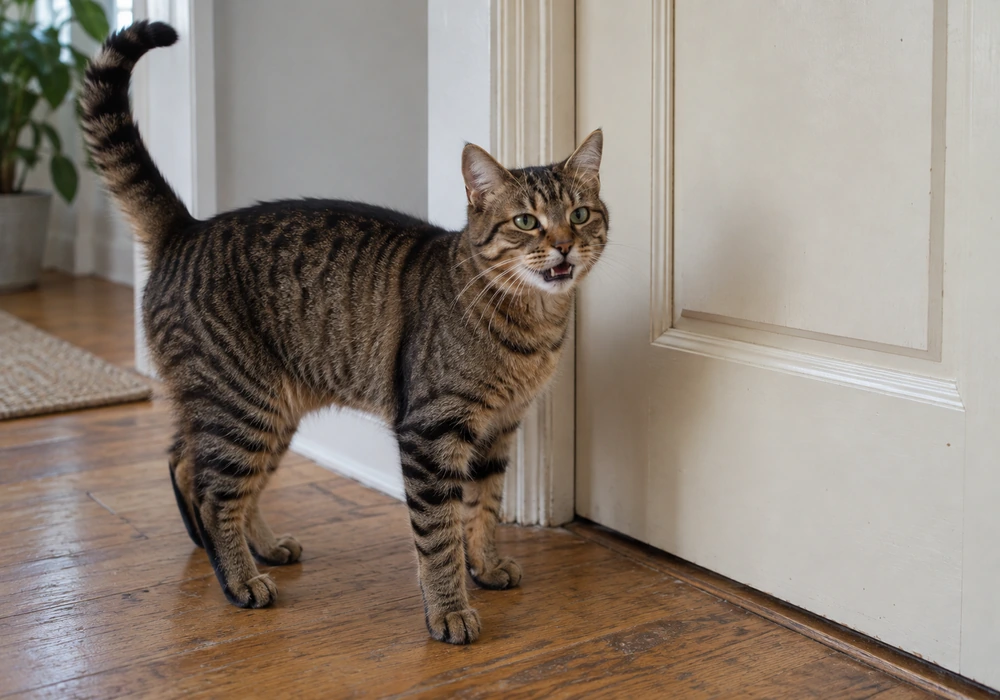
3. Reacting to stress or another cat
A move, construction, visitors, or an unfamiliar cat outside can change vocal behavior. Inside the home, tension can be quieter than a fight: one cat may stare at another, block a doorway, or prevent access to a bowl or litter box.
Watch the routes your cat uses. If the calling happens near another cat or a particular window, that setting may provide a useful clue. Adding another cat for company can introduce more tension and should not be treated as a remedy for meowing. The room-by-room changes in cat stress relief are a better starting point than a second cat.
4. Becoming distressed when left alone
If the calling happens around departures, a short recording during a normal absence may help. Look for pacing, repeated visits to the door, or an outside disturbance. Persistent distress when alone deserves veterinary advice; it should not automatically be treated as a request for attention.
Pacing or clawing at the door on its own is easy to misread. The body-language checklist in signs of fear in cats helps you tell ordinary impatience apart from genuine distress.
5. Experiencing pain or illness
Dental pain, arthritis, urinary problems, and other illnesses can affect behavior. Notice reduced jumping, a changed posture, less grooming, hiding, or discomfort when touched. A painful cat may also become unusually quiet.
Your veterinarian may examine the mouth, assess movement, measure blood pressure, or recommend blood and urine tests. Testing depends on age and findings. If hyperthyroidism is suspected, a normal initial thyroid hormone result does not exclude every case; further testing may be needed.
6. Calling because of reproductive behavior
A female cat in heat may call repeatedly, roll, and become more affectionate. An unneutered male may pace and yowl when he detects a female in heat. Discuss spaying or neutering with your veterinarian. It can reduce mating-related calling, but it will not resolve unrelated pain, stress, or learned habits.
7. Developing sensory or cognitive changes
An older cat may call more as hearing, vision, or sleep patterns change. Confusion, wandering, altered interaction, and nighttime vocalizing can occur with cognitive dysfunction.
Do not assume that nighttime yowling is simply dementia. Thyroid disease, high blood pressure, dental pain, arthritis, and other conditions may cause similar changes and need assessment.
Notice the pattern
What the Timing and Location Can Tell You
The circumstances help narrow your next steps, but they do not establish a diagnosis. For example, a cat can learn to call for breakfast while also developing an illness that increases hunger.
| When it happens | What to check |
|---|---|
| Before meals or early in the morning | Meal timing, actual daily intake, weight changes, and unusual thirst. |
| At a window or closed door | Outside cats, noise, a blocked route, or a familiar request for access. |
| When you leave | Whether calling continues during your absence and whether pacing or other signs of distress occur. |
| While moving or being touched | Pain, stiffness, reduced jumping, or a changed response to handling. |
| At night in an older cat | Disorientation, changes in sight or hearing, pain, thirst, and litter-box habits. |
Two Combinations That Call for a Check Sooner
A meal-time call that now comes with weight loss or heavy drinking points away from habit and toward a medical cause. Calling that changes where it happens, such as a cat that used to ask at the kitchen door and now calls from the hallway, is easier to explain by confusion or pain than by appetite.
Practical next steps
My Cat Meows All the Time: What Can I Do?
Keep a short record
Turn “my cat meows all the time” into a more useful record: note the time, location, what happened just before the calling, and what you did afterward. Add changes in eating, drinking, movement, and litter use. A short video of an ordinary episode can help your veterinarian; do not provoke the behavior to capture it.
Compare the same part of the day when reviewing progress. An evening spent observing your cat cannot be compared fairly with a day when nobody was home. Keep records alongside veterinary care, not as a reason to postpone it.
Adjust meals thoughtfully
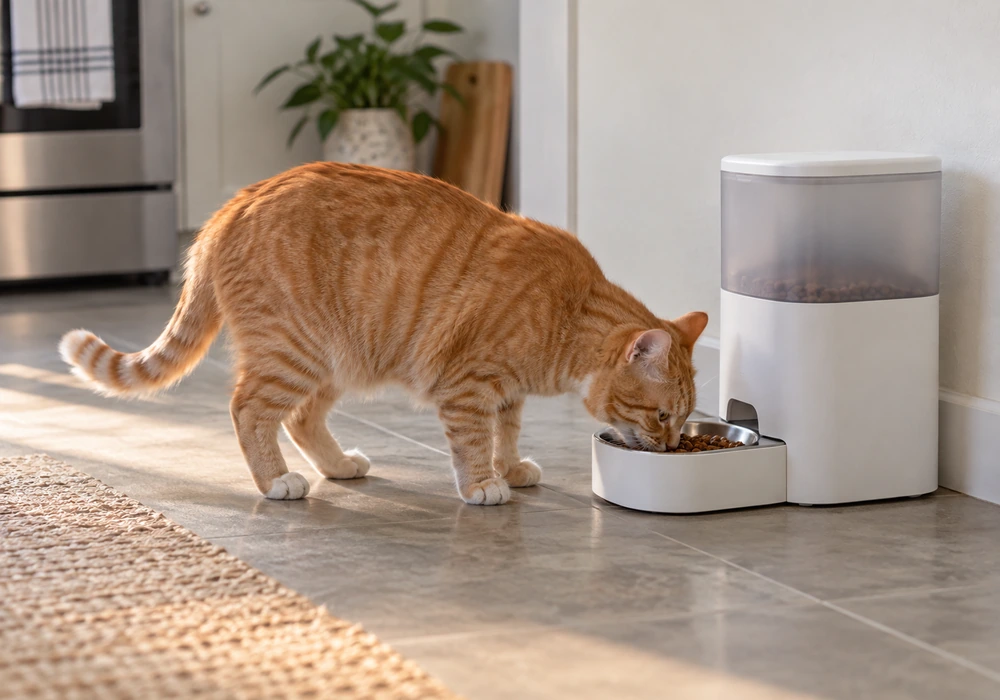
For an otherwise healthy cat whose calls reliably precede breakfast, a timed feeder may help separate meal delivery from waking you. Use a measured part of the existing daily ration. Check the clock, portion size, power supply, and food-storage instructions before relying on it overnight.
A simple food puzzle can provide an activity, but start with food that is easy to reach. If your cat cannot use it comfortably, simplify it or offer an ordinary bowl. Do not make every meal difficult to obtain or keep adding food whenever the cat calls.
Make rest, play, and essentials easier to access
Provide quiet resting places and short play sessions suited to your cat’s mobility and interest. In a home with several cats, provide food, water, and litter boxes in separate locations, with routes each cat can use without confrontation. One box per cat, plus one, is the usual starting figure, and setting up a litter box walks through placement.
Keep hiding boxes dry and free of loose tape or staples. Choose stable feeding equipment and replace damaged items. Wash wet-food dishes after each use and water and dry-food bowls daily. A safe, usable setup matters more than buying a product advertised to stop meowing.
Reward a quiet pause when the request is learned
Once illness, fear, and unmet needs have been addressed, respond to a brief quiet pause with the attention or activity your cat wants. Start with a pause the cat can manage, and offer company regularly before repeated calling begins.
Keep the household response consistent. Rewarding a long bout of meowing only after it becomes unbearable can maintain the pattern. However, do not delay a needed meal, water, litter access, or care to enforce silence. Avoid shouting, spraying water, or frightening the cat.
A common concern
What If Your Cat Meows All Night?
For a healthy cat with a familiar nighttime pattern, try predictable daytime activity, an evening play session, and a scheduled meal if it fits the feeding plan. Check that water, a clean litter box, and a comfortable sleeping place remain accessible overnight.
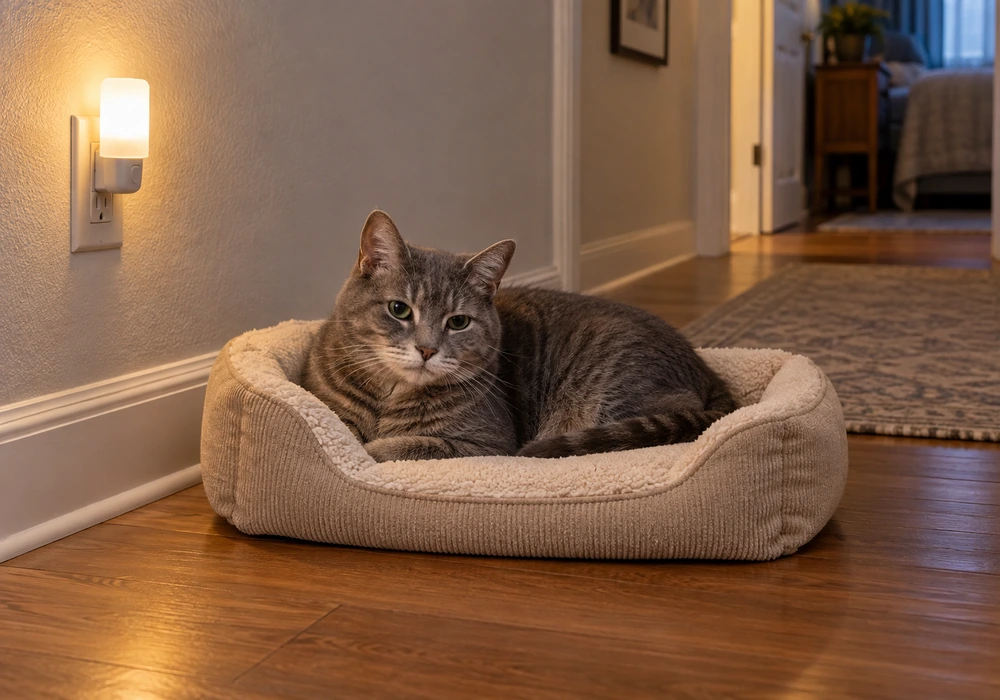
If “my cat meows all the time” now includes new nighttime calling in an older cat, arrange a veterinary review. Keep furniture and essential supplies in familiar positions, provide a bed and litter box that are easy to enter, and consider a low night-light if navigation in dim light is difficult.
Do not automatically ignore nighttime crying or keep a cat awake all day to make them sleep. If you are caring for a young kitten, kitten calming covers age-appropriate settling and handling.
How to Tell Whether Your Cat Is Improving
Useful progress includes easier rest, normal eating and litter use, comfortable movement, and willing interaction. Fewer meows alongside more hiding or lethargy is not an improvement.
When to Ask for a Review
If you still feel that “my cat meows all the time,” review the record with your veterinarian. There is no fixed deadline for behavior change; agree on a follow-up plan and report new symptoms promptly. The aim is to understand what your cat needs and reduce avoidable distress for both of you.
Sources and Further Reading
This guide reflects everyday experience living with cats and does not replace veterinary advice about a particular animal. New or worsening calling, especially with straining to pass urine, labored breathing, reduced eating, weight loss, heavy thirst, or sudden confusion in an older cat, needs a veterinary examination rather than another change of routine at home.