
Food on the chin or stool stuck to a paw does not always call for a full bath. A gentle kitten wash may be as simple as wiping the dirty fur with a warm, damp cloth and drying that area. Most healthy kittens do not need regular baths.
If more of the coat needs cleaning, first check that your kitten is well enough to be washed. Then prepare a warm room, use a suitable shampoo only if needed, rinse carefully, and towel-dry right away. These five steps explain how to choose the least stressful method that gets the fur clean.
1. Decide Whether a Kitten Wash Is Necessary
First identify what is on the fur and check how your kitten is behaving. A kitten that is alert and eating normally needs a different approach from one that is weak, cold, or unwell. Spot cleaning means washing only the dirty area, leaving the rest of the coat dry.
| What is on the fur? | Recommended first step | When to seek advice |
|---|---|---|
| Food around the mouth or a small amount of stool on a paw | Gently remove it with a warm, damp cloth, then dry the cleaned area. | Contact a veterinarian if the skin is sore or stool repeatedly soils the fur. |
| Dirt spread over the body that will not come off with a damp cloth | Assess whether the kitten is old enough and well enough for a bath. | Ask first if the kitten is very young, unwell, or too frightened to handle safely. |
| An unknown chemical or suspected poison | Call a veterinarian immediately and keep the product packaging. | Do not wait for symptoms or choose a cleaning product without advice. |
Can You Bathe a Kitten Under Eight Weeks Old?
Cats Protection recommends cloth cleaning rather than bathing for kittens under eight weeks old. Very young kittens lose heat easily when wet. Reaching eight weeks of age does not automatically mean a kitten needs or can safely tolerate a bath. Health, body condition, and the reason for washing still matter.
Ask your veterinarian how to clean and keep warm a newborn, underweight, or sick kitten. An orphaned kitten may also need guidance from its foster-care team. If the kitten feels cold, seems weak, or is feeding poorly, postpone a kitten wash and contact your veterinarian promptly.
Repeated stool on the rear fur needs more than cleaning. Diarrhea is unusually loose or watery stool. Clean the affected area gently and contact your veterinarian promptly if the problem continues, especially if your kitten also vomits, eats less, or has little energy.
2. Prepare a Warm Room and All Your Supplies
Prepare for a kitten wash in a quiet, draft-free room. Set out everything before bringing your kitten to the washing area so you can keep one hand available to support it throughout cleaning. The new kitten kit checklist covers everyday supplies worth gathering before you begin.
- A stable basin or sink: choose a space you can reach comfortably and remove nearby glass containers or other breakable objects.
- A nonslip mat: check that it stays flat and secure when wet. A towel can work if it does not slide or bunch up.
- A soft washcloth and at least two dry towels: use clean, absorbent fabric without loose threads.
- A small plastic cup and clean rinse water: use the cup to pour water gently onto the body.
- Cat shampoo, if needed: check the age limits and read the application and rinsing instructions in advance.
Use lukewarm water. Test it with your hand or elbow; it should feel comfortably warm, not hot. VCA’s kitten bathing advice recommends warm water, a nonslip surface, and gradual introduction to the washing area.
If there is no urgent cleaning need, let your kitten explore the dry basin first. For a kitten already eating solid food, a small treat can reward calm behavior. Watch for signs of fear in cats, such as flattened ears, a tense crouch, or repeated attempts to escape. Pause instead of forcing the kitten to stay. Keep water away from the mouth and nose; the notes on kitten aspiration sound explain how to describe concerning breathing noises without relying on sound alone. A second adult can hand you supplies, but never leave the kitten unattended in or beside the basin.
3. Use Cat Shampoo Labeled for Your Kitten’s Age
Water alone may remove food or stool from a small area. If you need shampoo for a kitten wash, choose one formulated for cats and labeled for your kitten’s age. Ask your veterinarian if the label does not make its suitability clear.
Do not substitute human shampoo or baby shampoo. Avoid essential oils, household disinfectants, and homemade shampoo mixtures. A label that says “natural” or “gentle” does not replace instructions about which animals and ages the product is suitable for.
Check How the Shampoo Should Be Used
- Dilution: whether to mix the shampoo with water and, if so, the exact amounts. Follow the product’s directions rather than a general recipe.
- Application and rinsing: where to apply it and whether it must be rinsed off.
- Contact time: how long a medicated shampoo must remain on the skin before rinsing. Use the time specified by the veterinarian or product instructions.
Use medicated shampoo only for the condition it is intended to treat and as directed by your veterinarian. An itchy kitten may have fleas, irritated skin, or another problem; itching alone is not a reason to choose a flea shampoo.
For flea treatments applied to the skin, check the product’s instructions about bathing before and after application. Waiting periods vary. Do not apply an extra dose after a bath unless your veterinarian directs you to. Keep shampoo in its original container and follow the instructions for mixing and storing diluted shampoo.
4. Give a Gentle Kitten Wash and Rinse Thoroughly
To Clean a Dirty Paw, Chin, or Patch of Fur
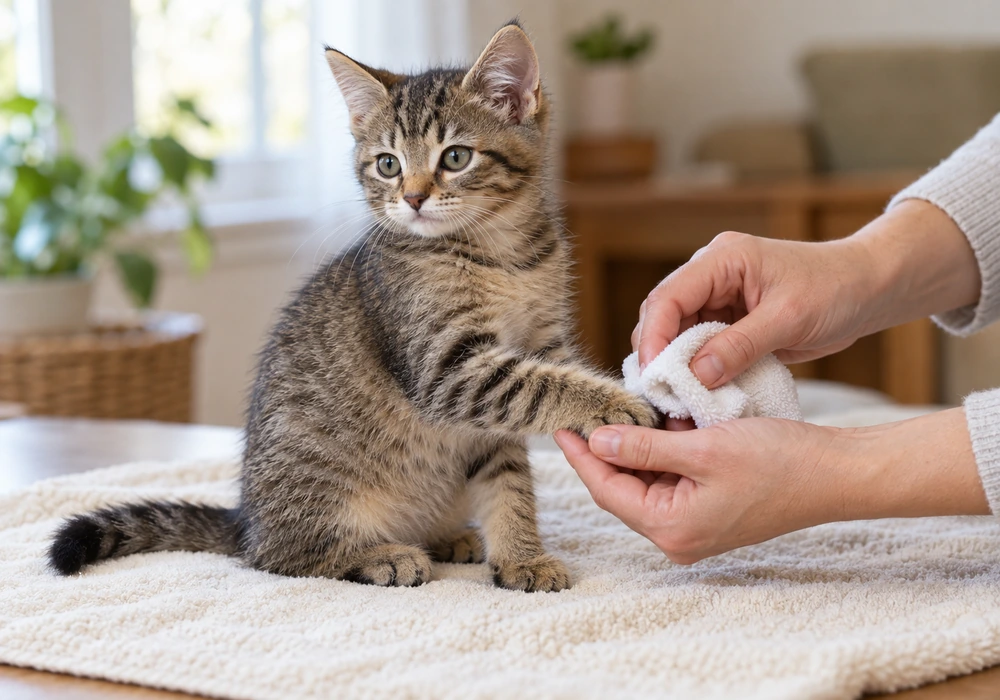
Set your kitten on a towel and support it gently. Press a warm, damp washcloth against dried food or stool to soften it, then wipe the loosened material away. Do not pull dried residue from the fur or skin. Use a clean part of the cloth for each wipe.
For food around the mouth, use a cloth dampened with plain water. Wipe the surrounding fur without getting liquid into the mouth, nose, eyes, or ears. Leave the rest of the coat dry, and gently pat the cleaned area with a dry towel.
A mat is a compact clump of tangled fur. If stool is trapped in a mat close to the skin, stop if removal pulls on the skin or causes discomfort. Ask a veterinarian or experienced cat groomer for help; do not cut the mat out with scissors.
If More of the Body Needs Washing
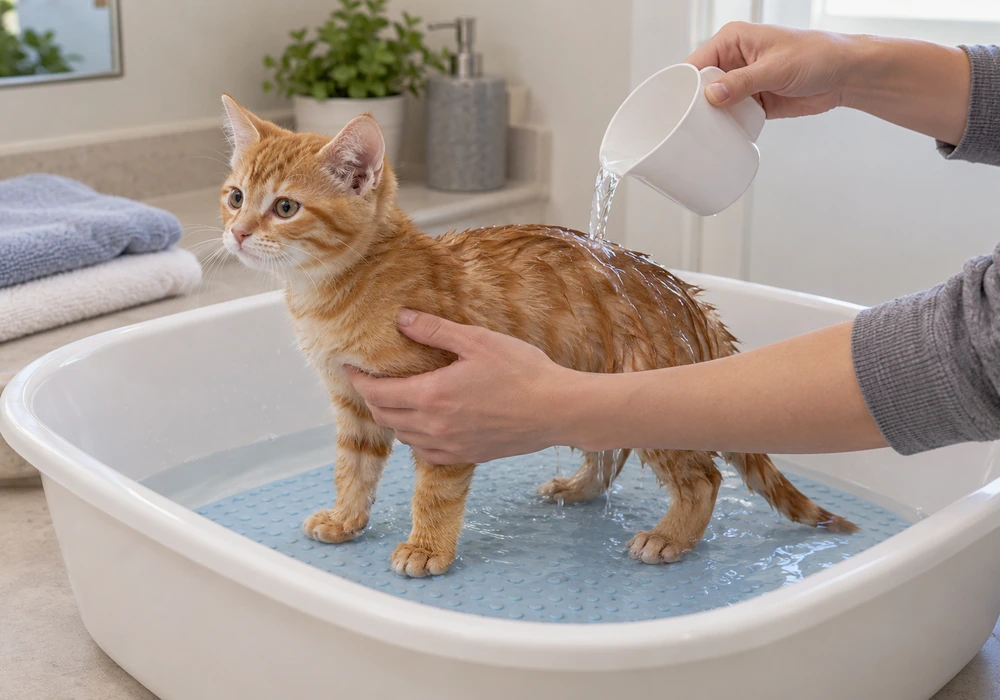
- Support your kitten on the nonslip surface. Keep the paws firmly supported. If there is standing water, use only a shallow amount that does not reach the belly. Keep the head above and away from the water.
- Wet the dirty fur gradually. Pour small amounts of lukewarm water onto the body with the cup. Do not pour water over the head or direct a stream into the ears.
- Apply shampoo as instructed. Gently work it through the areas that need cleaning. Avoid scrubbing or pulling the fur, and follow any required contact time.
- Rinse every shampooed area. Use fresh, lukewarm water, including under the body if shampoo was applied there. Rinse until no shampoo remains; do not use the soapy bathwater for this step.
- Lift your kitten onto a dry towel. Support the chest and hindquarters, then begin drying immediately.
Kittens lick their coats after washing, so removing shampoo residue matters. Only leave a product on the fur if it is specifically designed for that use and suitable for your kitten.
Stop if your kitten panics or repeatedly slips. Do not continue by gripping more tightly. Remove any shampoo and towel-dry the kitten if you can do so safely. If you cannot rinse it safely, contact your veterinary team immediately for help. Avoid scruffing, which means gripping the loose skin at the back of the neck.
5. Towel-Dry Your Kitten and Keep It Warm
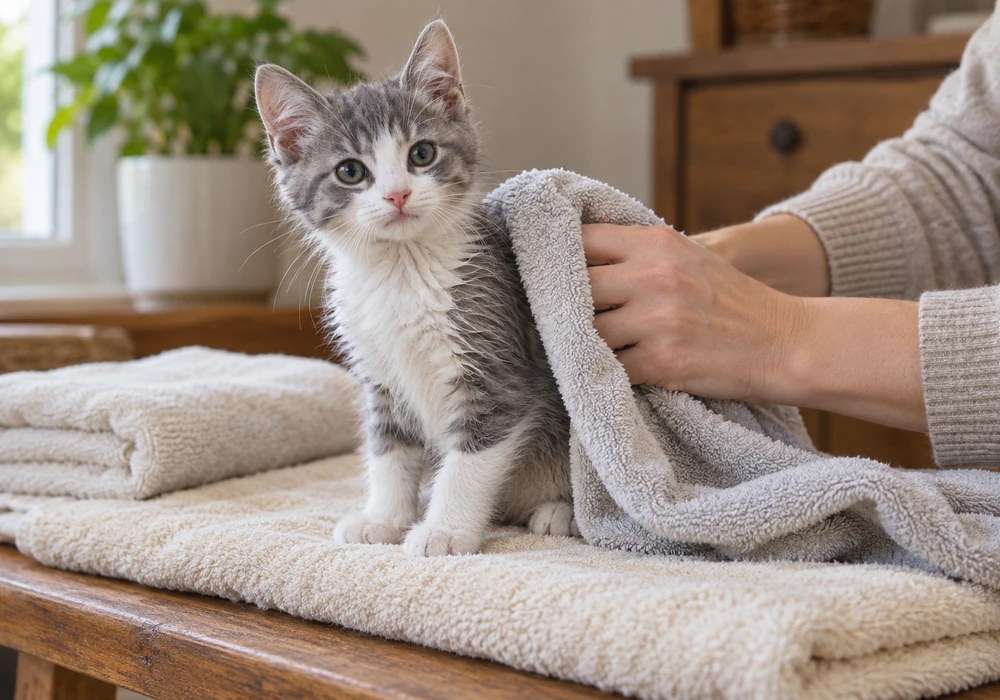
After a kitten wash, gently press and pat the wet fur with a soft towel to absorb water. Replace the towel as soon as it becomes damp. Check every area you washed, particularly the belly, legs, and spaces between the toes; the outer fur may feel dry while the coat beneath is still damp.
Keep your kitten in a warm, draft-free room and supervise it until the coat is dry. Then provide clean, dry bedding and let it rest. Check the litter box for wet or soiled material too; safe litter for kittens covers suitable choices and routine cleaning. A household hair dryer is usually unnecessary. If towel-drying is not enough, ask your veterinary team how to finish drying your kitten safely.
Do not use hot air, put the kitten directly on a heating pad, or place it in a heated enclosure to speed up drying. Very young kittens may not move away from excessive heat and can be burned.
Know when to call a veterinarian. If your kitten feels cold or keeps shivering after washing, seek veterinary advice promptly. Unusual weakness, difficulty waking, or slow, shallow, or labored breathing requires emergency care. These signs can occur with hypothermia, an abnormally low body temperature, or another serious problem. Gently dry the kitten, wrap it loosely in a dry towel with its face uncovered, and contact an emergency veterinarian immediately. Do not wait for shivering before seeking help.
Afterward, wash the towels and cloths, clean and dry the basin and mat, and replace wet bedding. Between necessary washes, brushing is covered in grooming cats.
Common Questions About a Kitten Wash
How often should I wash my kitten?
A kitten wash should address a specific cleaning need rather than follow a fixed schedule. Use a damp cloth when that is enough. If your kitten regularly needs a full bath, ask your veterinarian why the coat is becoming soiled. Follow the prescribed schedule for any skin treatment.
Can I use dish soap instead of kitten shampoo?
Do not use dish soap for routine bathing. A veterinarian may recommend a particular detergent after exposure to a specific substance, but that instruction applies to that situation. If you suspect poisoning, call immediately, keep the packaging, and prevent licking if you can do so safely without delaying care. Do not use solvents to remove the substance.
Will a bath get rid of fleas?
A bath may remove some adult fleas, but it does not eliminate flea eggs and developing fleas in the home. Ask your veterinarian for treatment appropriate to your kitten’s age and weight, along with advice on cleaning the home. The FDA’s flea-treatment guidance advises checking the label’s age and weight limits and using a flea comb for kittens too young for flea products.
Never use a flea treatment labeled for another species or reduce its dose to try to make it suitable for a kitten. Some contain permethrin, an insecticide that can severely poison cats. Heavy flea infestations can also cause anemia, a shortage of red blood cells that carry oxygen. Seek urgent veterinary care if a kitten with fleas has pale gums, seems weak, or has difficulty breathing.
This guide reflects everyday experience living with cats and does not replace veterinary advice about a particular animal. A kitten that feels cold, keeps shivering, refuses to eat, or has repeated diarrhea or stool in the coat needs a veterinary examination, and unusual weakness, difficulty waking, pale gums, or slow, shallow, or labored breathing needs emergency care.