
A wet rattle or cough during a feed can be frightening. If you are worried about a possible kitten aspiration sound, stop feeding and watch the kitten’s breathing. A noise alone cannot confirm that milk reached the airway, and a serious problem can develop without any obvious coughing.
When it is an emergency
Open-mouth breathing at rest, obvious effort with each breath, collapse, or blue, gray, or markedly pale gums are signs that require emergency veterinary care. Stop feeding and arrange transport immediately. Do not wait for a recording or for every sign to appear.
If milk comes out of the nose, coughing starts during feeding, or breathing changes after a feed, stop and contact a veterinarian immediately. Do this even if the suspected kitten aspiration sound stops and the kitten seems to recover.
A veterinarian must assess suspected kitten aspiration pneumonia using the feeding history, breathing effort, and examination findings. A sound alone can neither confirm nor rule it out.
During normal swallowing, liquid travels down the esophagus, the tube leading to the stomach. Aspiration happens when milk, medication, vomit, or other material enters the airway instead, and it may reach the lungs. To judge a concerning sound, consider what happened just before it and whether the kitten can breathe comfortably now.
How to Describe a Possible Kitten Aspiration Sound
You might hear a new wet gurgle, rattle, cough, or whistle during or after feeding. Tell the veterinarian whether it started while the kitten was swallowing, continued after the feed stopped, or appeared later. The timing and the kitten’s breathing effort are more useful than trying to match the noise to an online recording.
| What you hear | What to report and how to respond |
|---|---|
| Wet, bubbly, or gurgling breathing | Report a new wet noise during or after feeding. Stop the feed and contact a veterinarian; the sound alone cannot show whether fluid entered the lungs. |
| Coughing or hacking | Tell the veterinarian whether coughing began while milk or medication was being given. Stop giving anything by mouth until you receive instructions. |
| Wheezing or whistling | A whistling sound may accompany narrowed airways. Report whether the kitten is also breathing faster or working harder to breathe; the noise does not identify the cause. |
| Snoring, snorting, or a harsh high-pitched sound | These sounds may come from the nose or throat. Describe any nasal discharge and feeding problems. Do not assume the lungs are affected, or unaffected, based on the sound. |
| Crackling or popping | Describe when the sound occurs and whether breathing looks difficult. A phone recording cannot confirm the crackles a veterinarian may hear through a stethoscope. |
The absence of coughing does not rule out aspiration. Some cats with aspiration pneumonia cough little or not at all. Changes in breathing effort, alertness, and feeding tolerance can be easier to notice.
A recording of your own kitten at rest is a better baseline than a clip of someone else’s cat, and the sounds cats commonly make show how much normal variation exists.
Could Congestion or Purring Explain the Noise?
Possibly. Nasal congestion and upper respiratory infections can cause noisy breathing, often with sneezing or discharge. A kitten with persistent noisy breathing needs an examination even when there was no obvious feeding accident.
A purr-like noise is not proof that a kitten is comfortable: cats can also purr when they are unwell or uncomfortable. After a feeding problem, watch the kitten’s posture and chest movement. Straining to breathe, extending the neck while distressed, or breathing with an open mouth matters more than the noise’s volume. Cornell’s guidance on breathing difficulty in cats explains why prompt assessment is essential.
Responding to a Possible Kitten Aspiration Sound
- Stop anything being given by mouth. Remove the bottle nipple or feeding syringe. Do not offer more milk or water to test whether swallowing has improved.
- Call a veterinarian immediately. Explain what happened and what breathing looks like now. If the kitten is struggling to breathe, go to an emergency clinic and call while arranging transport.
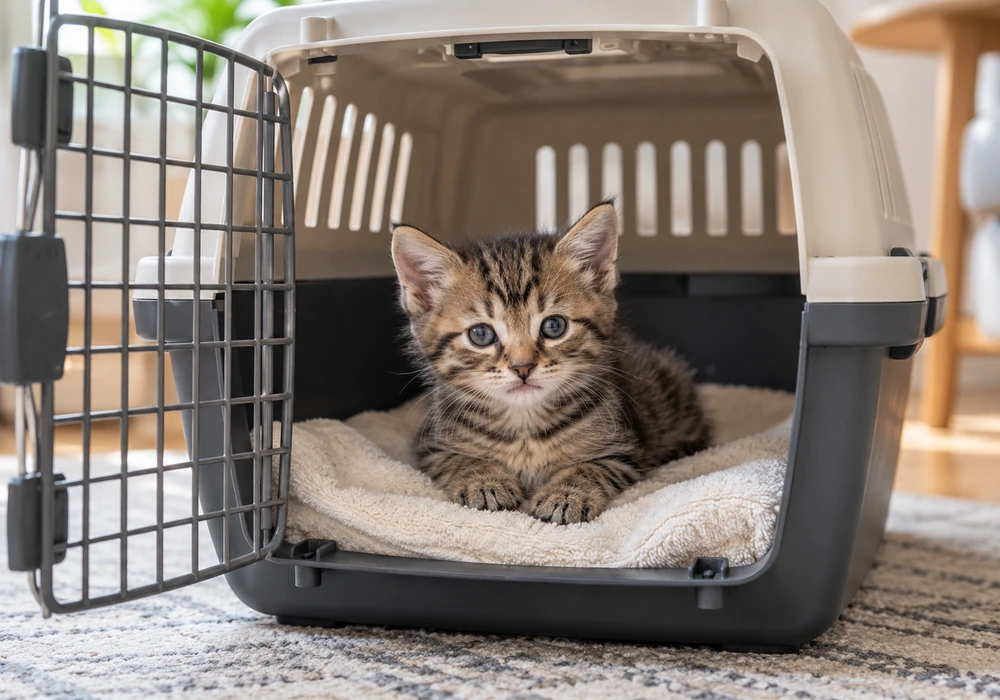
- Handle the kitten as little as possible. Use a ventilated carrier with soft bedding. Let the kitten keep a comfortable breathing position, leave the face clear, and avoid tight wrapping around the chest.
- Prevent chilling without overheating. Ask the clinic about warmth during transport. Any heat source should be gently warm, wrapped, and kept from direct skin contact. Do not delay departure to prepare elaborate warming equipment.
A stopped feed still needs a replacement plan straight away. Newborn kittens need frequent nutrition. Ask when feeding can safely resume, by which method, and in what amount. Stopping an unsafe feed does not mean leaving a kitten unfed overnight while waiting for improvement.
Do Not Try to Drain Milk From the Lungs
Do not swing or shake a kitten, hang it upside down, induce vomiting, reach blindly into the throat, or attempt deep suction. These actions can cause injury or worsen the situation. Do not use chest compressions to try to clear milk from a kitten that is responsive and breathing.
If the kitten becomes unresponsive or stops breathing normally, call the emergency clinic for immediate resuscitation instructions while arranging urgent care.
Give the Clinic a Clear Account of the Event
Report the kitten’s approximate age, what was given, whether a bottle or syringe was used, when the noise began, and whether milk appeared at the nostrils. Mention vomiting, previous feeding problems, medications, and any similar episodes.
Record a possible kitten aspiration sound only if the kitten is stable and filming will not delay care. A short video showing the head, chest, and abdomen may help the veterinarian judge the episode. Keep the original audio and state whether the kitten was resting, crying, or feeding. Never repeat a feed to reproduce the sound.
Why Feeding Problems Can Lead to Aspiration
A kitten needs to coordinate suckling, swallowing, and breathing. Milk delivered faster than the kitten can swallow is more likely to enter the airway. Squeezing a bottle, pushing a syringe plunger, feeding a kitten on its back, or using a damaged nipple with excessive flow can all contribute.
Technique is only part of the picture. A cold, weak, or ill kitten may not suck or swallow normally. A cleft palate, an opening in the roof of the mouth, can interfere with feeding. Vomiting, incorrectly given liquid medication, and swallowing disorders are other possible causes.
Milk at the nose is a feeding warning sign, not proof of pneumonia. It is a reason to stop and obtain veterinary advice. Repeated episodes need investigation; changing bottles cannot correct every underlying problem.
How Veterinarians Assess and Treat Aspiration
A kitten in respiratory distress, meaning difficulty breathing, may need oxygen and a quiet environment before a complete examination or chest X-rays. Reducing stress and steadying the kitten’s breathing can be more urgent than obtaining images straight away.
Once the kitten can tolerate assessment, the veterinarian considers the feeding history, breathing effort, temperature, and chest sounds. Chest X-rays may show pneumonia. Blood tests and, in selected stable patients, airway samples can add information about inflammation or infection.
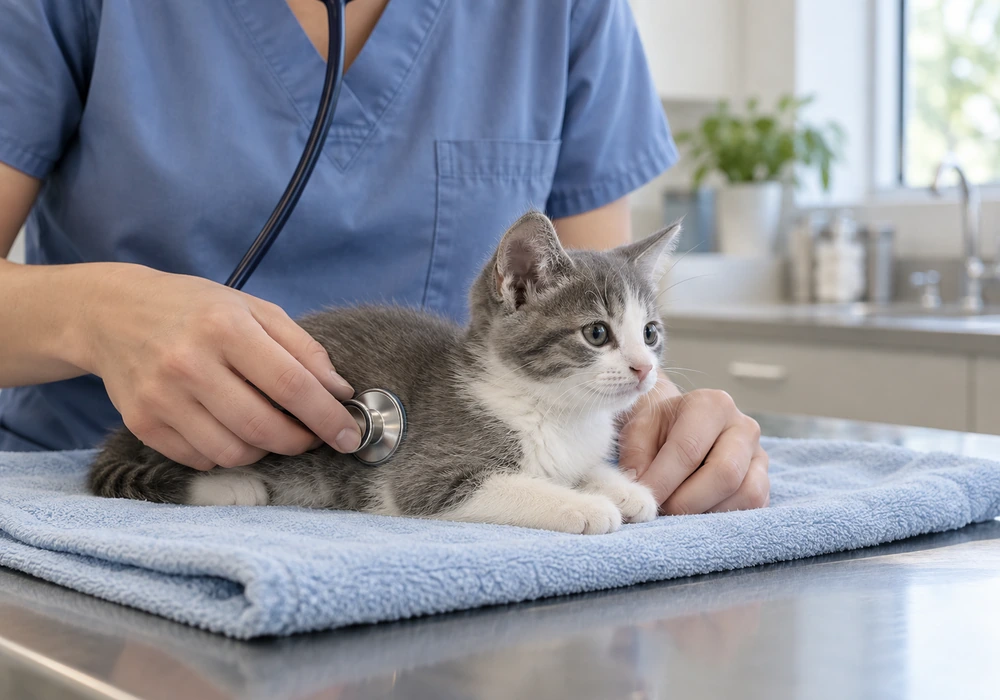
Changes on X-rays can appear after the initial event. The National Kitten Coalition’s aspiration guidance notes this delay. An early image without visible pneumonia must be read alongside the kitten’s symptoms and history; worsening breathing still needs reassessment.
Aspiration, Lung Inflammation, and Infection Are Different
Aspiration is the event itself. It can cause pneumonitis, or lung inflammation, when inhaled material irritates and injures lung tissue. Bacteria carried into the lungs can also cause infection. Aspiration pneumonia is pneumonia associated with inhaled material; the veterinarian assesses the extent of lung injury and whether bacterial infection is likely.
Treatment may include oxygen, carefully managed fluids, help maintaining body temperature, a safe nutrition plan, and medication chosen for the findings. Antibiotics treat bacterial infection; they do not remove inhaled milk. Whether they are needed depends on the veterinarian’s assessment of infection and lung injury. Do not start leftover antibiotics or change a prescribed course without speaking to the treating veterinarian.
If swallowing is unsafe, the veterinary team may recommend assisted feeding. Feeding tubes need correct placement, training, and an individual plan. They are not a home substitute for bottle feeding during a breathing emergency.
Reduce Aspiration Risk During Future Bottle Feeds
These precautions apply to a kitten well enough to feed and, after a suspected aspiration event, cleared by the veterinarian to resume oral feeding. A cold kitten, or one too weak to swallow, needs urgent professional guidance first. Home setup is part of preparing for a new kitten; bottle-fed kittens also need an individual feeding and warmth plan from their veterinary or rescue team.
- Use a supported belly-down position. Keep the head comfortably aligned and let the kitten suckle at its own pace. Do not cradle a feeding kitten on its back.
- Check the nipple and milk flow. Look for tears, enlarged openings, loose parts, and leaks. Ask a veterinarian or trained foster supervisor to demonstrate the expected flow with your actual bottle and formula. Do not enlarge a hole simply to speed up feeding.
- Avoid pressure. Do not squeeze milk into the mouth or push harder when a kitten refuses to swallow. A syringe is not automatically safer than a bottle.
- Prepare kitten milk replacer as directed. Follow the product’s mixing instructions and the kitten’s feeding plan. Do not add extra powder, water, oil, or thickeners to try to prevent aspiration.
- Warm the portion gently. Use a warm-water bath and check that the formula is comfortably warm, not hot. Avoid microwaving formula, which can heat unevenly.
The ASPCA kitten bottle-feeding guide (PDF) covers belly-down positioning, avoiding forced delivery, and cleaning supplies after use. Follow your own formula label and veterinary plan for amounts, mixing, and storage. The same label discipline matters once a kitten moves to solid food, and the checks for prepared kitten food set out what to look for then.
Keep Feeding Equipment Clean and in Good Condition
After use, take the bottle apart, wash the bottle, cap, and nipple, remove milk residue, rinse thoroughly, and let the parts dry in a clean place. Follow the equipment’s instructions for any additional disinfection; not every component tolerates boiling or a dishwasher.
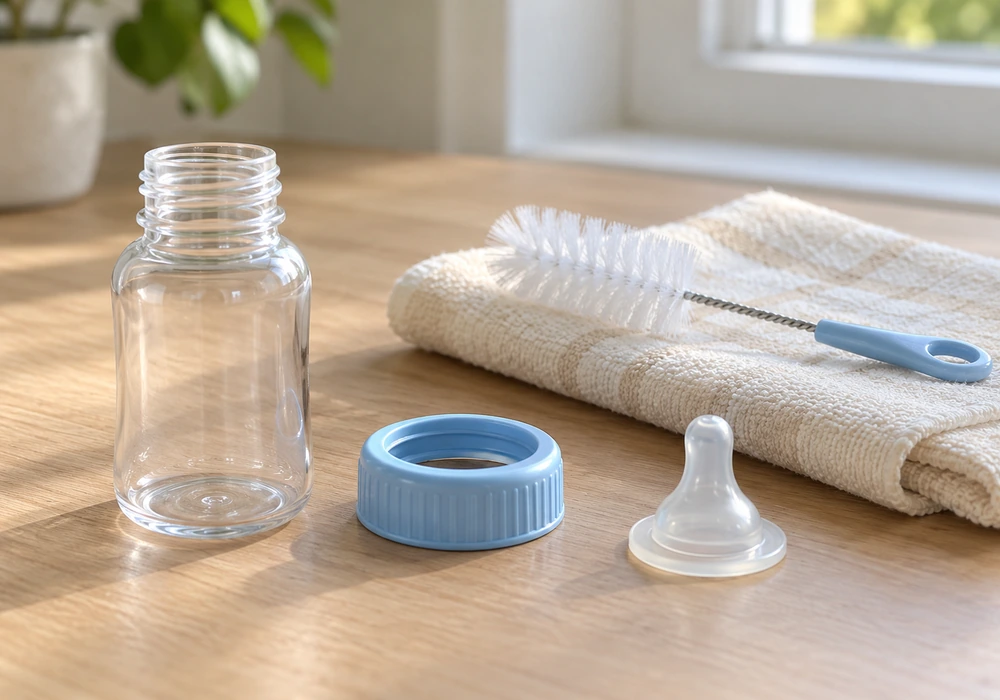
Discard formula remaining in a used bottle instead of pouring it back into the clean supply. Label prepared formula with the preparation time, refrigerate it as directed, and follow its specific storage limit. Replace damaged nipples rather than relying on cleaning to make them safe.
Watch Breathing and Feeding After Treatment
Ask for written instructions covering feeding, medication, warmth, warning signs, and the next examination. Confirm an after-hours contact. A kitten that becomes quieter, or whose unusual sound stops, has not necessarily recovered. Neither change shows that the lungs are clear or that the feeding problem has been solved.
- Record the time of each feed and how much was actually taken, not just offered.
- Note changes in breathing, alertness, nasal discharge, coughing, or feeding tolerance.
- Track weight as the veterinarian recommends, and use one shared log if several people provide care.
- If asked to count breaths, record whether the kitten was resting, crying, or moving. A number should never override visible difficulty breathing.
Seek emergency care for renewed breathing difficulty, collapse, or abnormal gum color. Contact the treating clinic promptly about poor intake or deterioration rather than waiting for the scheduled recheck.
Can a Kitten Aspiration Sound Develop Later?
Changes may begin during a feed or develop later. There is no reliable home waiting period after which a silent, apparently improved kitten can be assumed safe. Report the suspected event immediately and follow the veterinarian’s monitoring plan.
Can a Kitten Recover?
A kitten can recover with veterinary care, but the outcome depends on the amount and type of material inhaled, the extent of lung injury, and any underlying feeding disorder. A veterinarian can give a more useful outlook after examining the kitten and watching its response to treatment.
More health topics: Cat Health.
This guide reflects everyday experience caring for kittens and does not replace veterinary advice about a particular animal. A kitten that breathes with its mouth open, works hard for each breath, collapses, or has blue, gray, or very pale gums needs emergency care, and any kitten that coughs during a feed or has milk at the nose should be examined the same day.