
A feral cat is a domestic cat that is not accustomed to close contact with people and usually avoids being approached or touched. The key difference from a stray cat is its comfort around people, not simply that it lives outdoors.
If you find an unfamiliar cat, first check for signs that it needs urgent help. Then look for an owner or regular caregiver and observe from a safe distance. One frightened reaction is not enough to tell whether a cat is feral.
Get urgent help for breathing difficulty, collapse, heavy bleeding, or a serious injury. Contact a veterinary clinic or trained rescue without waiting to decide whether the cat is feral. Avoid trying to pick up or corner a frightened cat.
Feral Cats vs. Stray Cats: The Difference That Matters
Being comfortable with friendly human contact is called socialization. Feral cats, stray cats, and pet cats are all the same domestic species, Felis catus. These labels describe their circumstances and relationship with people, not different breeds.
| Cat’s situation | What it means for your next step |
|---|---|
| Feral cat | Avoids close human contact and is not accustomed to petting or handling. Ask an experienced community-cat team to assess its history and care needs. |
| Stray cat | Has been used to human contact but is now lost, abandoned, or without a regular home. Check for an owner before considering fostering or adoption. |
| Owned outdoor cat | May visit your yard while still having a home. A friendly greeting or missing collar does not show that it needs a new owner. |
Community cat is a broader term for an unowned cat living outdoors; it can include both feral and socialized cats. A cat’s comfort with people can also vary by person and setting. Alley Cat Allies’ guide to feral and stray cats explains these distinctions.
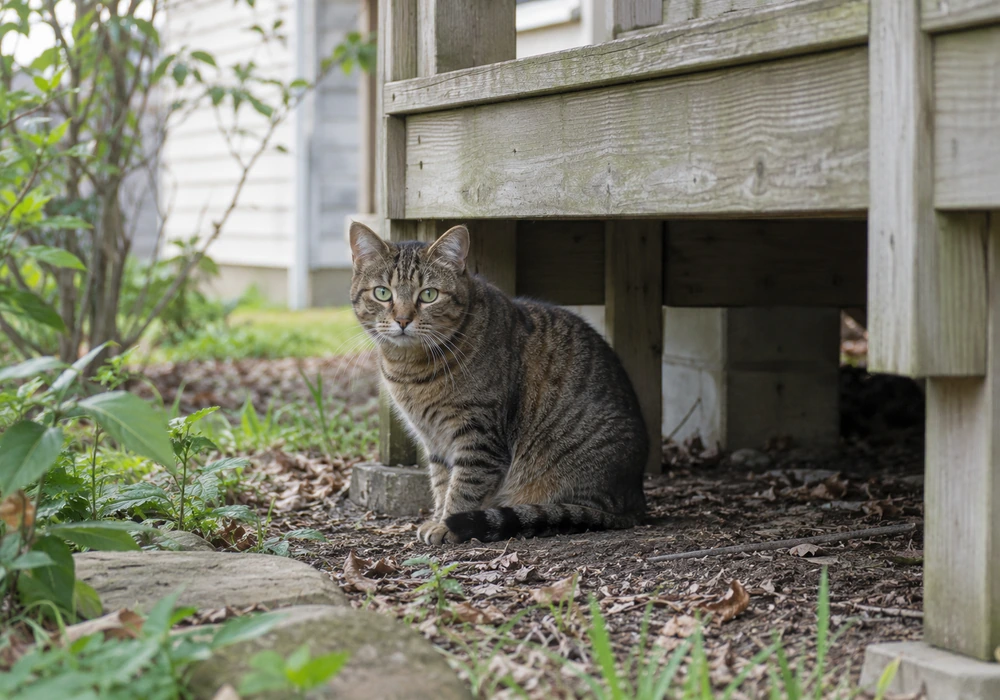
For example, a lost pet may hide under a porch and hiss at a stranger. If a neighbor recognizes it as a cat that normally seeks petting, that history matters more than the first fearful encounter. For more on mixed signals, stray cat hisses but wants to be petted outlines why a frightened cat can still want company.
How to Assess a Possible Feral Cat in Three Steps
Start with information you can gather without touching the cat. The aim is to choose suitable help, rather than prove that you can get close.
1. Look for an Owner or Regular Caregiver
Take a photograph from a distance, check local lost-cat notices, and ask nearby residents whether they recognize the cat. Find out how long it has been around, who feeds it, and whether it has lived indoors or accepted petting.
Also ask how it behaves with familiar people. A cat that hides from you but regularly rubs against a neighbor may simply be wary of strangers.
2. Watch During Several Calm Encounters
Stay far enough away that the cat can remain where it is, and leave its escape route open. Observe on different occasions in its familiar surroundings. If someone already feeds it, ask whether it approaches them willingly or waits until they leave.
A feral cat may consistently retreat from close contact, even with a regular feeder. Waiting near a food bowl does not by itself show that the cat is comfortable being touched. Never withhold food, chase it, or reach toward it to test its response.
3. Combine the Behavior With the Cat’s History
Write down what actually happened: who was present, whether the cat approached freely, and whether it sought petting or moved away. Share those notes with an experienced rescue, especially if the evidence is mixed.
Example: Suppose a cat eats near its feeder but backs away whenever the feeder reaches toward it. That shows familiarity with the person, but it does not establish that the cat would welcome handling or indoor life. A known history of avoiding touch helps the team interpret the pattern.
Flattened ears, crouching, and hissing are signs of fear in cats, so step back if you see them. Learn to recognize subtle signs of fear in cats as well. A dirty coat, silence, or a missing collar cannot reliably distinguish a feral cat from a frightened pet.
What to Do After Finding a Feral or Stray Cat
Once you have some background, choose a plan that fits the cat. A clinic, shelter, rescue, or community-cat organization can help arrange safe capture and a microchip scan. Getting your cat microchipped breaks down how identification and registration work.
- An owner or caregiver is identified: explain what you have noticed and coordinate care before starting another feeding routine or moving the cat.
- The cat accepts friendly contact, but no owner is found: follow local found-cat reporting procedures. Then ask a rescue about fostering or adoption if it needs a home.
- An adult cat consistently avoids close human contact: ask a community-cat program about veterinary care, sterilization, and whether support at its familiar site is appropriate.
- Its history and behavior remain unclear: give the team your photographs and observation notes. Do not force the cat indoors just to test whether it becomes friendly.
Before trapping, contact the receiving organization so an appointment, transport, and recovery space are ready. Do not move the cat to another neighborhood yourself; an unfamiliar site can leave it without known shelter or caregivers.
What an Ear Tip Tells You About an Outdoor Cat
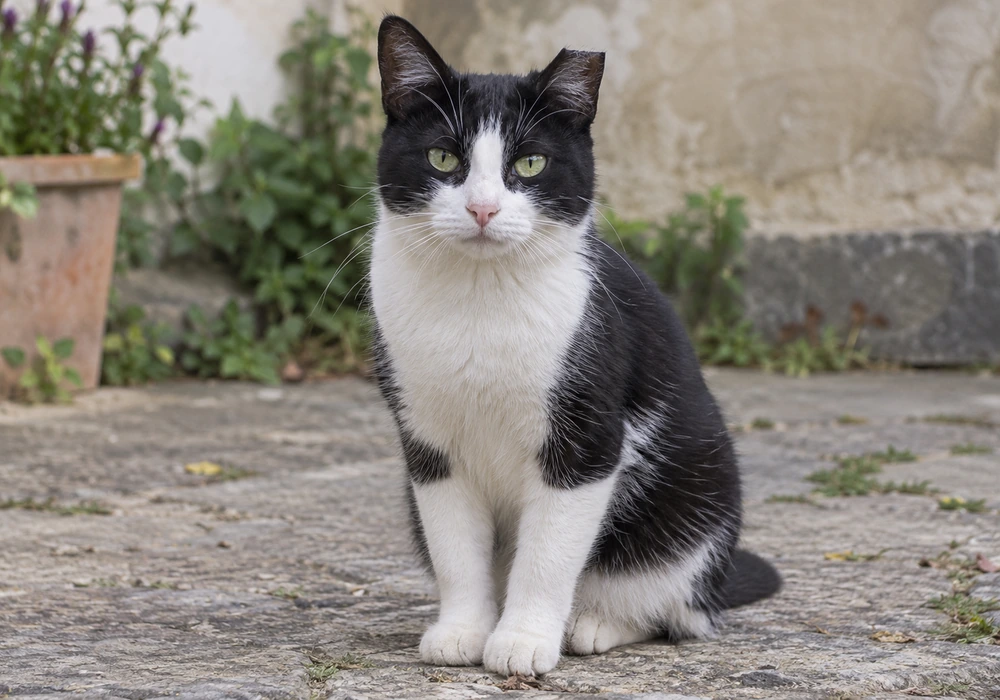
A neat, flat ear tip commonly marks a community cat that has been spayed or neutered. A veterinary team makes the mark while the cat is under anesthesia for sterilization. The left ear is often used, although local practices vary.
An ear tip does not show whether the cat is feral. Cats that accept petting can also be ear-tipped, and an irregular torn ear may be an injury rather than a planned mark.
If you see an ear tip, ask local caregivers whether they recognize the cat. They may know its feeding area and medical history. The mark does not prove that vaccinations are current or remove the need for help when the cat is sick or injured.
Can an Adult Feral Cat Become an Indoor Cat?
A frightened former pet may settle into a home again with time and suitable care. By contrast, an adult feral cat that has never been comfortable with close human contact may find indoor confinement highly stressful. Stress relief for indoor cats helps, but it cannot make an unsuitable placement work.
Regular feeding can build familiarity, but eating near a person is different from enjoying petting or feeling safe indoors. Before planning adoption, ask an experienced rescue to assess the cat’s background and responses over time.
A carefully planned foster placement may suit a socialized cat that is currently frightened. For a cat that continues to avoid close human contact, the team may instead recommend care at a suitable familiar outdoor site. The decision should reflect the individual cat’s welfare and the safety of the location.
Feral Kittens Need a Different Assessment
Kittens born to a feral mother can become comfortable with people through early, positive interaction. The Feline Veterinary Medical Association’s socialization statement places the sensitive socialization period at approximately 2 to 9 weeks of age.
Older feral kittens need an individual welfare assessment. The association generally advises against attempts to socialize outdoor feral kittens older than four months because of concerns about their emotional health. That guidance is not a claim that every kitten becomes impossible to socialize on a fixed birthday.
- Check for immediate danger. Sick, injured, cold, or clearly endangered kittens need prompt rescue or veterinary help.
- Ask about the mother. She may be nearby or waiting for people to leave. Have a rescue assess the litter’s age and dependence on her before removing healthy kittens.
- Prepare suitable care if fostering is recommended. Our guide to a kitten’s first days at home explains how to set up a safe space. Very young orphaned kittens need age-specific feeding instructions from a veterinarian or experienced neonatal rescue.
Ongoing Care for Feral Cats at a Suitable Outdoor Site
Helping a feral cat involves more than leaving food outside. Coordinate with existing caregivers and a local program, check local requirements, and assess traffic, shelter, and nearby sensitive wildlife habitat. Return to an outdoor site is not suitable in every situation.
Plan Veterinary Care Before Trapping
Trap-neuter-return (TNR) involves humane capture, veterinary sterilization, and return to a suitable familiar site after recovery. Programs commonly also arrange a microchip scan, vaccination, and ear tipping. Suitable socialized cats and kittens may be considered for adoption instead.
Work with a trained team to prepare the appointment, trap monitoring, secure transport, and recovery space. Follow the clinic’s instructions for feeding, observation, and release. Recovery time depends on the procedure and the cat’s condition, so a fixed overnight rule will not suit every cat.
After return, keep a simple record of the cat’s markings, treatment, available vaccination history, and health changes. Report new arrivals for assessment. Sterilizing one cat prevents its future litters; reducing births across a group requires continuing work.
Use a Consistent Feeding and Cleanup Routine
Where feeding is permitted, provide complete cat food suited to the cat’s life stage and fresh water. Coordinate portions with other caregivers so several people do not unknowingly provide extra meals. Our basic cat care guide covers food selection and storage hygiene.
Use dishes in a suitable feeding spot, rather than scattering food on the ground. Observe the meal, remove leftovers when the cats finish, and clean the dishes. Clear food away sooner if heat, insects, or other animals become a problem, while keeping fresh water available.
Check Shelter and Bedding Regularly
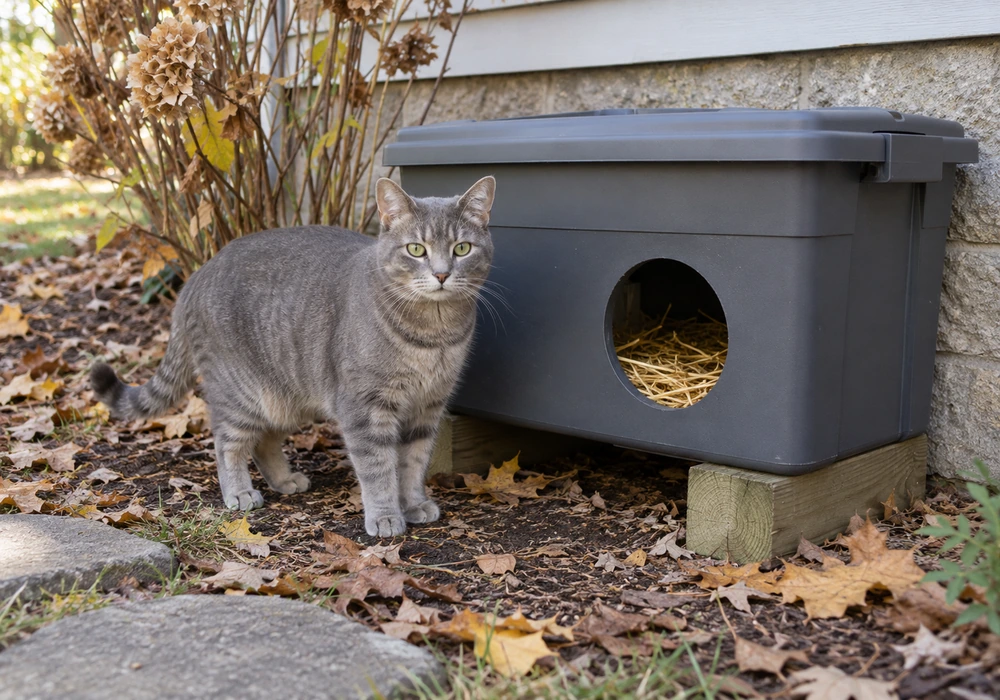
In cold weather, provide a stable, weather-resistant, insulated shelter raised above wet ground. Face the entrance away from prevailing wind and keep the approach clear. Some shelter designs use an opening about 6 by 6 inches; adjust the size so the cats using it can enter comfortably.
Use loose, dry straw, the dry stalk material, for bedding in an exposed winter shelter. Hay is different, and blankets or towels can hold moisture. Replace damp or dirty bedding, and keep food and water outside the sleeping space.
Neighborhood Cats’ winter-shelter guidance provides designs and placement advice. In warm weather, prioritize shade, fresh water, and protection from heat rather than relying on a small insulated box.
When a Feral Cat Needs Professional Help
A cat that stops eating, develops a wound, limps, or has a marked behavior change needs veterinary advice. Contact a clinic or trained rescue, describe what you can see, and ask how to arrange safe assessment. Do not attempt direct handling of a frightened cat.
Keep unfamiliar cats separate from household cats until a veterinary assessment. Also wash your hands after handling feeding dishes or cleaning the area.
If you are bitten or scratched, wash the wound immediately with soap and running water. Seek prompt medical advice for a bite, a serious wound, signs of infection, or uncertainty about the cat’s rabies vaccination. The CDC’s advice on cat bites and scratches explains when medical attention is needed.
For a healthy cat whose status is unclear, begin with a photograph, local inquiries, and calm observation. Those details help a rescue choose care based on the cat’s actual needs.
This guide draws on everyday experience caring for cats and does not replace veterinary advice about a particular animal. A cat that struggles to breathe, collapses, bleeds heavily, has a serious wound, or stops eating needs professional help straight away, and a bite or deep scratch on a person should be checked by a doctor.