
When you get your cat microchipped, the appointment is usually straightforward: a trained professional checks for an existing chip, inserts one if needed, and confirms that a scanner can read its number. The price depends on where you live and what the service includes. Before you leave, you also need to know who will register that number and how to confirm that it is linked to your current contact details.
That last step matters just as much as the implant. A microchip can help a clinic or shelter identify a found cat, but a readable number is useful only if it leads to someone who can help bring the cat home.
How Much Does It Cost to Get Your Cat Microchipped?
Start with a local quote rather than a single price from a search result. A public shelter clinic, a private veterinary appointment, and an implant added to another procedure may have different fees. Published examples show why the service details matter.
| Published example | Price | What to check |
|---|---|---|
| Humane Society of Southwest Missouri, Springfield, United States | US$25 per pet | Its public walk-in clinic lists a $25 fee, using mini chips, and charges the same for any pet. Owners are instructed to register the chip online afterward. |
| Cats Protection guidance, United Kingdom | £20–£30 | A general estimate that varies by location, rather than a guaranteed quote from every clinic. |
Published prices checked October 15, 2026. These are separate regional examples, not a national or worldwide average. Confirm current fees and eligibility before booking.
The Missouri clinic’s service page explains its registration step and asks that cats stay in individual carriers throughout the visit. Meanwhile, Cats Protection’s microchipping guide notes that charities may offer reduced rates and that its adoption fee includes microchipping. If your cat came from a rescue, check the paperwork before paying for another implant.
Ask for the Full Price, Including Registration
When comparing places to get your cat microchipped, ask whether the quote includes:
- The chip and insertion. Also ask whether a consultation or examination is charged separately.
- The first registration. Find out whether the clinic submits your details or whether you must complete the process yourself.
- Later account changes. Ask about fees for changing contact details or transferring the record after adoption or rehoming.
- Any additional services. Clarify taxes, handling or sedation charges if relevant, and paid recovery plans offered alongside the basic record.
Not every provider charges for every item. Similarly, an annual registry plan is not the cost of inserting the chip. Ask what registration and updating options remain available if you decline or stop a paid plan. A low initial price tells you little unless you know how the record will be maintained.
What the Chip Actually Does
A standard identification microchip is a small, passive RFID device placed under the skin. A compatible scanner supplies the energy needed to read its identification number, so the chip has no battery to recharge. Your contact details are stored in a separate registry, not in the implant.
It does not provide GPS tracking or send your cat’s location to your phone. Someone must find the cat, scan the chip, and use the number to contact the appropriate registry.
Before the Visit: Check Existing Records and Make a Plan
Before you get your cat microchipped, gather adoption documents, any previous chip number, and your current phone number, email, and address. Tell the clinic if your cat becomes frightened during handling or has a medical condition that may affect the visit. That gives the team time to plan an appropriate approach.
Transport your cat in a securely closed carrier with familiar bedding. For a kitten still learning to enter a carrier willingly, the gradual carrier practice in our guide to training a kitten can make future visits easier. However, do not postpone needed care or a legal deadline until that training is perfect.
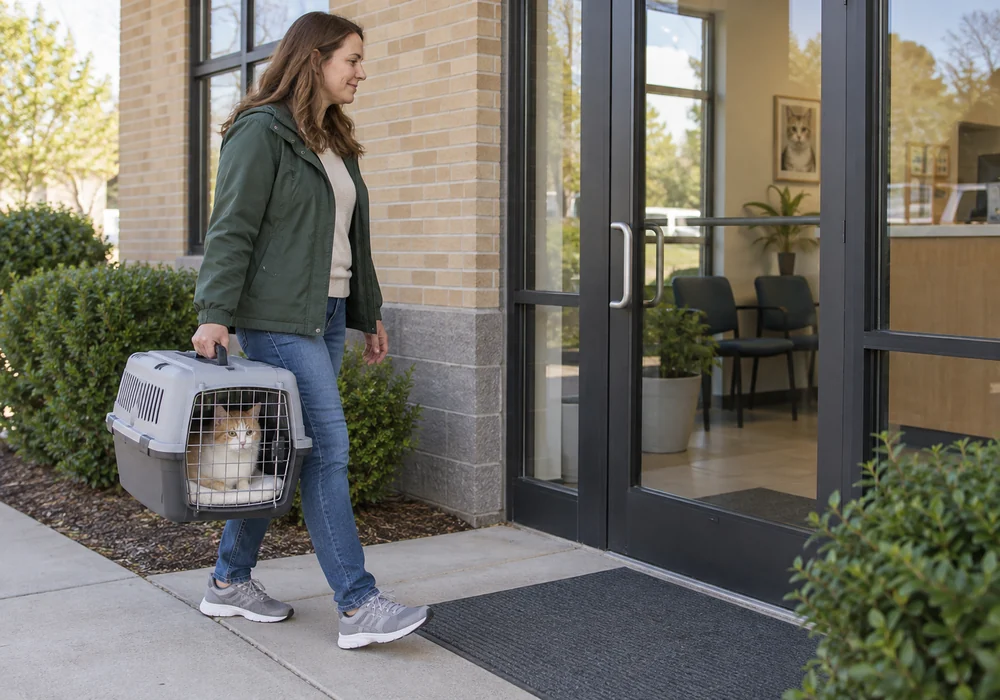
Ask your veterinarian when to get your cat microchipped based on the cat’s age, health, and local requirements. The implant can sometimes be placed during an already planned procedure under anesthesia, but routine microchipping does not usually require general anesthesia. Do not assume that waiting until neutering will meet every local deadline.
If international travel is likely, mention it before booking. A common ISO-compatible format uses a 15-digit number and operates at 134.2 kHz, but the United States also has chips on other frequencies and with 9- or 10-digit numbers, so a universal scanner matters. Confirm the chip’s compatibility and the destination’s identification, vaccination, and documentation requirements in advance. A chip alone is not a travel permit.
Rules Depend on Where You Live
In England, pet cats must be microchipped and registered by 20 weeks of age, including cats kept indoors. Contact details must remain current, and noncompliance can lead to a fine of up to £500. This is not a UK-wide cat requirement: current guidance treats microchipping as a choice in Scotland, Wales, and Northern Ireland. Check the official cat microchipping requirements and ask your veterinarian about any applicable exemption. Elsewhere, check the rules for your own location.
What Happens When You Get Your Cat Microchipped?
The insertion itself is brief, although the whole visit also includes handling, checking records, and discussing registration. Expect these steps in order.
1. Scan Before Inserting Anything
The team should first check whether your cat already has a readable chip. This is especially important for adopted cats or cats with incomplete records. An existing chip usually calls for checking or transferring its registration, rather than automatically inserting another one.
2. Place the Chip Under the Skin
A trained professional uses a sterile applicator to insert the chip beneath the skin. The usual placement site varies by country and professional guidance; the shoulder-blade region is commonly used in both the UK and the United States. This is not a procedure to attempt at home.
Brief discomfort or a small amount of bleeding can occur, so “completely painless” is not an accurate promise. If your cat is difficult to handle safely, the veterinarian may recommend a different handling plan or sedation based on the individual cat’s needs.
3. Confirm the Number and Take the Paperwork
After insertion, the team should scan again to confirm that the chip can be read. Ask them to compare the displayed number with the label and record, digit by digit. Keep a copy of that number, the clinic’s details, the implantation date, and the name of the recovery registry.
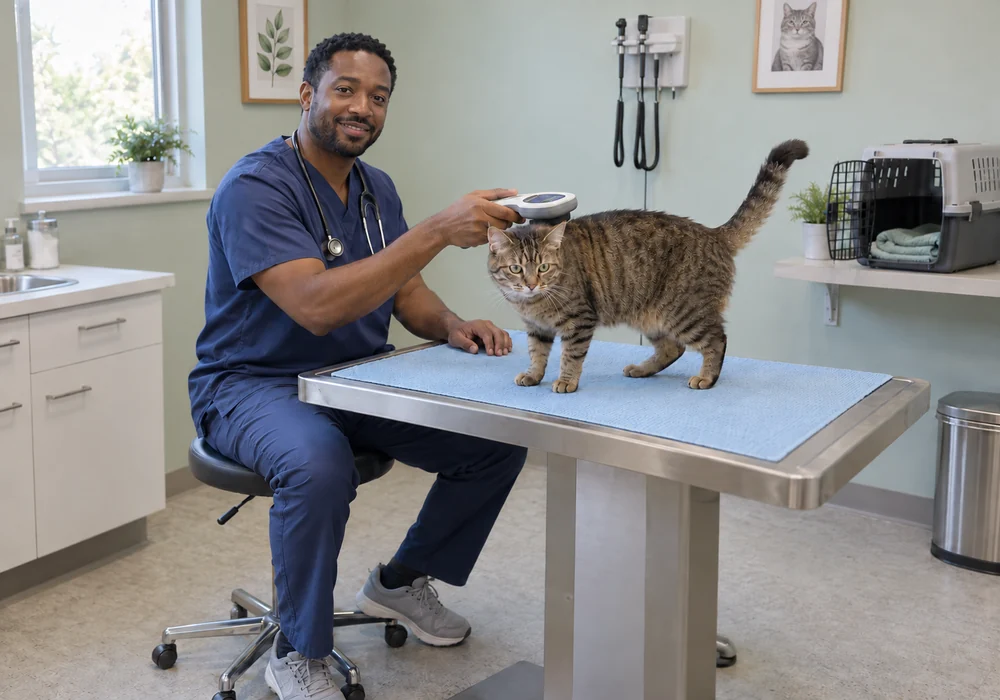
Before leaving, agree on who completes registration and when you should receive confirmation. If the clinic submits it, ask what to do if the confirmation does not arrive. If registration is your responsibility, complete it promptly rather than putting the paperwork aside.
Registration Connects the Chip Number to You
Getting your cat microchipped and registering the chip are separate actions. A number entered in the clinic’s medical record does not, by itself, prove that a pet recovery registry has your current information.
Open the registry account or contact the registry directly. Check the chip number against your paperwork, then verify the cat’s description, the registered keeper’s details, and your phone number, email, and address. Add a backup contact if the service supports one. Save the confirmation and account recovery information somewhere you can reach without the original paper certificate.
If you do not know the registry, start with the clinic or rescue that supplied the chip. In the United States, the AAHA Universal Pet Microchip Lookup Tool can identify participating registries associated with a number. It primarily serves US chips and does not register a chip, update an account, or reveal an owner’s private contact information. An unsuccessful search does not establish that no chip or registration exists elsewhere.

After adoption or rehoming, follow the registry’s process for transferring the record. Updating your veterinarian’s file alone is not enough. Registration can help establish a cat’s history, but it is not conclusive proof of legal ownership in every situation. Our questions to ask when buying a cat explain how to check for a chip and its paperwork before you take a cat home.
For privacy, use the registry’s verified website or phone number and protect your account login. Keep the chip number available for veterinary and recovery purposes, but avoid posting documents that show your home address or other personal details publicly.
Aftercare and Problems Worth Reporting
After you get your cat microchipped, follow the clinic’s instructions for the insertion site and handling. Most cats do not need an extended recovery period from the implant alone. Nevertheless, persistent bleeding, increasing swelling, discharge, significant pain, or a cat that seems unwell warrants a call to the veterinarian. New weakness or difficulty moving needs urgent veterinary attention.
Microchips can occasionally move from their original position or fail to read, and migration is the complication most often reported. Infections and injuries have also been reported. Very rare reports of tumors near implants do not, on their own, establish that a chip caused the tumor or provide a reliable individual risk percentage. The AVMA’s microchip guidance explains how the devices work and why registration, not the implant alone, is what makes identification useful. Have any persistent lump examined rather than trying to diagnose it yourself.
If a scanner does not detect the chip later, ask the veterinary team to investigate before assuming it has disappeared. They may need to check scanner compatibility, scan a wider area, or use another reader. If replacement is necessary, the veterinarian should document both the old and new numbers and help you keep the records consistent. Incorrect contact details need a registry correction, not another implant.
Keep the Record Useful Throughout Your Cat’s Life
A readable, uncomplicated identification chip does not need charging or routine replacement. However, it still needs two kinds of follow-up: checking the device and maintaining the record.
- At routine veterinary visits: ask for a scan to confirm that the chip still reads and that the number matches the records.
- After a move or contact change: update the recovery registry promptly, even if you have already notified the clinic.
- Once a year: review your account, backup contact, and access details. Add the reminder to your regular cat care routine.
- If your cat goes missing: notify the registry, check your contact details, and flag the cat as missing if that service is available. Contact local shelters and veterinary clinics and continue searching with a recent photograph; the chip cannot track the cat’s movements.
When you get your cat microchipped, leave with more than a receipt. You should have a confirmed readable number, a verified recovery record, and a clear way to keep your details current. Those are the practical steps that allow identification to lead to a phone call when your cat needs help getting home.
This article draws on what we have learned living with cats of our own as well as on the published sources cited above, and it cannot replace a veterinary examination. Contact a veterinarian promptly for bleeding, swelling, or discharge at the implant site, a lump that persists or grows, or a cat that seems unwell after the visit, and seek urgent care for sudden weakness or difficulty moving.