
Training a kitten starts with small, useful choices: scratching a post, playing with a toy instead of your fingers, and walking into a carrier without a chase. Make each choice easy, reward it promptly, and practice while your kitten is comfortable enough to join in.
You can begin building these habits as a healthy, weaned kitten settles into your home. The exercises below explain what to reward, how to make the next step manageable, and what to change when a lesson stops working.
Before Training a Kitten, Check Comfort and Access
Your kitten needs somewhere to hide, easy access to food, water, and litter boxes, and time to sleep and explore. Keep familiar feeding and litter arrangements initially. Leave a secure carrier open in the living area so it can become an ordinary resting place. If the house is still being set up, our new kitten kit checklist covers the basics worth having in place first.
Start an exercise when your kitten is awake, interested, and approaching willingly. Choose a quiet spot with secure footing and an easy route away. If another pet crowds the kitten or competes for rewards, practice separately.
A kitten that freezes, crouches, hisses, or repeatedly tries to escape needs a less demanding situation. Our guide to signs of fear in cats explains why quietness can be misleading. Pause if your kitten appears frightened or unwell; neonatal care and the assessment of unsocialized feral kittens require different guidance.
Make the First Lesson Easy to Understand
The basic pattern for training a kitten is simple: choose one observable action, make it easy to offer, and follow it with something the kitten wants. A useful starting goal is “touch this target” or “look toward me.” “Behave yourself” gives neither of you a clear task.
The Action-and-Reward Sequence
- Prepare. Have a tiny food portion, favorite toy, or welcomed interaction ready before the attempt.
- Wait for a small success. Accept an easy first version, such as looking toward a target, instead of immediately requiring a longer movement.
- Reward promptly. Deliver the reward as soon as the chosen action happens. If you are using a familiar marker word or click, mark that moment and promptly provide the promised reward.
- Pause and reassess. Repeat while your kitten remains interested. After hesitation, reduce the distance, duration, or distraction.
A marker can help identify the precise moment you liked. To introduce one, pair a quiet “yes” or tolerable click with a tiny reward immediately afterward, several times in a calm setting. Once that association is familiar, use it during the exercise. A cue asks for an action; a marker identifies an action that just earned a reward. Do not click repeatedly to attract attention or hold a clicker near the ears.
You can also reward directly without a marker. FelineVMA’s training guidance emphasizes a reward the individual cat actually wants, immediate timing, and letting each cat learn at its own pace; it also advises against running a session with a cat that is ill or in pain, or already hiding, crouching, or hissing. A clicker is an optional tool, and some cats learn faster without one.
Try a Simple Nose Touch
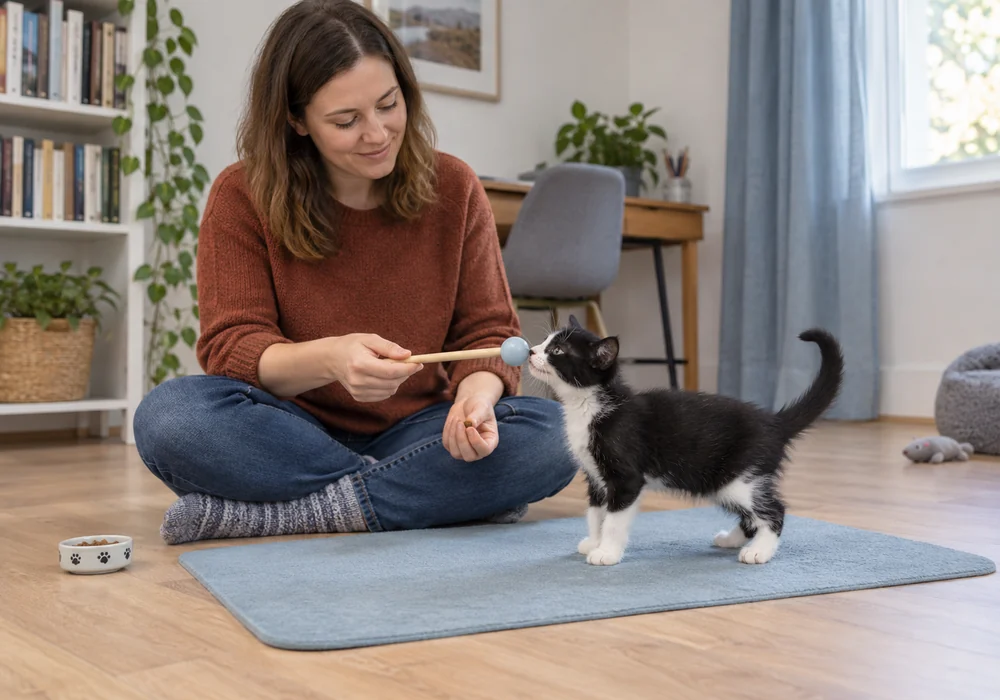
- Hold a smooth, blunt target nearby and keep it still. Choose a securely constructed object without a small detachable tip.
- Reward a glance or small approach if needed. As investigation becomes easy, reward a gentle nose touch. Never push the object into your kitten’s face.
- Move the target only a little farther away after comfortable repetitions. Introduce a consistent cue, such as “touch,” once the action is predictable.
Stop if your kitten avoids or chews the target. Later, this familiar action can help invite a few steps toward a mat or carrier. These are home practice examples; their pace should follow your kitten’s response.
Teach a Name Response
In a quiet room, say your kitten’s name once when a turn toward you is likely, then reward that turn. Wait for another easy opportunity instead of repeating the name continuously. As the response becomes familiar, reward a step toward you and gradually increase the distance indoors. Keep the name associated with worthwhile interactions rather than using it mainly before something unpleasant. A name response can make daily communication easier; it does not guarantee recall outdoors.
Keep Rewards Small and Meals Regular
Where practical, use tiny portions of your kitten’s complete growth diet. Count them toward the day’s food. The treat guidance available through WSAVA’s global nutrition guidelines sets treats below 10% of daily calories, and that figure is a ceiling rather than a target to fill. Its body-weight table is written for healthy adult cats, so ask your veterinary team about your growing kitten’s needs rather than borrowing that table. If you want rewards that are not commercial treats, our homemade cat treat recipes keep portions small enough for frequent repetition.
Do not skip meals to make training more effective. Refusing a reward can reflect fullness, distraction, fear, or illness. Change the situation or stop. Wash reward dishes and utensils, and promptly refrigerate or discard leftover wet food according to its storage instructions.
Build Good Scratching, Play, and Litter Habits
Much of training a kitten happens during ordinary life. Put the appropriate option where the behavior already occurs, then notice and reward its use.
Show Where Scratching Works
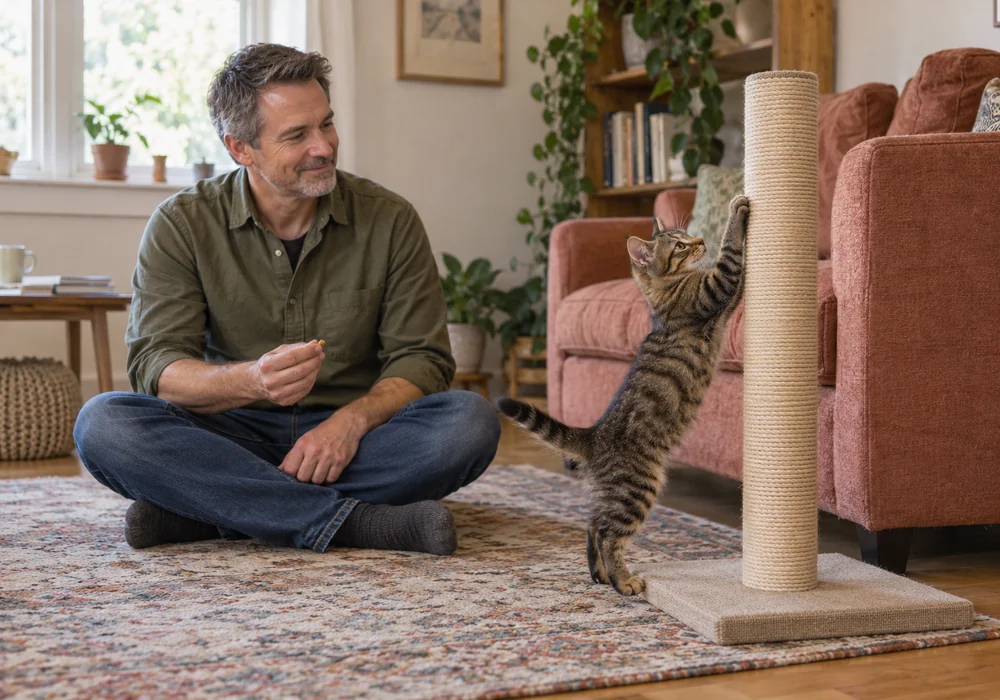
Scratching maintains claws and leaves visual and scent signals. Place a stable post beside a favored sofa corner, or offer a flat cardboard scratcher near a resting spot. Match the surface and angle your kitten actually uses. A vertical post should allow a comfortable stretch and remain steady under pulling.
Reward voluntary scratching promptly with something your kitten enjoys. Protect or limit access to vulnerable furniture while the alternative becomes familiar. If the post is ignored, change one feature at a time, such as location, texture, or orientation; our guide to getting a cat to use a scratching post covers the height, surface, and placement details that matter most. Dragging the paws down it does not teach willing use. Check for frayed loops, exposed fasteners, and a base that rocks.
Keep Hunting Games Away From Skin
Use a wand, thrown toy, or suitable kicker so your kitten can stalk, chase, and catch something away from hands and feet. Let the kitten catch the toy during play. Avoid hand wrestling, even when tiny teeth seem harmless. Our guide to playing with a kitten explains how to end a session while interest is still high.
If teeth or claws reach skin, stop making your body an exciting moving target and calmly disengage when safe. Give the kitten time to settle before offering an appropriate game. Plan play before predictable ambush periods so biting does not become the usual way to start entertainment. Supervise toys with strings or detachable parts, inspect them, and put hazardous toys away afterward.
Hitting, scruffing, and spraying water can create fear without explaining the behavior you want. Sudden, severe, or persistent biting needs assessment of the situation and your kitten’s health, and our guide to understanding cat behavior sets biting in the context of normal feline communication.
Make the Litter Box Easy to Find and Use
Provide a quiet, accessible box with a low entrance and room to turn and dig. Keep it away from feeding areas and start with familiar litter when possible. Show the location, allow exploration, and offer an unhurried opportunity to reach it after meals or naps. Let toileting finish undisturbed; any welcomed quiet reward comes afterward, outside the box.
Clean accidents with a suitable pet-urine cleaner as directed, then check access, cleanliness, and whether another pet blocks the route. Never force digging with the paws or punish an accident. Our guide to litter training kittens covers box choices, cleaning, and recurring problems in more detail, and how to set up a litter box explains placement in a multi-cat home.
Training a Kitten to Enter and Travel in a Carrier
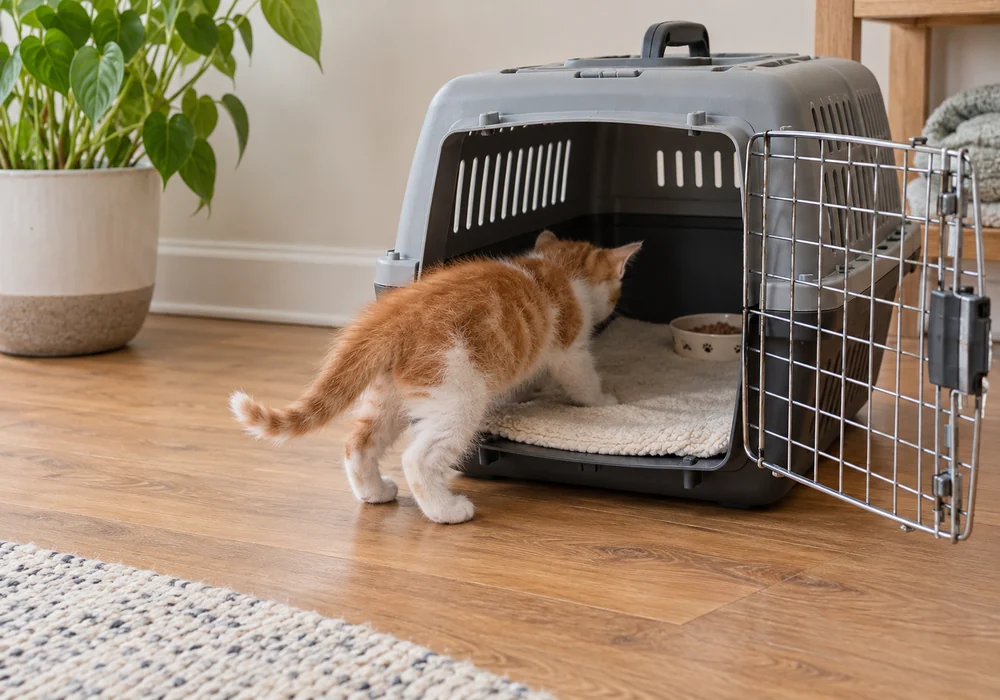
Leave the carrier on the floor with familiar bedding and its entrance safely open. Choose a secure, ventilated carrier that fits your kitten as it grows; check the latches and door. A removable top can help the veterinary team reach the cat without pulling it through a small opening.
Begin at the easiest stage your kitten can manage. It may approach immediately, or it may need several relaxed encounters before stepping closer.
- Investigate: reward looking toward or approaching the entrance.
- Enter: reward the head, paws, and eventually the body going inside. Keep the exit available.
- Pause inside: build a short, comfortable stay on the bedding.
- Move the door: start with a tiny movement. Later, try a momentary closure and reopen before distress develops.
- Lift and carry: introduce a small lift, then a short indoor carry after earlier steps are comfortable on more than one occasion.
- Prepare for travel: introduce a stationary vehicle, then a short journey when appropriate. Follow safe carrier restraint and temperature guidance.
Change one demand at a time. Closing the door, lifting, engine noise, and vehicle movement should not arrive together as one surprise. If avoidance returns, restart with an easier version. Quietness after prolonged confinement does not establish comfort.
Why practice before a trip? A small 2018 controlled carrier-training study listed by Vetmeduni found a larger reduction in transport stress in trained cats than in controls. It involved 22 cats aged eight months to 4.3 years, split into 11 trained and 11 untrained animals, and used 28 sessions of about eight minutes over six weeks. Only three of the eleven trained cats finished all seven stages, which is a useful reminder that partial progress still counted. The trained cats also spent less time in the examination. That protocol supports gradual preparation; it does not set a required timetable for a younger kitten or guarantee a relaxed appointment.
If a visit is needed before training is complete, contact the clinic for a transport and handling plan. Do not delay care to finish a lesson. Discuss fear or motion sickness with the veterinary team; medication must be prescribed for the individual cat.
Teach a Resting Spot for Busy Household Moments
When training a kitten, a mat can provide a familiar place to settle while you prepare food or move around the home. Place a washable, nonslip mat well away from hot surfaces and exterior doors.
Reward a voluntary step onto it, then all four paws. Once approaching the mat is predictable, add a consistent cue before the movement. Reward a brief pause and let the kitten step off between repetitions, gradually building duration. Practice first during an easy, quiet activity rather than your busiest meal preparation.
Later, move your hands or take one step while the kitten stays comfortably on the mat. Increase duration and distraction separately. Continue blocking hazards and securing doors during real arrivals; a trained response does not make an open doorway or hot kitchen safe.
Prepare for Gentle Care and New Experiences
Training a kitten also means helping necessary care become familiar. Work with short, comfortable experiences and pay attention to how your kitten feels about them.
Build Comfortable Touch Before Longer Handling
Start with contact your kitten already welcomes. On a stable resting surface, briefly touch a comfortable part of the leg, offer a reward, and pause. On later easy repetitions, move closer to the paw, then try a brief paw touch. Increase duration separately from pressure. A withdrawn paw means stop and simplify the next attempt.
Similarly, let a brush appear at a comfortable distance and pair it with something pleasant before attempting a gentle stroke. Our guide to grooming cats explains brushing and coat care; the training goal here is willing participation. Painful mats or irritated skin need care advice rather than repeated practice.
Support the whole body when lifting is necessary, and never lift by the scruff. Supervise children, beginning with calm contact while seated on the floor. Home practice can help preparation, but veterinary procedures may still require adapted handling, pain relief, or sedation.
Let Social Experiences Stay Manageable
Invite a calm visitor to sit at a distance and allow your kitten to approach or remain in a retreat. Introduce household sounds quietly or from farther away, increasing intensity only while the kitten remains comfortable. Repeated exposure that causes hiding or escape attempts can increase fear.
Cats Protection describes an early sensitive socialization period of about two to seven weeks. That window is not a deadline after which learning stops, or a reason to separate a kitten early from its mother; the same guidance states that no kitten should be rehomed before eight weeks old. Ask about earlier experiences and adapt to current confidence. Discuss vaccination, parasite control, and infection risks with your veterinarian before shared classes or contact with unfamiliar animals.
When Training a Kitten Stops Working
Describe what happened before, during, and after the attempt. When a cue gets no response, check the setup before making the lesson harder. Labeling the kitten stubborn does not tell you what needs to change.
| What you notice | What to check or change |
|---|---|
| The cue gets no response | Reduce distance and distraction. Check reward value and timing, then reward an easier action instead of repeating the word. |
| It works only with visible food | Gradually fade the visible lure while keeping a clear cue and rewarding the completed action. |
| The skill disappears in another room | Practice an easier version there. Change location, distance, and distraction one at a time. |
| The clicker causes retreat | Use a softer marker word or direct reward. Stop using a sound that frightens the kitten. |
| Avoidance begins after a trip or handling | Return to comfortable earlier steps and discuss possible pain, nausea, or fear with the veterinary team. |
Recognize When the Next Step Is Veterinary Care
Repeated accidents, painful elimination, reduced appetite, marked lethargy, vomiting, diarrhea, or a sudden behavior change warrant veterinary advice. Repeated straining with little or no urine requires immediate veterinary care. Persistent fear or aggression may need a qualified feline behavior professional working with your veterinarian.
Keep Training a Kitten Part of Daily Life
Try a few easy opportunities over roughly one or two minutes, then pause. That is a starting example, not a quota or a proven optimum. End earlier when interest fades, and protect ordinary meals, sleep, play, and exploration.
Agree on cue words, toy use, and boundaries across the household. Keep familiar actions rewarding, practice in useful everyday settings, and return to easier steps after illness, a move, or a frightening experience.
A useful practice note: “Carrier entrance, quiet room: approached three times, stepped inside once, then walked away. Next time, repeat the open-door step.”
This records both the behavior and the limit of today’s comfort. Useful progress includes choosing to participate, leaving without a struggle, and returning willingly.
This guide reflects published feline behavior guidance and years of living with cats; it is general information, not a training or treatment plan for your kitten. Kittens hide illness well, so stop the session and call the clinic if yours stops eating, becomes withdrawn or weak, strains without producing urine, passes blood, or shows repeated accidents or a sudden change in behavior.