
Vocal habits, temperament, and everyday care
People looking for quiet cat breeds may want fewer meows, a softer voice, or both. The British Shorthair, Chartreux, Ragdoll, Persian, and Russian Blue are worth comparing, but “quiet” does not mean the same thing in every breed description. Consider the cat’s vocal habits alongside its grooming, activity, and social needs.
Compare Meowing Frequency and Voice Volume
Meowing frequency means how often a cat meows. Voice volume means how loud its meows are. A cat may meow frequently in a soft voice or meow rarely but loudly. Neither feature tells you how much it enjoys playing, exploring, or spending time with people. A quiet cat still needs daily interaction and opportunities to stay active.
The profiles of these quiet cat breeds draw on descriptions from registries such as the Cat Fanciers’ Association and The International Cat Association. These are general descriptions, not measured ratings of meowing frequency or voice volume. Individual cats vary, including within the same breed.
How to Read the Table
Each row answers two separate questions. A blank entry means the profile does not describe that feature on its own, so the table does not rate it either way.
| Breed | Meowing Frequency | Voice Volume | Main Care Considerations |
|---|---|---|---|
| British Shorthair | Occasional meowing; usually not very talkative | Not specified separately | Weekly coat care; often enjoys sitting near people |
| Chartreux | Generally infrequent | Usually soft | Interactive play; extra grooming during seasonal shedding |
| Ragdoll | Generally not very talkative | Not specified separately | Regular combing and time with the family |
| Persian | Not specified separately | Often described as soft | Daily grooming and attention to eye and breathing health |
| Russian Blue | Varies; some cats are quite talkative | Not specified separately | Regular play and time to become familiar with new people |
“Not specified separately” means the linked breed profile does not clearly describe that feature on its own. It does not mean the cat is silent or loud. Ask about the individual cat’s usual vocal habits.
01 · Breed profile
British Shorthair
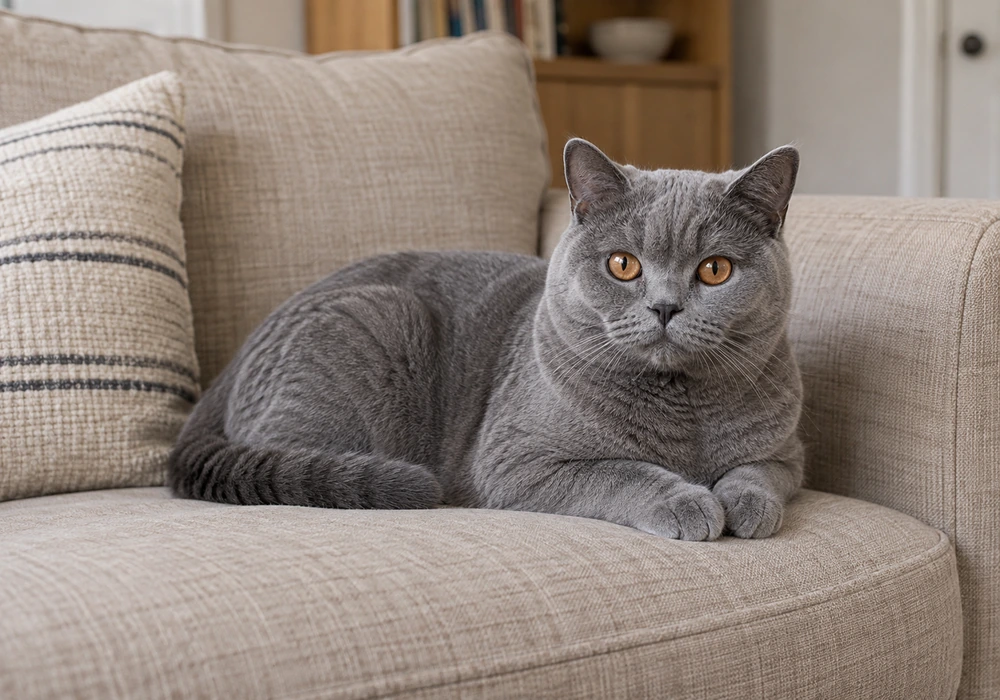
British Shorthairs are generally described as calm and not very talkative, with occasional meowing rather than prolonged vocalizing. This concerns how often they vocalize; it does not establish how loud each cat’s voice will be. Many enjoy being near their people and watching household activities.
Handling and Affection
Affection does not always mean wanting to be held. A British Shorthair may settle beside you on the sofa while showing little interest in being carried. Let the cat approach for contact and pay attention to its response when you handle it.
The short coat is unusually dense and benefits from regular brushing or combing, usually about once a week. Allow time for daily play as well. Among quiet cat breeds, the British Shorthair can suit someone who enjoys a cat’s company without expecting it to spend long periods on their lap.
02 · Breed profile
Chartreux
Chartreux are known for a soft voice that many use infrequently. They may also seek interaction through chirps, gentle paw touches, or bringing over a toy.
They can be affectionate and playful, with a strong interest in household routines. A Chartreux may follow you from room to room or join an energetic game despite rarely meowing. Plan for interactive play and notice when the cat approaches for attention.
Grooming a Woolly Coat
The blue-gray coat has a dense, woolly texture. Comb it regularly and more often during seasonal shedding. These cats have a naturally muscular build, so assess body condition with your veterinarian rather than assuming extra weight is part of their breed type.
03 · Breed profile
Ragdoll
Many Ragdolls enjoy staying close to their people. The International Cat Association describes the breed as generally quiet and not especially talkative. Ask about the individual cat’s meowing habits rather than assuming that every Ragdoll will sound the same.
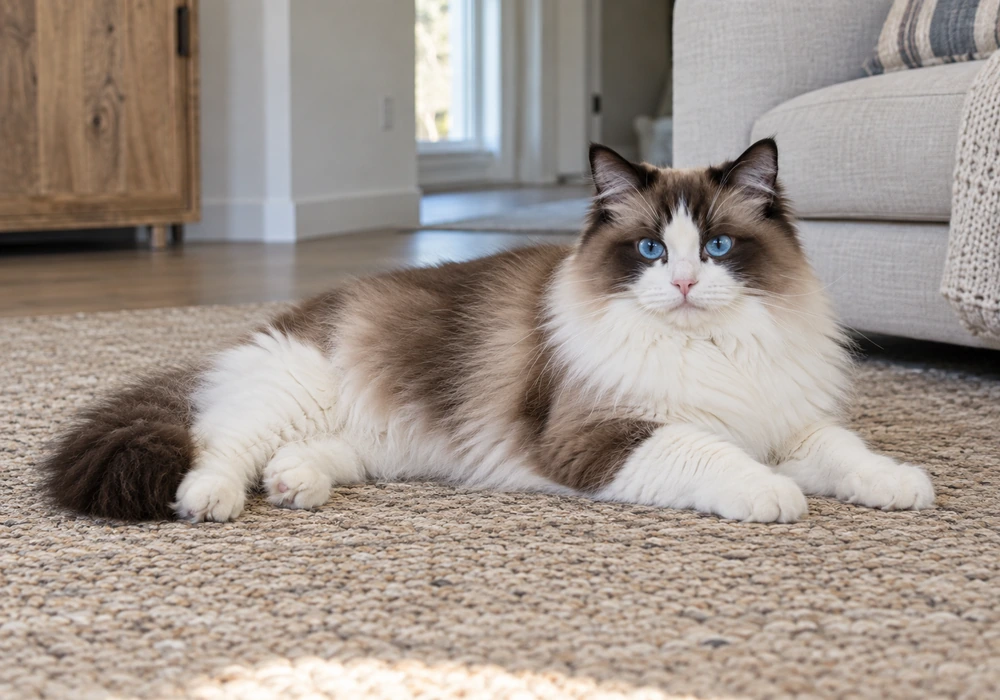
Their interest in company matters when considering your daily schedule. Make time for play and gentle interaction, and ask the current caregiver how the individual cat behaves when alone. Being quiet does not tell you how comfortable it is without company.
Coat Care and Heart Screening
A silky, semi-long coat needs regular combing, usually once or twice a week and more often during shedding. Check under the front legs for tangles and introduce grooming gradually. The breed’s name also should not be taken literally: not every Ragdoll relaxes when picked up.
If you are choosing a kitten, ask about heart screening in the parents. Ragdolls are among the breeds affected by hypertrophic cardiomyopathy (HCM). A veterinarian can help interpret health records and advise on appropriate assessment.
04 · Breed profile
Persian
Persians are generally described as calm and affectionate, with soft voices. Many enjoy gentle play and attention from familiar people. However, a soft voice does not necessarily mean that a cat meows infrequently; ask about its usual routine.
The long coat requires a substantial grooming commitment. The Governing Council of the Cat Fancy recommends daily combing to prevent tangles and mats. Check the fur around the eyes as well. A calm personality does not reduce the work involved in keeping the coat comfortable and clean. Coat care for this length of fur is compared across breeds in long haired cat breeds.
Face Shape and Health Screening
Health deserves particular attention when choosing a Persian. A shortened face can be associated with breathing difficulties. Ask about persistent eye discharge or noisy breathing, and review screening records for polycystic kidney disease (PKD), an inherited condition associated with the breed.
05 · Breed profile
Russian Blue
Russian Blues are often described as quiet and playful, but some are quite talkative. Ask about the individual cat’s usual meowing habits rather than assuming it will meow infrequently. Some are reserved with strangers but affectionate once they know someone well.
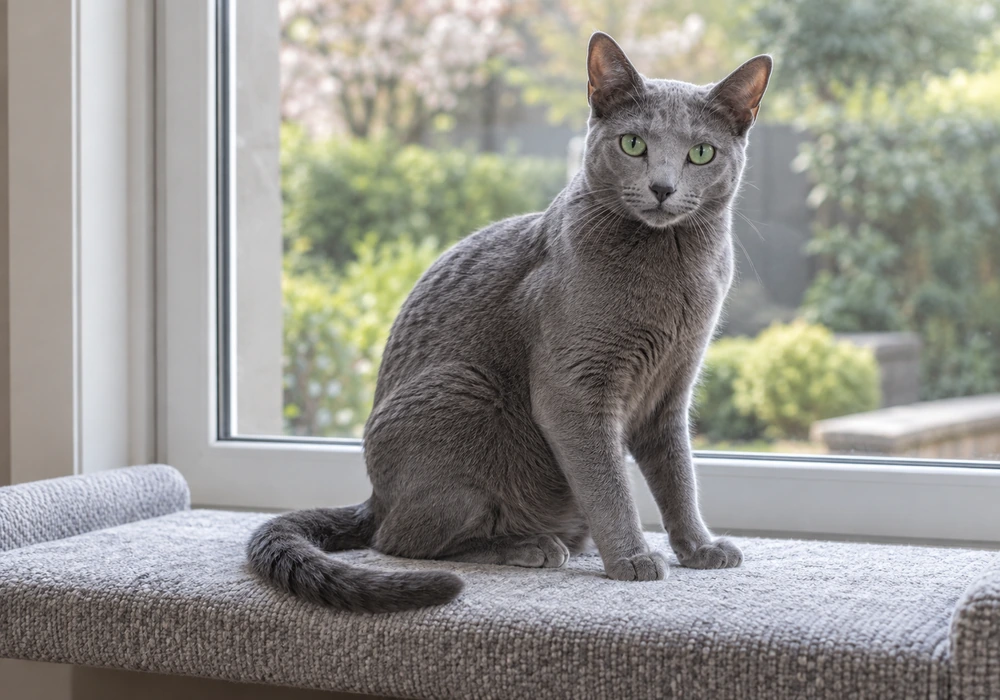
Give a new cat time to approach and explore at its own pace. Hiding during a first meeting does not tell you how sociable that cat will be after settling in. Ask about its behavior with familiar caregivers as well as with visitors. The body-language signals covered in signs of fear in cats help you judge whether a reserved cat is settling or still worried.
Play and Coat Care
Russian Blues can enjoy interactive toys and food puzzles. Their short, dense coat usually needs relatively modest grooming, with occasional combing to remove loose hair. A Russian Blue can be an option among quiet cat breeds if you can provide regular play and patient introductions.
Choosing Among Quiet Cat Breeds: Questions to Ask
Start with the individual cat’s daily habits. An adult cat living in a foster home may have a well-documented routine, including how often it meows and how it behaves overnight. A quiet domestic shorthair or longhair may suit your household just as well as a pedigreed cat.
What to Ask Before You Visit
Ask the breeder, rescue, or current caregiver:
- How often does the cat meow? Ask about meals, closed doors, bedtime, and time alone.
- How loud are its meows? Ask whether they are usually soft or easily heard from another room.
- How does it seek attention? Does it meow repeatedly, approach for petting, or prefer sitting nearby?
- What is it like once comfortable? A first meeting in an unfamiliar setting may not show its usual behavior.
- What daily care does it need? Discuss grooming, play, health history, and relevant screening records.
For an apartment, also consider places to climb, scratch, hide, and rest. For a busy household, consider how the cat responds to children, visitors, and other animals. Meowing is only one part of deciding whether a cat’s needs fit your home.
If you choose a kitten, allow for changes as it matures. Kitten calming covers ways to help a young cat settle in and manage excitement.
Notice Changes in Your Cat’s Usual Behavior
A cat that has always meowed little may be behaving normally. A new change in appetite, activity, grooming, or willingness to interact needs attention, even if the cat makes no sound. International Cat Care’s pain guide describes hiding, reduced appetite, and reluctance to move or jump as possible signs of discomfort.
A Silent Cat Can Still Be in Pain
Contact your veterinarian when these changes occur. Knowing your own cat’s usual behavior is more useful than assuming that withdrawal or reduced activity is simply part of a quiet temperament.
If your cat becomes more vocal, persistent calling is a different question from temperament. The causes, and the signs worth a veterinary visit, are set out in my cat meows all the time.
This guide reflects everyday experience living with cats and does not replace veterinary advice about a particular animal. A cat that goes quiet suddenly, stops eating, hides, has trouble breathing, or cannot pass urine needs a veterinary examination, not a comparison of breed descriptions. Breed labels describe tendencies and vary from cat to cat.