
If your cat empties the bowl and asks for more, check how much they ate and whether their weight or habits have changed. Increased appetite in cats can reflect higher energy needs, medication effects, or conditions such as hyperthyroidism and diabetes.
The key is to compare eating with the rest of your cat’s health. A growing kitten needing larger meals is different from an older cat eating more while getting thinner. The five groups of possible causes below explain those differences and when to seek veterinary care.
Is Your Cat Eating More, or Just Asking for More?
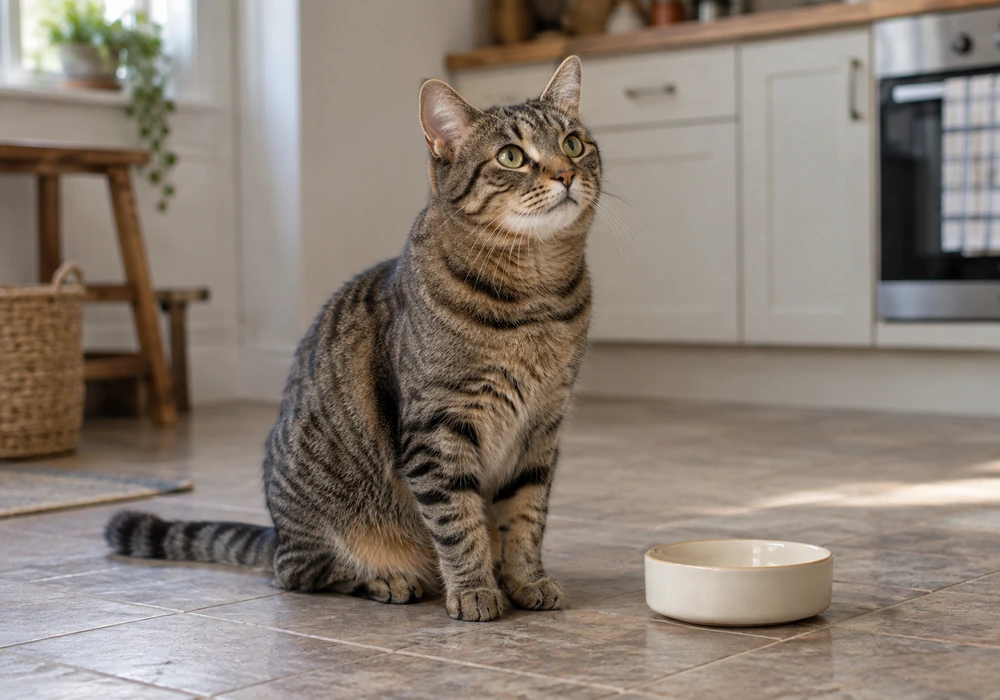
To assess increased appetite in cats, distinguish a new eating pattern from familiar food requests. Food requests can become part of a daily routine, especially when they regularly lead to treats. On the other hand, a cat whose appetite has increased may finish a larger portion than before or start taking food from another cat’s bowl.
Look at how much food your cat actually eats over the day, rather than the number of requests. Count meals, treats, and food supplied by everyone in the household. If several cats share bowls, feed them separately so you can tell whether one is getting more and another is missing out.
The veterinary term for excessive hunger or eating is polyphagia. It describes a symptom, not a diagnosis. Neither eating quickly nor leaving an empty bowl tells you, on its own, whether your cat needs a larger portion. Calling more often without eating more is a separate question, and frequent meowing in cats covers it.
Five Reasons a Cat May Eat More Than Usual
The possible causes are grouped into five categories. The fifth includes digestive disease and intestinal parasites. These categories help organize the discussion; appetite alone cannot identify the cause.
- Higher energy needs or too few calories
- Medication effects
- Hyperthyroidism
- Diabetes
- Digestive disease or intestinal parasites
1. Higher Energy Needs or Too Few Calories
Growing kittens need energy for growth as well as everyday activity. Pregnancy and milk production also increase a cat’s nutritional needs. These cats may need more food, a different feeding schedule, or a diet suitable for their life stage.
A change of food can make a difference even when the bowl looks equally full. Two recipes can contain different amounts of energy per gram, cup, or pouch. Switching to a lower-calorie food without adjusting the amount can unintentionally reduce your cat’s intake. Check the label and confirm that an automatic feeder is dispensing the intended portion.
In an adult cat, aging alone is not a sufficient explanation for a sudden, persistent increase in hunger. Check for changes in weight and health rather than assuming that an older cat simply needs more food.
2. Medication Effects
Prednisolone and other corticosteroids used to treat inflammation can cause increased appetite in cats. An appetite stimulant prescribed during illness may also increase food intake. The timing matters: did the change start after a new prescription or a dose adjustment?
Tell the prescribing veterinarian about the change, particularly if your cat is also drinking or urinating more. Do not stop a medicine or alter its dose yourself; those signs should not automatically be dismissed as side effects.
3. Hyperthyroidism
Hyperthyroidism is an important medical cause of increased appetite in cats, particularly in middle-aged and older animals. Excess thyroid hormone speeds up metabolism, so the body uses energy faster. Affected cats may eat more yet lose weight because their intake cannot keep pace with that increased energy use.
Restlessness, increased thirst, vomiting, diarrhea, or a coat that looks less well groomed can accompany the appetite change. A previously quiet older cat may also become more vocal. Eating enthusiastically does not mean the cat is otherwise healthy.
4. Diabetes
In diabetes, the body does not produce enough insulin or respond to it properly. Glucose builds up in the blood while the body has difficulty using it normally. Fat and muscle may be broken down for energy, explaining why a cat can feel hungry and lose weight at the same time.
Excess glucose passing into the urine draws water with it. The cat urinates more and drinks more to replace that water. Increased appetite in cats, along with weight loss, increased thirst, or larger urine clumps, warrants prompt veterinary advice. These signs suggest a need for testing; they do not confirm diabetes on their own.
5. Digestive Disease or Intestinal Parasites
Eating enough is only part of nutrition: food must also be broken down and its nutrients absorbed. In exocrine pancreatic insufficiency (EPI), the pancreas supplies too few digestive enzymes. Weight loss is a common finding in affected cats; some also eat more or pass loose, bulky, or unusually foul-smelling stools.
Diseases of the small intestine can also reduce nutrient absorption. Appetite may increase, stay normal, or fall, and diarrhea is not always present. Intestinal parasites can contribute to poor growth or weight loss, particularly in kittens. Some affected cats seem hungrier, but appetite alone cannot tell you whether parasites are present.
These problems require different treatments. More food cannot reliably correct an enzyme deficiency or intestinal disease, and an over-the-counter dewormer is not a substitute for finding the cause.
What Do Weight and Thirst Changes Tell You?
Weight helps you interpret increased appetite in cats. It does not identify the cause, but it can show whether increased eating is meeting the body’s needs.
| Your cat’s weight | How to interpret it |
|---|---|
| Losing weight despite eating more | Food may supply too few calories, or a condition such as hyperthyroidism, diabetes, or digestive disease may be involved. Have unexplained weight loss checked instead of only increasing portions. |
| Gaining weight while eating more | Extra calories may be contributing to weight gain. Review portions, treats, and medication effects, but do not assume that weight gain excludes illness. |
| Weight appears unchanged | Food requests may reflect routine, but stable weight does not rule out an early medical problem. Consider how recently the change began and whether other habits have changed. |
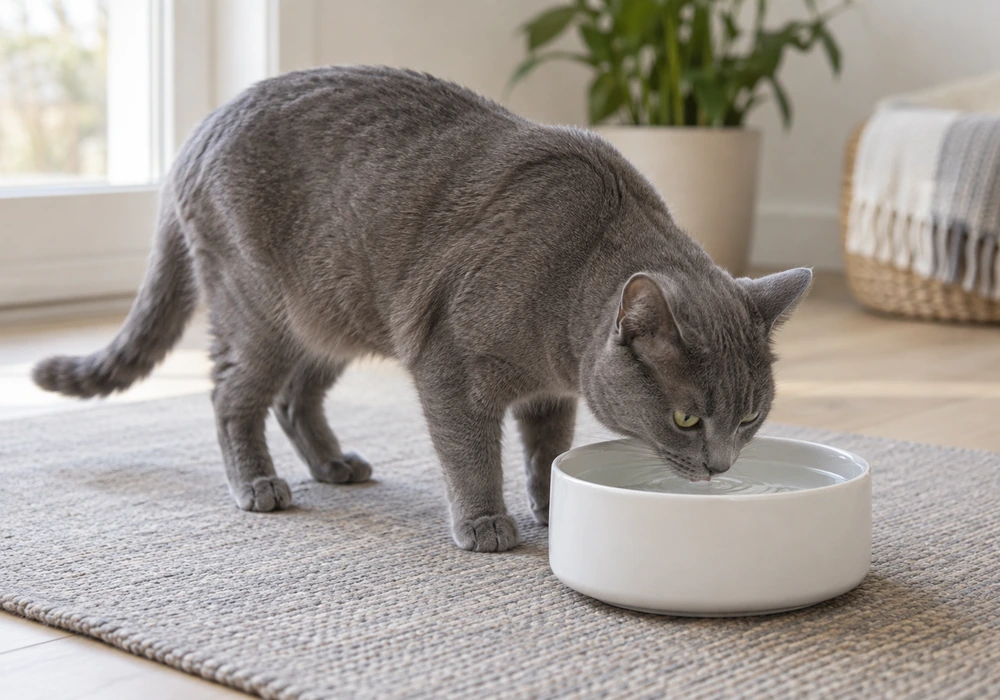
Increased drinking adds another useful clue. If your cat is visiting the water bowl more often and producing larger amounts of urine, report both changes. In a home with several cats, observe which cat is drinking rather than relying only on how quickly a shared bowl empties.
When Should You See a Vet?
Arrange an appointment for a clear, persistent increase in appetite that has no obvious explanation, particularly in an older cat. If the change is sudden or pronounced, call for advice when you notice it rather than waiting to see whether weight loss develops.
Contact the clinic promptly if your cat is also losing weight, drinking or urinating more, vomiting repeatedly, having ongoing diarrhea, or becoming unusually restless or weak. A cat can still be active and eager to eat while an illness is developing.
An otherwise well cat asking for an extra meal does not usually need an emergency visit. The important distinction is a familiar food request versus an unexplained change in eating or health.
How Will the Vet Find the Cause?
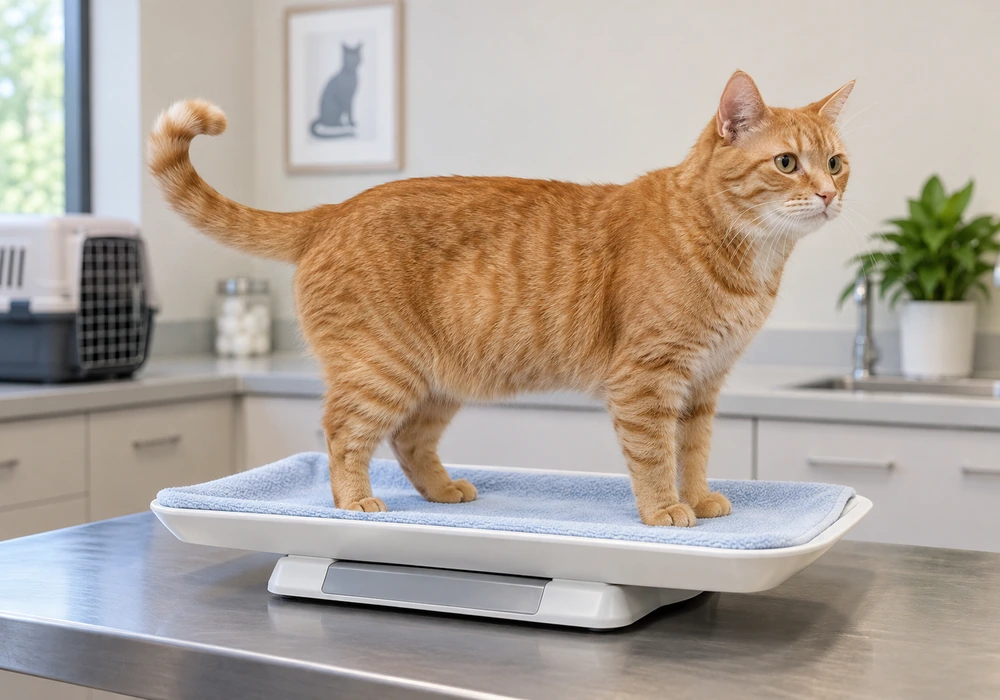
The first step in investigating increased appetite in cats is a feeding history and a physical examination. Bring the food label, an estimate of daily intake, a medication list, and any previous weights. Your veterinarian will assess weight and muscle condition and look for findings such as dehydration, a fast heart rate, or an enlarged thyroid gland.
Blood, Urine, and Thyroid Tests
Blood and urine tests can help investigate diabetes and assess other organs. A thyroid hormone test, usually total T4, is commonly included when hyperthyroidism is suspected. A normal initial result does not exclude every case, so further testing may be needed if the signs still suggest thyroid disease.
For suspected diabetes, one high blood glucose reading may not be enough: stress can temporarily raise glucose in cats. Your veterinarian may use repeat measurements, urine results, and a fructosamine test, which reflects average glucose levels over roughly two weeks.
When Digestive Disease Is Suspected
If digestive disease is suspected, testing may include a fecal examination, vitamin B12 measurement, abdominal ultrasound, or feline trypsin-like immunoreactivity (fTLI), a blood test used to diagnose EPI. The history and examination determine which tests are appropriate.
Treatment then addresses the cause. Thyroid disease requires control of excess thyroid hormone; diabetes requires a glucose-management plan; EPI usually requires digestive enzymes with meals and assessment for vitamin B12 supplementation. Adjusting portion size alone cannot replace those treatments.
Managing Increased Appetite in Cats: Should You Feed More?
Increase food because your cat’s nutritional needs require it, not simply because the bowl is empty. A growing kitten or nursing cat may need an adjusted feeding plan. An adult cat already receiving an appropriate daily allowance may not need extra calories, even if they readily accept them.
Start by checking the food’s calorie content and the total actually eaten. Package directions are a starting point; the right amount also depends on your cat’s age, activity, body condition, and health. If your cat is losing weight, ask your veterinarian about feeding while the cause is investigated. Helping your cat gain weight safely sets out measured meals and progress tracking once you and your veterinarian have agreed a plan.
- Measure the daily total. Include wet food, dry food, treats, and meals given by other people. Weighing dry food can make portions more consistent than estimating by eye.
- Prevent one cat from taking another’s meals. Separate feeding areas make intake easier to track and give each cat time to eat.
- Record changes without delaying care. Note food intake, drinking, stool changes, vomiting, and weight when it can be measured safely.
- Keep fresh water available. Never restrict drinking to reduce urine output.
If medical problems have been excluded and the daily ration is appropriate, dividing it into smaller meals may suit a cat that frequently seeks food. An easy food puzzle can provide activity using part of that same ration. Do not withhold meals as punishment or impose a crash diet to stop begging.
Sources and Further Reading
This guide provides general information about changes in appetite and does not replace veterinary advice tailored to your cat. A cat that stops eating, collapses, has difficulty breathing, cannot keep water down, or shows a sudden change in weight or thirst needs a veterinary examination rather than a change of food at home.