
One loose stool in a bright adult cat calls for a different response than repeated watery diarrhea in a kitten that will not eat. Knowing when to worry about cat diarrhea means checking the whole cat: energy, food intake, vomiting, pain, hydration, and normal urination. Stool appearance helps describe the problem, but the cat’s overall condition determines how quickly to act.
Seek emergency veterinary help now for collapse, marked weakness, breathing difficulty, severe abdominal pain, repeated vomiting that prevents your cat from keeping water down, substantial bleeding, or black, sticky, tar-like stool.
Call immediately for suspected poisoning or a swallowed object, or repeated straining with little or no urine. A urinary blockage can look like a bowel problem. Do not delay care to change food, try a remedy, or collect a stool sample.
When to Worry About Cat Diarrhea: Three Levels of Urgency
Diarrhea means abnormally loose or watery feces, sometimes with more frequent or larger bowel movements. Use the priorities below to explain the situation to a clinic. They summarize veterinary guidance; they are not a diagnostic score or a guarantee that observation is safe.
| Priority | What you notice | What to do |
|---|---|---|
| Emergency now | Severe illness, major bleeding, suspected poisoning or obstruction, or unproductive urinary straining | Contact an emergency veterinarian and arrange prompt assessment. |
| Contact the clinic today | A kitten, an elderly or medically vulnerable cat, reduced appetite, suspected dehydration, fresh blood, frequent watery stools, or worsening signs | Call promptly. Depending on severity, the cat may need immediate examination. |
| Brief, close observation | An otherwise healthy adult with mild, recent diarrhea, normal activity and intake, normal urination, and no warning signs | Monitor closely. Contact the clinic if there is no improvement within 24 hours or diarrhea continues beyond that point; act sooner if anything worsens. |
PDSA’s veterinary guidance supports contacting a veterinarian when mild diarrhea does not improve within 24 hours, with earlier advice for other symptoms or vulnerable cats. The clock starts when symptoms begin, not when you begin monitoring. If the timing is uncertain or you cannot watch the cat reliably, ask the clinic for guidance.
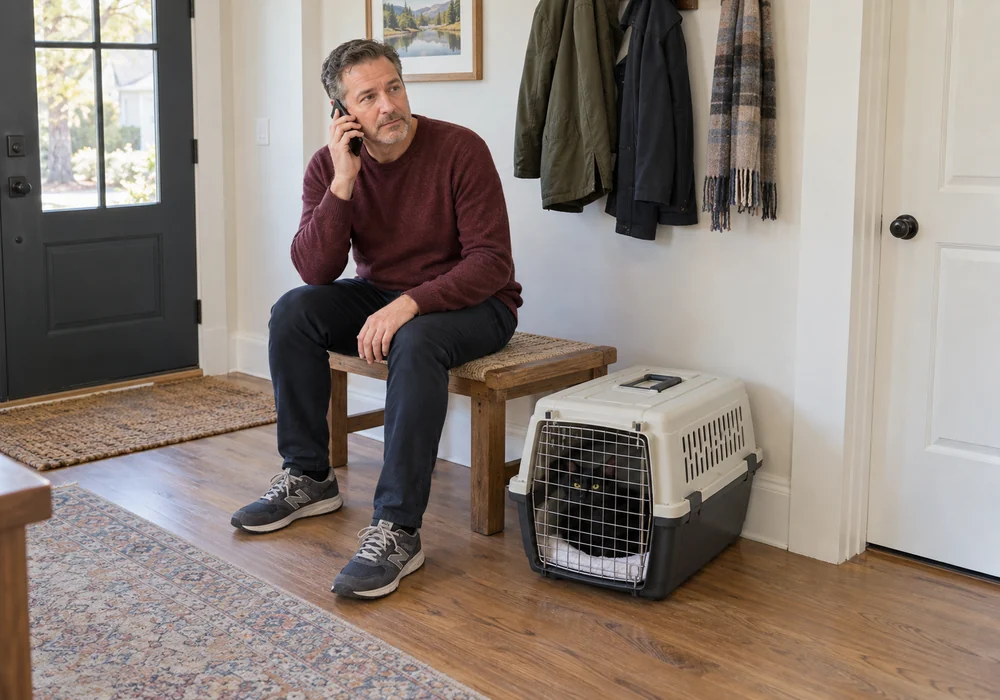
When Cat Diarrhea Needs Same-Day Advice
Kittens have less margin for fluid and nutritional losses. Contact a veterinarian promptly for a kitten with diarrhea, especially with watery stools, vomiting, reduced eating, or lethargy. Do not place a kitten on the healthy-adult observation timetable. Tell the clinic about vaccination history, recent adoption, and whether littermates are also ill.
An elderly cat or one with kidney disease, diabetes, or another significant condition also needs an earlier call. Existing illness and treatment can affect fluid balance and feeding decisions. Do not independently stop prescription medicines, alter insulin, or begin leftover treatment because the stool has changed.
Dehydration and Poor Appetite Change the Plan
Diarrhea can increase water losses while nausea or weakness reduces intake. Tacky gums, weakness, poor appetite, and sunken eyes can accompany dehydration. However, no single home skin check can establish that hydration is adequate; skin elasticity also changes with age. Cornell’s hydration guidance recommends prompt veterinary contact when dehydration is a concern.
Reduced eating alongside diarrhea warrants an earlier call. Do not wait for a cat to reach a fixed number of hours without food before seeking advice, and do not assume that a few licks meet its nutritional needs. If it cannot keep water down or becomes markedly weak, seek emergency care.
What Stool Appearance Can Tell You
Record whether the stool is soft but shaped, unformed, or watery, along with frequency and approximate amount. Note mucus and visible blood separately. Consistent photographs can document change, but smell, color, or a stool score cannot identify a parasite or select a medicine.
Fresh red blood warrants a veterinary call. A tiny streak in an otherwise bright cat differs from substantial bleeding or blood with weakness, pain, or vomiting. The clinic may recommend observation after discussing a minor episode. Suspected black, sticky, tar-like stool may contain digested blood and needs urgent assessment.
Frequent small amounts with mucus or straining can suggest irritation of the large intestine. However, repeated litter-box visits can also involve urinary disease or constipation. Check whether the cat actually passes normal urine; little or no urine with repeated straining requires emergency help.
When to Call the Vet for Diarrhea That Keeps Returning
A cat that plays and eats can still have persistent intestinal disease. Arrange an examination for recurring diarrhea, ongoing mucus, weight loss, or repeated episodes that briefly improve and return. Do not keep restarting a home observation period each time the stool firms up.
Possible causes include dietary changes, parasites such as Giardia, other infections, food-responsive disease, and inflammatory or systemic illness. Stress or a new food is useful history, but timing alone does not prove the cause. Young cats from group housing can have persistent intestinal infection while remaining active. Our guide to cat diarrhea after eating covers how to separate a meal that triggered a bowel movement from a food that caused the loose stool.
Diarrhea alone does not diagnose FIP. Our article on FIP and diarrhea in cats explains that specific connection and the limits of coronavirus testing. A cat with suspected or confirmed FIP needs an individual veterinary plan for new or worsening digestive signs.
The ACVIM consensus definition of chronic enteropathy uses gastrointestinal signs lasting at least three weeks after relevant alternative causes are excluded, and clinical references quote a similar window; Merck’s veterinary manual, for instance, describes signs lasting more than three weeks. That definition is not a reason to wait three weeks for an examination.
What to Do When Cat Diarrhea Can Be Monitored Briefly
These steps apply only to the stable, otherwise healthy adult described earlier, or to a cat following an individual veterinary plan. Warning signs or worsening condition end the observation period.
- Keep feeding consistent. Offer small, frequent portions of the usual tolerated, complete food unless the veterinarian recommends an alternative. Do not impose a routine fast.
- Make water easy to reach. A tolerated wet food can contribute water, but it cannot correct significant dehydration by itself. Do not abruptly replace the whole diet just to add moisture.
- Remove unnecessary variables. Pause discretionary treats, table scraps, and recent nonessential additions. Avoid starting several foods and supplements at once.
- Let eating and drinking remain voluntary. Do not force food or water into a resisting cat’s mouth. Refusal to eat calls for veterinary advice.
- Avoid self-prescribing. Do not give human antidiarrheals or leftover prescriptions. Record any products already given, including amounts and times, for the clinic.
Plain chicken, rice, milk, or broth should not displace appropriate complete nutrition. For weaned kittens, our guide to choosing complete kitten food explains life-stage labels; a sick kitten still needs prompt advice about feeding and treatment. A veterinarian may recommend a specific gastrointestinal or elimination diet when the history supports it.
Set a definite time to reassess meals, activity, vomiting, stool frequency, and urine output. Deciding when to worry about cat diarrhea should reflect the direction of those changes, not just the appearance of the latest stool.
Prepare a Useful History and Stool Sample
When you call or attend an appointment, give the clinic a concise account:
- The cat’s age, existing conditions, current medicines, and vaccination and parasite-care history.
- When diarrhea began, how often it occurs, whether it has happened before, and any blood or mucus.
- Food offered and eaten, vomiting, drinking changes, activity, discomfort, and observed urine output.
- New food, treats, supplements, medicines, boarding, household animals, or possible toxin or object exposure.
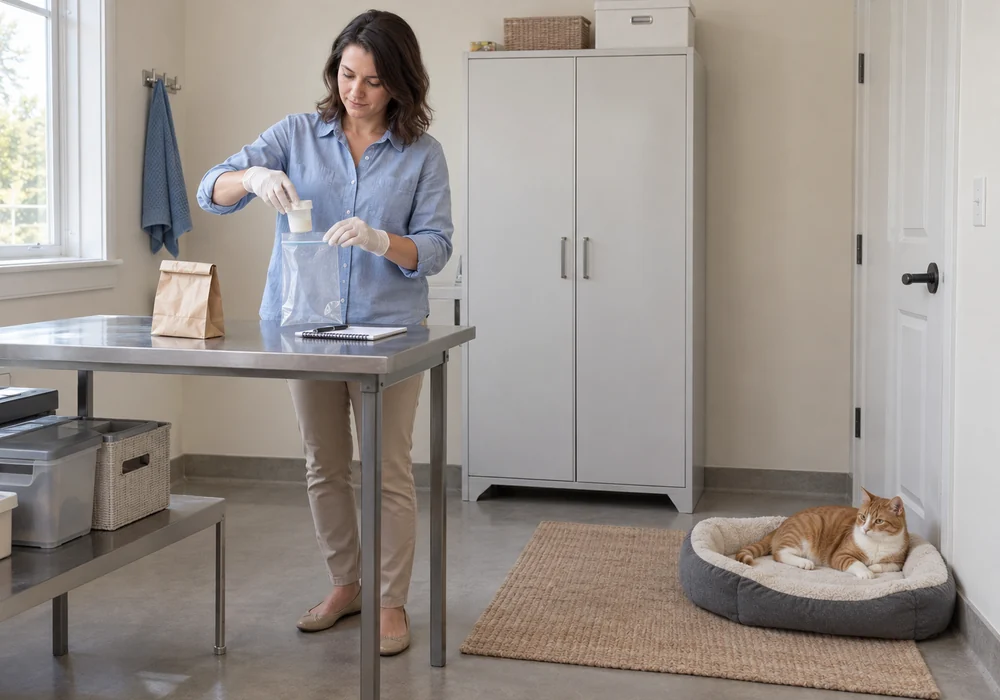
Ask whether the clinic wants a stool sample and how to collect, label, store, and transport it. If requested, use a fresh sample in a clean, sealed container with minimal litter contamination, and identify the cat and collection time. Do not add preservatives or assume freezing suits every test. In a shared household, establish which cat produced the sample.
If care is urgent, take the cat first. A missing sample should never delay an emergency assessment.
When Cat Diarrhea Needs a Veterinary Workup
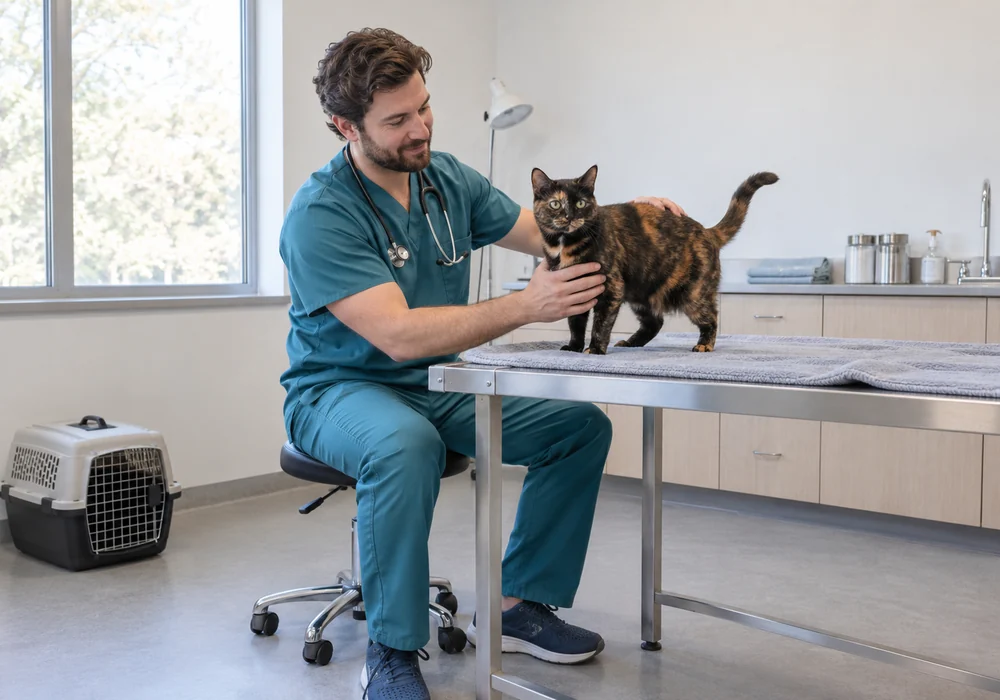
The veterinarian starts with the history and an examination, including hydration, weight, discomfort, and general condition. Depending on the findings, the next steps may include fecal tests, blood and urine tests, or imaging. Persistent disease may require a structured diet trial, additional nutritional testing, or selected tissue investigations.
A staged workup answers specific questions. Does the cat need fluids? Is there evidence of a parasite, obstruction, or illness outside the intestine? Would another test change treatment? Normal initial blood results do not exclude every intestinal disorder, and ultrasound alone cannot settle every chronic diagnosis.
A Stool Test Needs Clinical Context
One negative sample may miss an intermittently shed parasite, so the veterinarian may request repeat samples or combine methods. Conversely, a positive result does not automatically explain the symptoms.
In a study of 100 cats entering a Florida shelter, researchers detected at least one enteropathogen in 84% of the 50 cats with diarrhea and 84% of the 50 with normal feces. That finding illustrates why clinical context matters. It does not estimate infection rates in every household or mean infections never cause diarrhea.
Do Probiotics or Antibiotics Help?
They should serve a defined purpose rather than delay assessment. A randomized trial in foster kittens found lower odds of diarrhea requiring an unscheduled veterinary examination with Enterococcus hirae strain 1002-2: 10% of the kittens given the probiotic against 28% of those given a placebo. Of 130 kittens completing the study, 58 received the probiotic and 72 received placebo. This was prevention in a particular setting, not proof that every probiotic treats established diarrhea.
Antibiotics are not automatic treatment for loose stool. Research in 24 healthy adult cats found looser stools and reduced diversity of gut bacteria during two weeks of metronidazole, with an increased dysbiosis index and shifts in the relative abundance of 78 bacterial genera. All cats received the antibiotic; the study did not test its effectiveness against naturally occurring diarrhea. Ask the prescriber about the indication, and do not start leftovers or stop prescribed medication independently.
Keep the Recovery Area Clean
Remove feces promptly, wash hands after handling litter or samples, and keep litter-cleaning equipment separate from food preparation. A comfortable area with a separate tray, arranged as described in our litter box guide, can help identify stool and urine from the affected cat. Tell the clinic if other cats develop signs.
CDC cleaning guidance distinguishes removing dirt from disinfection. Clean visible contamination first, then follow any disinfectant’s label for dilution, contact time, rinsing, drying, and keeping cats away. Do not mix chemicals or use phenol-containing disinfectants around cats. For a diagnosed infection, ask for an organism-specific household plan.
Use intact, washable bowls and trays, change soiled bedding, and refrigerate unused wet food promptly according to its label. If several animals become ill after the same food, retain packaging and lot details and tell the veterinarian. Do not deliberately feed the suspect item again.
How to Tell Whether Your Cat Is Improving
Look for a pattern: fewer abnormal stools, adequate eating, usual engagement, and no new vomiting, pain, or concerning drinking or urine changes. One formed stool is encouraging only in that context. Less stool because the cat has stopped eating does not establish recovery.
Follow the agreed feeding, medicine, and recheck plan. Report recurrence, weight loss, or declining appetite even after initial improvement. If you are unsure when to worry about cat diarrhea, describe the uncertainty to the clinic rather than extending observation on your own.
This article draws on what we have learned keeping cats of our own as well as on the published veterinary sources cited above, and it cannot replace an examination of your cat. Stop and contact a veterinarian if diarrhea lasts beyond 24 hours, comes with repeated vomiting, blood or black tarry stool, a swollen or painful abdomen, marked weakness, or a cat that refuses food or water.