
Coat, markings, and body features
To identify cat breed traits, look at coat texture, markings, body shape, and facial features together. A gray coat may remind you of a Russian Blue, and a fluffy tabby may resemble a Maine Coon, but color or size alone cannot establish ancestry.
To identify your cat’s breed, compare a combination of physical traits with established breed descriptions, then check the cat’s background. Appearance can suggest a match; pedigree records provide evidence of ancestry. For many adopted cats, domestic shorthair or domestic longhair remains the most accurate description.
01 · Start with the coat
Identify Cat Breed Clues in the Coat
Look at your cat in daylight while they are standing or resting comfortably. Record coat length and texture separately from color. Two cats can share the same gray coloring while having very different coats and builds.
- Short and close-lying: the fur follows the outline of the body, making the legs, waist, and shoulders easy to see.
- Short and plush: a dense coat stands away from the skin and can make the cat look rounder than their underlying frame.
- Medium or long: look for a neck ruff, longer fur behind the hind legs, and a feathered tail. Note whether the coat is silky and flowing or thick and shaggy.
- Wavy or curly: check the back, sides, and tail for a consistent wave or curl. This is a useful reason to compare curly-coated breeds.
Coat texture becomes more informative when paired with another feature. For example, the Devon Rex combines a wavy coat with prominent cheekbones and large ears set low on the head. The coat types above are described in more detail, with care notes, in long haired cat breeds.
Describe the coat pattern first
The Cat Fanciers’ Association’s coat guide distinguishes coat descriptions from breed names. Use these terms to describe your cat’s markings:
- Tabby: mackerel tabbies have narrow stripes; classic tabbies have broad swirls; spotted tabbies have spots; ticked tabbies have bands of color on individual hairs.
- Solid: one main color without obvious tabby markings or white patches. In breed descriptions, gray is usually called blue.
- Bicolor: white combined with another color. “Tuxedo” is an informal description of a black-and-white arrangement.
- Tortoiseshell or calico: tortoiseshell coats mix dark and red or cream areas; calico coats have these colors with substantial white.
- Colorpoint: the face, ears, legs, and tail are darker than the body.
Tabby and tuxedo are not breeds. A tabby forehead marking or a white chest tells you about the coat pattern, so record it separately from any proposed breed name.
02 · Look beyond the fur
Compare Body Shape, Face, Ears, and Tail
To identify cat breed features beyond the coat, watch your cat standing naturally. Is the body compact and broad, long and slender, or long and substantial? Compare the length of the legs with the torso and look at the width of the chest. Weight alone is a poor guide: body fat and a thick coat can make an ordinary-sized frame look much larger. For a broader comparison of body size, see large cat breeds compared by size.
Head shape and muzzle
Use both a front view and a side view. A rounded head with full cheeks looks different from a wedge-shaped head that narrows toward the nose. Also look at the muzzle: is it broad and square, or narrow and tapered? The comparison table below shows how these features differ among familiar breeds.
Ears and eyes
Note ear size, spacing, and whether the tips are rounded, pointed, or curved. Backward-curving ears are a characteristic feature of the American Curl. Record eye color separately from eye shape: are the eyes round or almond-shaped, and are they set close together or widely apart?
Tail and overall proportions
Look at tail length relative to the body, how much it tapers, and whether the fur forms a plume. A bushy tail becomes a more useful clue when considered alongside the head, muzzle, and coat, rather than by itself.
Allow for age. Kittens have developing coats and proportions, so an adult breed photograph may be a poor comparison. Some breeds mature slowly: the CFA’s Ragdoll profile describes coat color developing over about two years and full size taking around four years.
03 · Compare the combination
Identify Cat Breed Traits Through Comparison
Use this table to find breed profiles that resemble your cat. The features come from CFA breed descriptions and can help you compare appearance, but they cannot confirm ancestry. Individual cats may not match every feature in a breed standard.
Familiar breeds and their everyday differences are covered in popular house cat breeds.
| Breed | Coat and coloring | Features to compare together |
|---|---|---|
| Russian Blue | Short, dense blue coat with silver-tipped hairs | Green eyes in mature cats, a wedge-shaped head, large ears, and a graceful body |
| British Shorthair | Very dense, plush short coat; many colors and patterns | Round head and eyes, full cheeks, a broad chest, and a sturdy build |
| Maine Coon | Shaggy coat, shorter at the shoulders and longer underneath | Long rectangular body, square muzzle, large ears, and a long plumed tail |
| Siamese | Short, close-lying coat with darker points | Blue almond-shaped eyes, a long wedge-shaped head, large ears, and slender proportions in the CFA standard |
| Ragdoll | Silky semi-long coat with points; some patterns include white | Blue eyes, a broad chest, a substantial body, and a broad, softly contoured wedge-shaped head |
| Birman | Longer pointed coat with characteristic white feet | Blue eyes, a broad rounded head, substantial build, and white “gloves” on the paws |
If your cat is gray
Eye color and coat texture help identify cat breed similarities in gray cats. A Russian Blue typically has silver-tipped fur, green eyes, and a graceful outline. A British Shorthair has a rounder head, fuller cheeks, and a broad, sturdy body. Compare those features together. Many domestic shorthairs are also solid gray, and British Shorthairs come in colors other than blue.
A common identification puzzle
If your cat has blue eyes and dark points
Start with coat length, then look at the face, build, and white markings. A short, sleek coat and slender frame fit a different description from a silky longer coat and broad chest. Birman descriptions emphasize white feet, but white paws alone do not settle the question because mitted Ragdolls also have them.
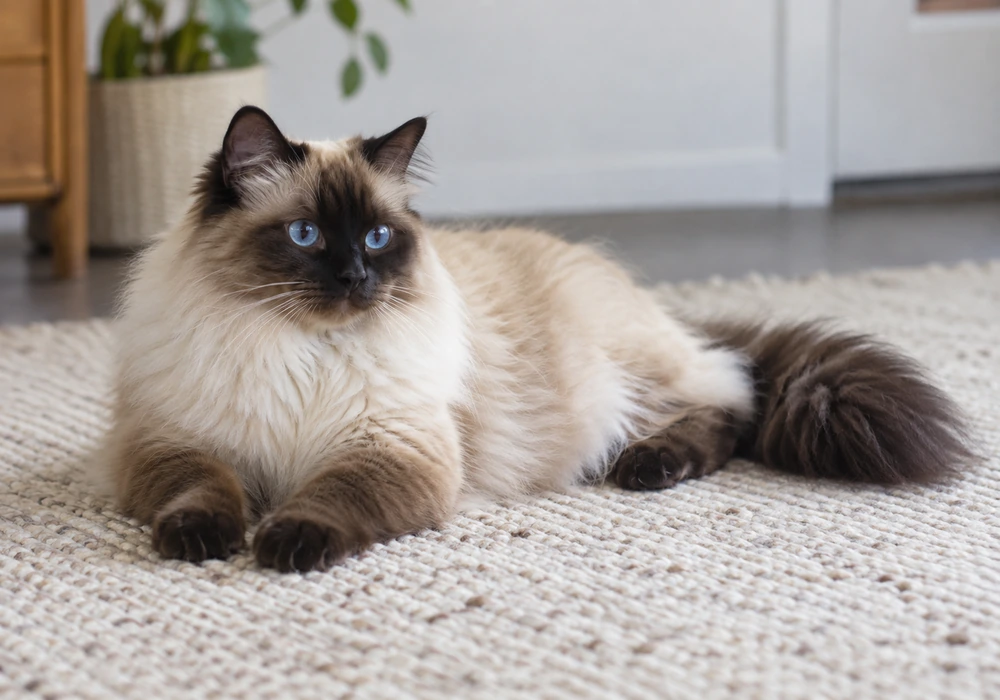
Temperature-sensitive pigmentation produces darker color on cooler parts of the body, including the face, ears, legs, and tail. This pattern also occurs in non-pedigreed cats. If the parents are unknown, “blue-eyed colorpoint domestic longhair” is a useful description while you investigate further.
04 · Make a useful visual record
Take Photos That Make Comparison Easier
To identify cat breed features from photos, you need more than a face close-up. Take three clear photographs in natural light:
- From the side: include the whole body, legs, and tail.
- From the front: show the face, ears, chest, and paws.
- A coat close-up: capture the pattern and texture on the back or flank.
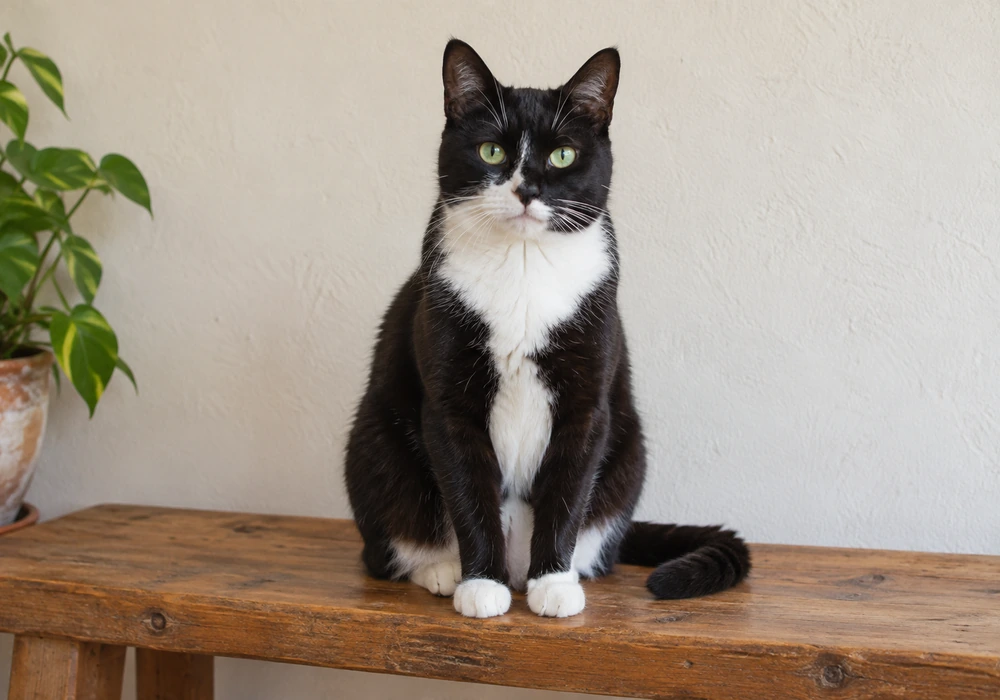
Keep the camera near the cat’s level and avoid filters or very close wide-angle shots. Add the cat’s approximate age, weight, and any known history. These details help an experienced breed club member or veterinarian make a more informed comparison.
What a Photo Cannot Show
A photo-identification app can suggest breed names to research. Treat its result as a visual match: it has no access to your cat’s parents or pedigree. Check the suggested breed’s full description rather than relying on the app’s confidence score.
05 · Check the background
Use Records to Confirm a Breed
If you want to identify cat breed ancestry, records are stronger evidence than a visual match. If your cat came from a breeder, ask for the registration certificate and pedigree. Check the cat’s registered name, date of birth, breeder, and parent details against the information you received. See CFA’s guide to registration and pedigree records for more information. A microchip record or general pet registration is not a pedigree. The paperwork checks are worked through for one breed in purebred Siamese verification.
If you adopted your cat, ask the shelter, rescue, or previous caregiver whether its breed description came from records or an assessment of its appearance. Without supporting records, the cat’s ancestry remains uncertain; missing paperwork alone does not rule out pedigree ancestry.
A breed name alone does not establish ancestry. The stories behind geographic labels sit in cat breeds named after countries.
What “domestic shorthair” and “domestic longhair” mean
Domestic shorthair and domestic longhair describe the coat length of cats whose breed ancestry has not been established. They are general descriptions, not specific breed names. A domestic shorthair is not automatically an American Shorthair or a British Shorthair.
A cat without an established breed is not necessarily a mix of two named breeds. Many cats come from generations of cats that were not selectively bred to a breed standard, so there may be no specific pair of breeds to identify.
Can DNA Tests Help Identify Cat Breed Ancestry?
Cat DNA tests compare your cat’s genetic markers with reference samples. Depending on the provider, the results may describe similarities to certain breeds, estimated ancestry, or relationships to broader cat populations. Check what the test measures and what its results can tell you before buying it.
Genetic similarity to a breed does not prove that your cat had a parent or grandparent of that breed. A DNA report can provide additional clues, but it cannot replace documented pedigree records. Read the explanation of genetic similarity and ancestry from Basepaws.
06 · Write it down
Put the Clues Together
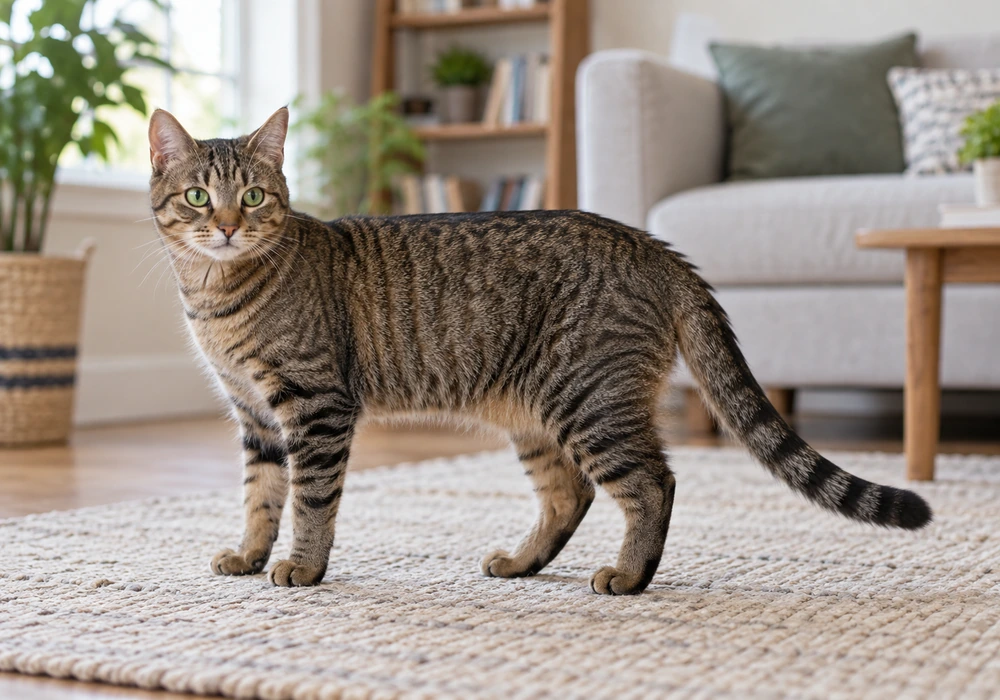
Summarize what you can observe and what you know about your cat’s background. For the tabby shown earlier, the description could be:
Coat: short, brown mackerel tabby.
Physical features: green eyes, upright ears, and a long ringed tail.
If the parents and pedigree are unknown: domestic shorthair, with breed ancestry unconfirmed.
What to Do With a Close Match
If several features resemble a particular breed, use that breed as a point of comparison while you look for supporting records. Personality alone cannot identify a breed: cats of many backgrounds can be quiet, affectionate, or talkative. Vocal range varies widely, as quiet cat breeds shows.
When you try to identify cat breed traits, start with what you can see and check the cat’s background. Describe the coat, compare the body and face, and review any available records. If the evidence is limited, a clear description of your cat is more reliable than a breed label based on one feature.
This guide reflects everyday experience keeping cats and does not replace a breed standard, a veterinarian’s assessment, or documented registration records. Appearance alone cannot establish ancestry: if a decision depends on pedigree, ask the breeder or registry for the certificate, and take any trait that worries you about health, rather than looks, to a veterinarian.