
Litter training kittens starts with a box they can find and enter easily, suitable litter, and a consistent routine. Most kittens naturally dig in loose material; your job is to give them a comfortable place to do it.
Even a kitten that used a box in its previous home may have an accident while settling in. Start with a familiar setup, show your kitten where to go, and give it privacy. This guide explains when to begin, how to build a simple routine, and what to check if your kitten keeps missing the box.
Straining with little or no urine? Seek emergency veterinary care immediately. A possible urinary blockage needs treatment, even if your kitten has only just started litter training.
When to Start Litter Training Kittens
Offer a shallow litter box as your kitten becomes mobile and starts passing urine and stool independently, often around three to four weeks old. Kittens younger than about three weeks usually depend on their mother to stimulate this process. If you are caring for an orphaned kitten, ask a veterinarian to demonstrate the necessary assistance; a litter box cannot replace it.
An older kitten may already use a box reliably. Ask the previous caregiver which box and litter worked, then provide a recognizable option in your home.
Choose a Box and Litter Your Kitten Can Use
The essential supplies for litter training kittens are a suitable box, litter, a scoop, waste bags, and cleaning supplies. Our new kitten kit checklist covers the rest of the equipment for bringing a kitten home.
Choose a low entrance and enough room to turn
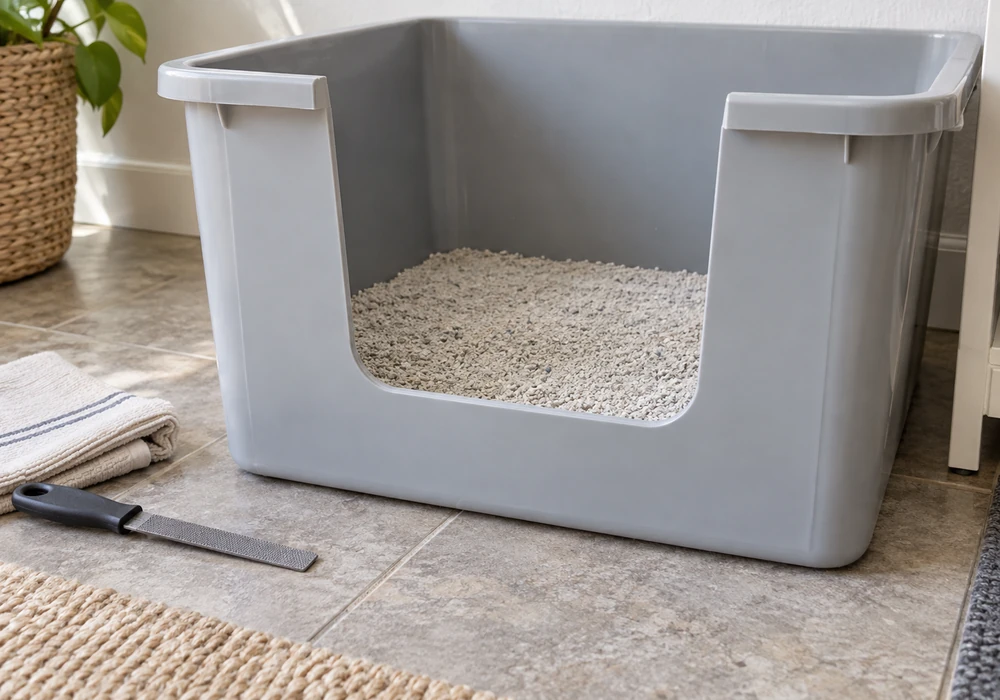
The kitten should be able to step over the entrance without scrambling and turn, dig, squat, and leave comfortably. Choose a stable box with smooth edges. A large box can work well for a small kitten if the entrance is low enough; check the fit again as the kitten grows.
Veterinary house-soiling guidelines suggest a box about 1.5 times the cat’s length, measured from nose to tail base. This is a sizing guide, not a reason to overlook a difficult entrance. An open box makes it easy to check cleanliness and watch how comfortably your kitten enters and leaves. If you need a lower entrance, our guide to making a litter box from a tray or storage bin explains how to choose and prepare a suitable container.
Start With Suitable, Unscented Litter
Start with the litter your kitten already accepts when it is suitable for its age and behavior. Choose an unscented option. About 3 cm (1.2 inches) is a reasonable starting depth for digging; adjust to the kitten and the product. A deep, shifting layer can be harder to stand on.
ASPCApro’s foster-kitten handout recommends non-clumping litter for kittens under four months because they may swallow it. This litter absorbs urine without forming firm clumps. The age recommendation is a foster-care precaution, rather than a universal cutoff. For a very young kitten or one that mouths litter, choose an unscented, non-clumping option with your veterinarian or shelter.
Litter is not food. “Natural,” “paper,” or “tofu” does not guarantee that a product is safe to swallow or that it does not clump; our guide to safe litter for kittens compares the common materials. If your kitten eats its current litter, ask about a replacement rather than keeping that product available. Persistent litter eating, vomiting, abdominal discomfort, or reduced appetite needs veterinary advice.
Keep Boxes Nearby and Easy to Reach
Begin in a comfortable, kitten-safe room with places to rest, hide, and play. Keep the litter box apart from food, water, and bedding. Visit and interact with your kitten there, and leave drinking water available.
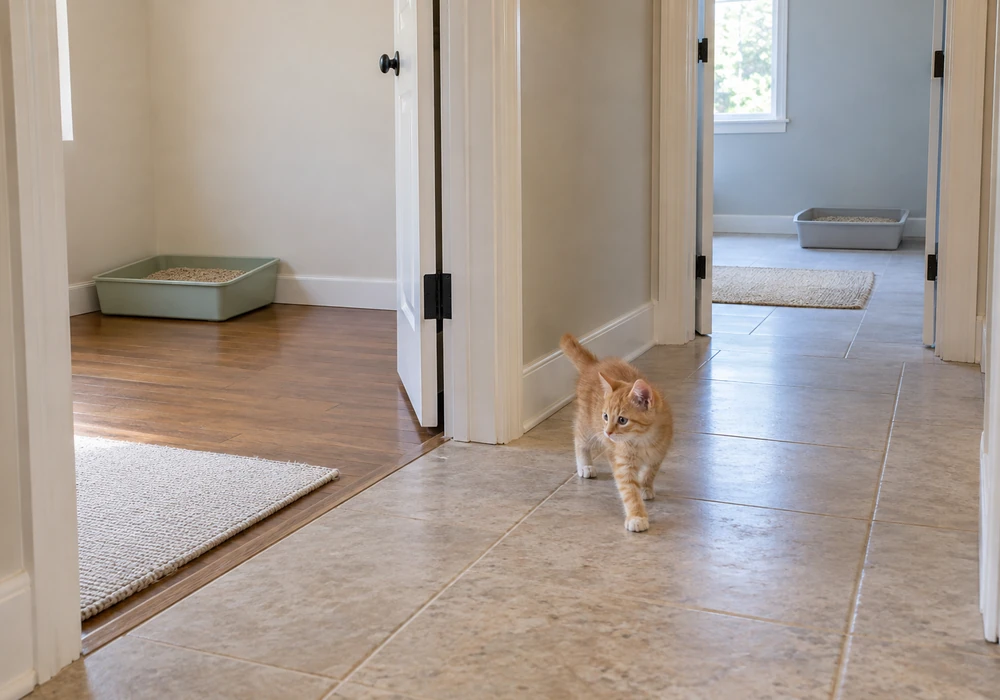
Plan for one box per cat, plus one extra: two for one kitten or three for two cats. Use separate accessible locations, including a box on each floor the kitten uses. Avoid noisy appliances, busy doorways, and routes another cat can block. Boxes side by side do not provide a separate route if another cat blocks that area.
Litter Training Kittens: Four First Steps
VCA’s kitten litter-training guidance recommends starting in one room and supervising wider exploration until box use is consistent. Build that routine with these four steps.
-
1. Show the location and let your kitten investigate
Place your kitten near the box. If it is comfortable being lifted, you can briefly set it inside, then let it leave. Do not hold it there or move its paws through the litter. It needs a chance to explore without being restrained.
-
2. Offer a visit after meals, naps, and play
These are useful times to show the nearby box again. Sniffing a corner or pawing at the floor may also mean your kitten is looking for somewhere to go. Guide it calmly; avoid chasing, startling, or expecting it to urinate on command.
-
3. Step Back and Reward Afterward
Give your kitten space while it uses the box. Once it has finished and stepped out, offer quiet praise or a small suitable food reward away from the litter. Avoid interrupting to pet it or putting treats inside the box.
-
4. Introduce more rooms gradually
Look for repeated, comfortable use for both urine and stool before allowing wider access. Begin with short supervised visits, show the return route, and add convenient boxes as needed. If accidents start after expansion, return to a smaller, well-equipped area while you check the cause.
Common Mistakes When Litter Training Kittens
If your kitten is comfortable and passing urine and stool, use the pattern of accidents to decide what to check. Pain, repeated straining, or sudden changes need veterinary attention rather than a trial of different products.
| Common mistake | What you may notice | What to do instead |
|---|---|---|
| Opening the whole home too soon | Accidents begin in newly accessible rooms. | Shorten the distance to a box and expand access more gradually. |
| Keeping a box that is difficult to enter or use | The kitten hesitates at the rim or squats beside it. | Offer a clean, lower-entry box with more usable space; repeated accidents also warrant a health check. |
| Replacing familiar litter abruptly | Avoidance starts after a change in scent, texture, or depth. | Restore a suitable accepted option and introduce changes gradually. |
| Putting every box in the same inconvenient spot | Several boxes go unused, or one cat waits to approach. | Provide another quiet location with a clear route. |
| Shouting, dragging, or holding the kitten in the box | The kitten becomes wary of the box or your approach. | Stop forcing contact. Offer calm opportunities and investigate the original problem. |
| Waiting for non-clumping litter to form clumps | The box stays wet despite feces being scooped. | Remove or replace urine-soaked litter; non-clumping litter absorbs liquid without forming firm clumps. |
One kitten uses the box for urine but passes stool elsewhere
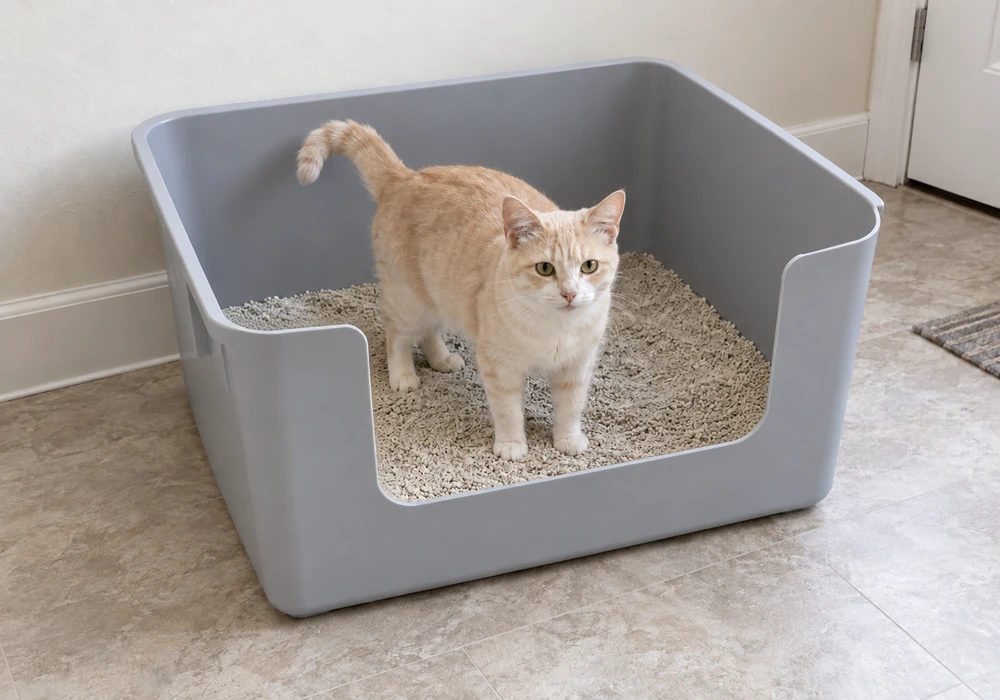
Check stool consistency, cleanliness, space to squat, and entry height. Offer another suitable box; some cats use separate boxes for urine and stool. Repeated stool accidents, diarrhea, straining, or pain need veterinary advice.
Clean Up Accidents and Keep the Box Inviting
Cleaning is part of litter training kittens: lingering urine odor can draw a kitten back to the same spot. Remove stool or blot up urine, then use an enzyme-based cleaner labeled for cat urine and suitable for the surface. Follow the instructions for application, contact time, rinsing, and drying. Keep your kitten away until the area is safe to use again.
Note where the accident happened, what your kitten was doing beforehand, and whether it passed urine or stool. A repeated spot on a rug may reflect lingering odor or a surface preference; a miss after a nap in another room may point to distance or a closed door.
Check one likely issue at a time while keeping a suitable, successful box available. If the kitten avoids a location where another cat watches or blocks the route, our guide to reducing stress at home explains how to improve access and privacy. Persistent accidents still deserve a veterinary assessment.
Make cleaning part of the daily routine
Check morning and evening, removing feces and wet material at least daily and more often when needed. With non-clumping litter, urine-soaked material needs removal or replacement even when there is no visible clump.
Cats Protection’s litter-box guidance recommends removing urine and stool twice daily and fully cleaning the box at least weekly. Replace litter sooner if wet or contaminated. Empty the box, wash with hot water and mild soap, rinse thoroughly, and dry before refilling. Keep another usable box available while it dries.
Wash your hands afterward. Avoid phenol-based disinfectants, which are toxic to cats. If illness calls for disinfection, ask the clinic which product and procedure to use.
When Litter-Box Problems Need a Vet
A health problem can interrupt progress with litter training kittens. Pain, diarrhea, or an urgent need to urinate may make it difficult to reach or use the box. Changing the setup cannot treat the underlying illness.
Seek emergency care for repeated straining with little or no urine
Repeated unsuccessful trips, crying, or increasing distress can indicate a urinary blockage. Cornell’s urinary-disease guidance identifies suspected obstruction as an emergency. It can resemble constipation; if you cannot tell what your kitten is trying to pass, seek urgent veterinary guidance. Do not wait overnight, press on its abdomen, or try a home remedy.
Call promptly for pain, illness, or a sudden change
Blood in urine, painful urination, repeated accidents, or loss of previously reliable habits needs veterinary assessment. Diarrhea is especially concerning with vomiting, poor appetite, or lethargy, so check our guide to when cat diarrhea needs a vet; young kittens need early advice. Repeated unsuccessful attempts to pass stool, abdominal swelling, or pain also warrant a call. Do not give human laxatives.
Bring brief notes about urine, stool, appetite, and recent changes. In a shared box, waste does not prove that every kitten has eliminated normally. Ask the clinic about samples, and never delay urgent care to collect one.
Litter Training Kittens: Common Questions
How long does litter training take?
There is no fixed timetable for litter training kittens. Age, health, previous experience, and the home’s layout affect progress. Look for independent, comfortable use and the ability to find the box from the areas your kitten visits. Repeated accidents are a reason to reassess, not to wait indefinitely.
Can I use a covered or automatic litter box?
A spacious covered box can work if the kitten accepts it, can enter easily, and the box stays clean. Keep an open alternative if access or preference is uncertain. For an automatic model, check its exact age, weight, and operating restrictions. Keep a conventional box available; a small kitten may not meet the device’s requirements.
This guide draws on published cat-care guidance and our own experience raising kittens, not a clinical study, and it does not replace advice about your own cat. Kittens differ in age, health, and temperament, so treat the timings as a starting point. If your kitten strains to pass urine, passes blood, vomits, stops eating, or abandons a box it used reliably, contact a veterinarian promptly.