
Orange Cat Facts: Why They’re Orange, and Why Most Are Male
Orange cats are known for their warm-colored coats, visible tabby markings and reputation for being friendly. Their coat color has a clear genetic explanation: a change on the X chromosome alters pigment production. That inheritance pattern also explains why orange cats are more often male. Personality is less straightforward, and an orange coat does not tell you how an individual cat will behave.
This guide explains the genetics, the male-to-female ratio, common coat patterns and the evidence behind personality claims. It also covers freckles, sun exposure and the health signs owners should take seriously. Use the menu below to go straight to the questions that interest you.
Five key facts about orange cats
- Two independent studies published in 2025 identified a deletion in ARHGAP36, a gene on the X chromosome, as the cause of sex-linked orange coloration.
- The deletion changes gene activity in pigment cells rather than removing the gene or changing its protein-coding sequence.
- Male cats usually need one orange allele, while females need two to have an orange rather than tortoiseshell coat. The exact sex ratio varies between populations.
- Orange cats commonly show tabby markings, even on a genetic background that would produce a solid coat in a non-orange cat.
- Research does not establish that orange cats are universally friendlier, less intelligent or more aggressive than other cats.
Why Are Orange Cats Orange? What Scientists Found in 2025
The link between orange fur and the X chromosome was known long before the responsible DNA change was identified. In May 2025, two independent teams published their findings online in Current Biology. The Kaelin et al. study and the Toh et al. study pointed to a deletion of about 5,000 DNA base pairs within ARHGAP36. The papers later appeared in the journal’s June issue.
The teams approached the question through genetic comparisons and studies of gene activity. In the Kaelin study’s skin samples, ARHGAP36 RNA levels were about 13 times higher in orange than non-orange samples. That result describes the samples tested; it is not a fixed expression level for every orange cat.
Two main pigments create many coat colors
Two forms of melanin provide the main pigments in cat fur. Eumelanin produces black and brown shades, while pheomelanin produces yellow and red shades. Other genes influence how much pigment is made, where it appears and how it is distributed through the hair.
In orange areas, pigment production shifts toward pheomelanin. The result can range from pale ginger to a deeper reddish orange. Breeders often use the term “red” for the color that most owners call orange or ginger.
Human red hair also involves pheomelanin, but the genetic explanation differs. Many human red-hair variants affect MC1R, a receptor involved in pigment signaling. The orange-cat mutation changes activity farther along the pigment pathway.
A deletion that changes how a gene is used
The Toh study identified a deletion of 5,076 DNA base pairs inside an intron, a non-protein-coding part of ARHGAP36. The missing section includes a conserved region that appears to help regulate gene activity. Its loss allows the gene to become active in pigment cells, where it is normally largely inactive.
The gene was already known from research on other tissues, including the brain and hormone-producing organs. Its involvement in cat pigmentation was the unexpected finding. Because the deletion changes regulation rather than the protein-coding sequence, the important question is where and how much of the gene is expressed.
The researchers linked this extra gene activity to reduced protein kinase A signaling, part of the pathway that normally supports dark pigment production. In simpler terms, the change shifts the pigment cells toward producing orange pigment without requiring the usual type of MC1R mutation.
These studies provide strong evidence for the coat-color mechanism. They do not establish how the mutation affects every tissue throughout a cat’s life, and they were not designed to prove a link with intelligence or personality.
An unusual route to orange fur
Many mammals have yellow or reddish fur, but they do not all reach those colors through the same genetic change. The X-linked ARHGAP36 deletion is an unusual mechanism identified in domestic cats. It should not be assumed to explain orange coloration in other species.
Why Are Most Orange Cats Male?
The orange allele is carried on the X chromosome. A typical male cat has one X and one Y chromosome, so one orange allele on his X can give him an orange coat. A typical female has two X chromosomes and usually needs the orange allele on both to have an orange rather than tortoiseshell coat. White spotting and other color genes can still alter her appearance.
Why the often-quoted 80% is an approximation
A simple inheritance model shows how a male majority can arise. Let q be the frequency of the orange allele. If mating is random, males and females are equally numerous, and the allele has the same frequency in both sexes, the expected orange proportion is q among males and q² among females. The male share of orange cats is then q/(q + q²), or 1/(1 + q).
For example, if the orange allele frequency is 25%, the model predicts that 80% of orange cats will be male. If the allele frequency is 50%, the predicted male share falls to about two-thirds. These are calculated examples, not a worldwide population survey. The familiar “four out of five” figure should therefore be treated as a rough guide rather than a rule for every location.
| Parents | Daughters | Sons | Can a daughter inherit two orange alleles? |
|---|---|---|---|
| Orange male × orange female | All orange | All orange | Yes, all daughters |
| Orange male × tortoiseshell female | Half orange, half tortoiseshell | Half orange, half non-orange | Yes, a 50% chance for each daughter |
| Orange male × non-orange female | All tortoiseshell | All non-orange | No |
| Non-orange male × orange female | All tortoiseshell | All orange | No |
| Non-orange male × tortoiseshell female | Half tortoiseshell, half non-orange | Half orange, half non-orange | No |
This table considers the orange locus only. It leaves out white spotting, dilution and other genes that affect the final coat. Here, a tortoiseshell female carries one orange and one non-orange allele. A non-orange parent does not have to be visibly black; other genes can produce a different non-orange color.
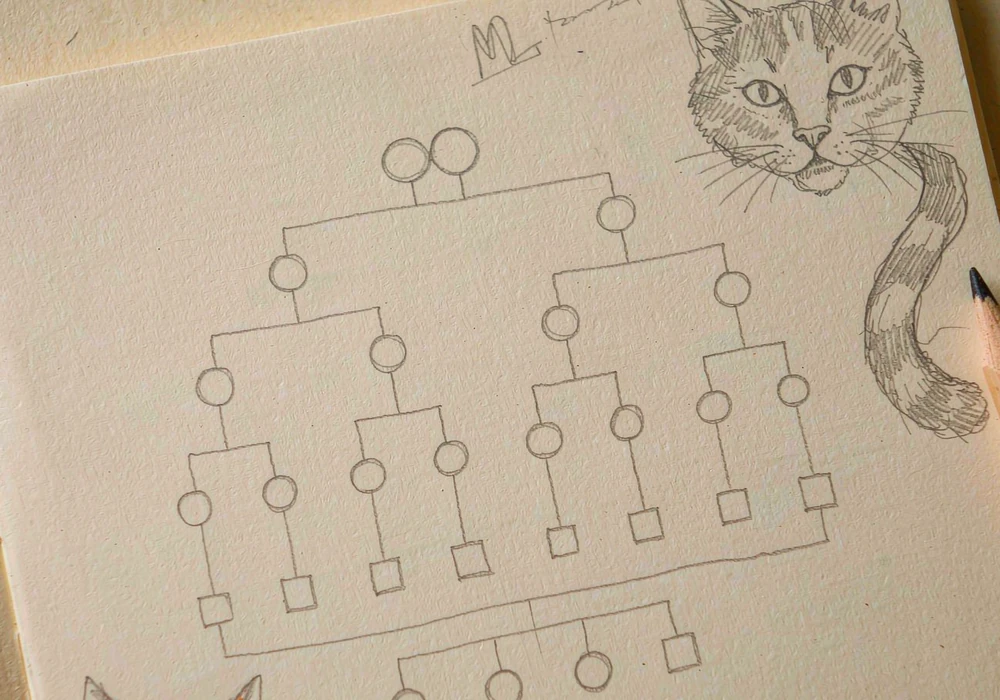
The same inheritance principles apply in different populations, but the frequency of the orange allele can vary. That is why coat color alone is not a reliable way to determine a cat’s sex.
How common are female orange cats?
Using the same 25% example, orange females would make up 6.25% of female cats. If the sexes are equally numerous, that is about 3.125% of all cats, or 20% of orange cats. These percentages have different denominators and should not be used interchangeably.
A female orange cat does not require an unusual chromosome arrangement. She normally inherits an orange allele from each parent. Male tortoiseshell and calico cats are a different case: rare mechanisms can include XXY chromosomes, chimerism or mosaicism. Their fertility depends on the underlying cause.
What an orange father passes to his kittens
In typical XX/XY inheritance, a father passes his X chromosome to his daughters and his Y chromosome to his sons. An orange father therefore passes the orange allele to every daughter, but her mother’s allele helps determine whether she is orange or tortoiseshell. A son receives his orange-locus allele from his mother. Other coat-color genes can come from either parent.
Color predictions are useful for understanding inheritance, but they do not measure a kitten’s quality or suitability as a pet. Health, temperament, responsible breeding practices and reliable records matter more than finding a particular shade or sex.
Why Do Orange Cats Show Tabby Markings?
Orange cats commonly have stripes, swirls, spots or subtler tabby markings. To understand why, it helps to separate two things: the genes that establish a coat pattern and the genes that control whether that pattern is easy to see.
Orange changes how the non-agouti coat looks
As the UC Davis Veterinary Genetics Laboratory explains, agouti influences pigment banding within individual hairs, while non-agouti usually produces a solid appearance. Orange is an important exception: TICA notes that red and cream cats can show their tabby patterns regardless of their agouti alleles. However, breed registries also use categories such as “solid red.” Visible markings, genetic pattern and registration terminology are related, but they are not interchangeable.
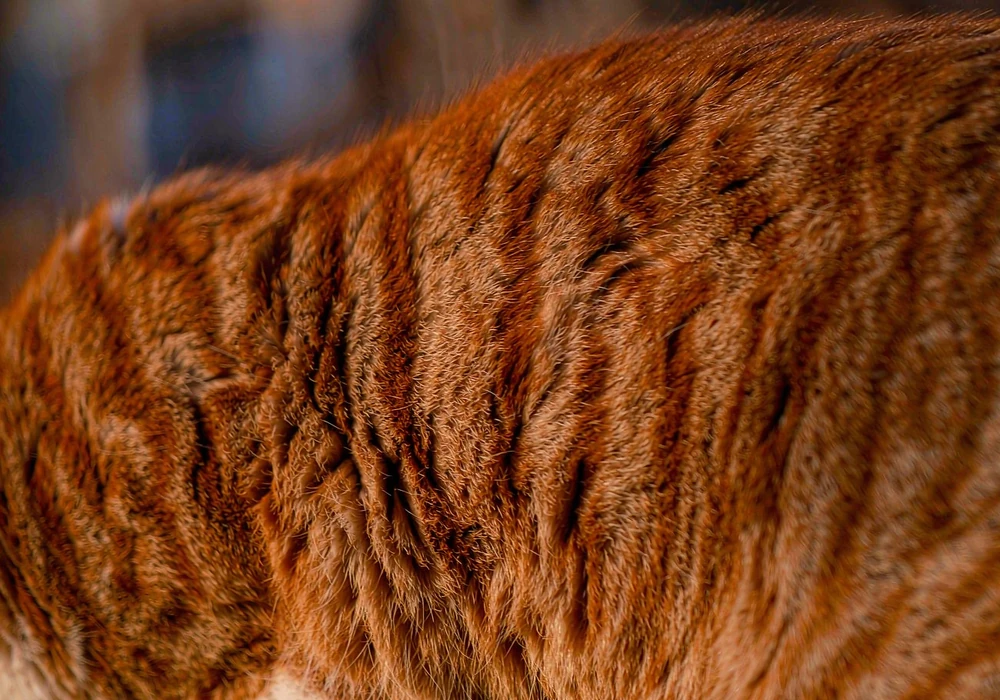
Four common tabby patterns and the forehead M
The four common tabby patterns are classic, mackerel, spotted and ticked. Classic tabbies have broad swirls or blotches; mackerel tabbies have narrow stripes; spotted tabbies have spots; and ticked tabbies have banded hairs with fewer obvious body markings. Tortoiseshell describes a mixture of orange and non-orange areas rather than a fifth tabby pattern. A tortoiseshell cat with tabby markings is often called a torbie.
The familiar M on a tabby’s forehead is formed by facial markings. It is often easy to recognize, but its contrast varies. It is not a sign of a particular breed or evidence of a special temperament.
What “orange tabby” tells you
“Orange tabby” describes color and pattern, not breed. Orange cats can have different coat lengths, shades and marking types. Cream is the diluted form of orange: variants affecting pigment distribution, including the dilution gene MLPH, produce the paler appearance. Cream kittens can result when the necessary dilution variants are inherited from both parents.
The pattern begins forming before birth. A 2021 study of coat-pattern development identified a role for DKK4 in an early skin pattern that appears before hair follicles develop. This research predates the 2025 orange-gene papers and addresses pattern placement rather than the orange mutation itself.
Are Orange Cats Friendlier? What the Research Shows
Orange cats can be affectionate, cautious, playful or reserved, just like cats of other colors. Existing studies do not establish a universal orange-cat personality. The main research often cited in these discussions measures different things, so its findings need to be kept separate.
A 2012 study examined people’s impressions
In Delgado and colleagues’ 2012 study, 189 participants rated personality traits associated with different coat colors. Participants tended to describe orange cats as friendly. The researchers did not directly observe the cats’ behavior, so this result documents human perceptions rather than demonstrating that orange cats are friendlier.
A 2016 survey examined owner-reported aggression
The Stelow et al. study analyzed 1,274 owner surveys. Owners reported more aggression during everyday interactions in some color groups, including sex-linked orange females, black-and-white cats and gray-and-white cats. The female category included tortoiseshells, calicos and torbies; it was not a finding that orange males are generally more aggressive.
Differences during handling and veterinary visits were small. Owner questionnaires can reveal useful associations, but they cannot establish that pigment causes behavior or predict how a particular cat will respond to people.
Another 2016 study accounted for breed
In Wilhelmy et al.’s study, researchers collected 574 completed owner questionnaires and analyzed a final sample of 394 cats from 12 breeds after exclusions. Many apparent associations between coat characteristics and behavior were explained by breed in this sample.
Red coloration was still associated with greater prey interest and more fear-related aggression toward unfamiliar people after accounting for breed. These were owner-reported associations from one study, not proof that orange pigment causes either trait. Further research is needed to establish how consistently these associations appear in other cat populations.
For everyday care, observing your own cat is more useful than relying on a color stereotype. Our guide to signs of fear in cats explains body-language signals that can help you recognize discomfort and respond calmly. Fear and defensive aggression can occur together.
| Claim | Evidence status | What the evidence means |
|---|---|---|
| Orange cats are friendlier | Not established | The 2012 perception study found that people associated orange coats with friendliness. It did not directly test feline friendliness. |
| Orange cats are more aggressive | No general conclusion | The 2016 aggression survey reported associations in specific color groups, including tortoiseshell, calico and torbie females, not a general orange-male effect. |
| Coat color predicts behavior | Limited and confounded | Breed explained many associations in the Wilhelmy sample. Coat color is not a reliable personality test for an individual cat. |
| Most orange cats are male | Explained by X-linked inheritance | The exact proportion depends on allele frequency and population assumptions. A calculated 80% is an example, not a universal rate. |
| Orange cats have higher prey interest | Association in one study | Wilhelmy et al. found a breed-adjusted association using owner questionnaires. This does not establish a cause or predict an individual cat. |
| Orange cats are more fearful of strangers | Association in one study | The reported association concerned fear-related aggression toward unfamiliar people. That is more specific than general shyness. |
Where “one orange brain cell” fits
The “one orange brain cell” joke is an internet meme, not a scientific description of intelligence. Funny videos are selectively shared, and memorable examples can reinforce a stereotype. Neither the coat-color discovery nor the questionnaire studies demonstrate that orange cats are less intelligent.
Why Sex and Other Factors Matter in Color Comparisons
Because orange cats are more often male, a comparison between orange cats and other cats may also compare different proportions of males and females. Researchers need to consider this alongside age, neuter status, breed and living conditions before attributing a difference to color.
A male majority can affect the comparison
Imagine one group contains mostly males and another has equal numbers of males and females. If a trait differs by sex, the groups could differ even if coat color has no direct effect. This is a possible confounding factor, not proof that sex explains every orange-cat stereotype.
Studies also differ in how participants are recruited and how behavior is measured. Owner reports can be useful, but expectations may affect what people notice or report. Direct observation and well-matched comparison groups can help clarify whether an association is consistent.
Body size and urinary anatomy are separate from color
Male cats are generally larger than females, although individuals and breeds vary. Their longer, narrower urethra also makes urinary blockage a particular concern. These are reasons to consider sex and anatomy rather than assuming an orange coat creates a special health risk.
A larger frame can require more calories; it does not automatically cause faster weight gain. Weight gain depends on energy intake relative to energy use. Our cat weight chart by age can provide context, but a veterinarian’s assessment of body condition is more useful than comparing cats by color.
The Association for Pet Obesity Prevention’s 2022 U.S. clinic-based survey classified 61% of the cats assessed as overweight or having obesity. Within the sample, 28% had body condition scores of 6–7 and 33% scored 8–9. These findings describe the surveyed cats and do not establish a color-specific obesity risk.
For an orange cat, use the same practical approach as for any other cat: measure portions, account for treats, provide regular play and review unexplained weight changes with a veterinarian. Coat color is not a reason to assume that weight gain is inevitable or harmless.
Three questions to ask about a behavior claim
First, did the study account for factors such as sex, age and breed? Second, did it measure observed behavior, owner reports or people’s general impressions? Third, has the result been confirmed in another suitable sample? These questions help you judge how far a finding can reasonably be applied.
A study can provide useful information while still having limitations. A reported association is a starting point for further investigation, not a guarantee about the cat in front of you.
Orange Cat Health: Freckles, Sun Exposure and Warning Signs
An orange coat does not diagnose a health problem, and it does not guarantee good health either. Most care decisions should be based on the cat’s age, breed, medical history, body condition and symptoms.
What the gene studies can tell us about health
The 2025 studies focused on pigmentation. Researchers found altered gene activity in orange pigment cells, while the non-skin tissues tested did not show the same change. This supports a pigment-focused effect, but it does not prove that the mutation has no possible effect in any tissue or at any age.
Those results also do not justify applying human cancer findings about ARHGAP36 directly to orange cats. Nor do they establish that orange cats have a higher overall disease risk. A coat-color mechanism and a long-term health study answer different questions.
For routine care, our overview of basic cat care applies to orange cats too. Choose brushing and grooming routines by coat length, texture and shedding rather than color. An orange coat does not require special products to maintain its shade.
Lentigo: common dark freckles
Orange cats commonly develop small, flat brown or black spots called lentigines, especially on the lips, nose and eyelids. The MSD Veterinary Manual describes feline lentigo as a benign increase in pigment-producing cells. Spots can appear in young cats and become more noticeable with age, but not every orange cat develops them.
Once a veterinarian has identified a spot as lentigo, treatment is usually unnecessary. However, a new dark mark should not automatically be diagnosed from a photo or coat color. Ask your veterinarian about unfamiliar lesions, especially if they grow quickly, become raised, change shape, bleed, ulcerate or seem painful.
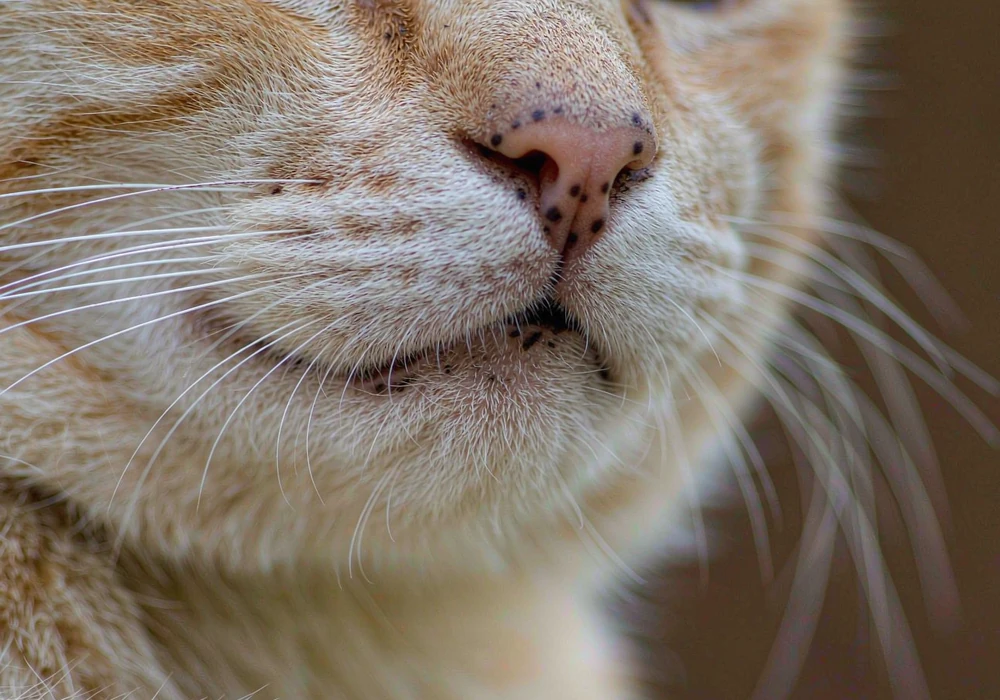
Sun protection depends on exposed skin
The Western College of Veterinary Medicine recommends particular care with sun exposure in lightly pigmented, sparsely haired areas such as white ear tips and a pale nose. An orange-and-white cat may have vulnerable areas even though much of the coat is pigmented. Limit intense sun exposure and provide shaded resting places. If sunscreen is needed, ask your veterinarian which product is suitable for cats; do not apply a human product without advice, because cats may lick it off.
Is Orange Tabby a Breed?
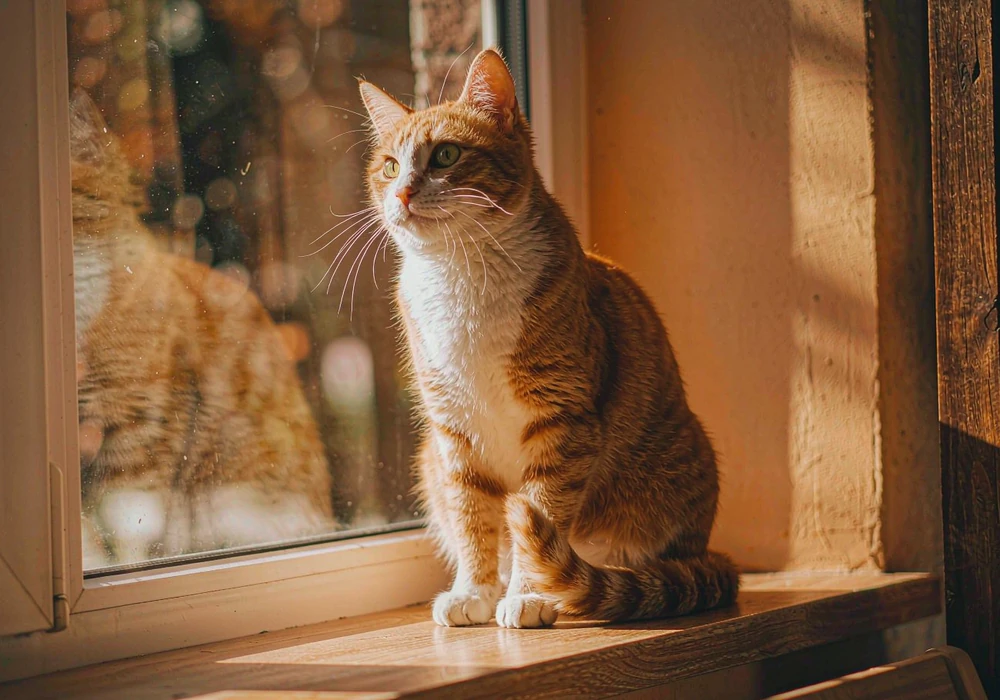
No. Orange describes coat color, and tabby describes a pattern. Orange coats occur in non-pedigree cats and in several recognized breeds, including Persians and Maine Coons. Breed standards use their own color terminology, so check the relevant registry rather than assuming every breed accepts orange.
What your cat’s appearance can tell you
Coat length, head shape and body type can suggest similarities to certain breeds, but an orange coat alone cannot establish ancestry. Our guide to identifying your cat’s breed explains useful features and their limits. Appearance is a starting point; reliable pedigree records provide stronger evidence of a specific lineage.
An orange Persian and an orange non-pedigree cat can share the same orange-locus variant while having very different ancestry. Color is therefore best recorded separately from breed or pedigree status.
A useful description without guessing ancestry
For a cat without a known pedigree, “domestic shorthair, orange tabby” or “domestic longhair, orange tabby” may be an accurate description. These terms describe the cat without assigning an unsupported breed. Our cat breed profiles can help you compare recognized breeds and their care needs.
If you are buying a pedigree kitten, check registration records, relevant health screening and the conditions in which the kitten was raised. Neither a striking color nor a high price substitutes for those checks.
Orange Cat History and Curiosities
Cats have a long association with ships, where they helped control rodents. The Chatham Historic Dockyard Trust records this practical role and notes that the Royal Navy stopped taking animal mascots to sea in 1975. That history concerns shipboard cats generally, not a documented advantage of orange cats.
Stories about lucky ginger cats or cats predicting storms belong to maritime folklore. They can be enjoyed as stories, but they are not evidence that orange cats have special weather-sensing abilities or a distinct personality.
The orange-gene research has its own human story: cat owners helped support the Japanese project through crowdfunding. As the Stanford researchers also noted, paintings from the twelfth century depict calico cats, showing that orange coloration is centuries old. The shared deletion supports the possibility of a common origin, but neither a painting nor the sampled genomes gives an exact date for the original mutation.
What These Facts Mean for Your Cat
The genetics explain why your cat is orange and why orange coats are more common in males. They do not tell you whether your cat will enjoy being held, chase every toy or hide when visitors arrive. Learn those preferences by watching your own cat.
Provide appropriate food, regular veterinary care, daily play and places to rest or hide. If behavior changes suddenly, consider pain, illness or stress rather than dismissing it as “orange cat behavior.”
Dark freckles may be harmless lentigo, but new or changing skin lesions deserve assessment. Repeated straining to urinate with little or no urine is an emergency, particularly in males: contact a veterinarian immediately rather than waiting for a routine appointment.
Want to compare breeds that can have orange coats? Explore their grooming needs, activity levels and other characteristics alongside coat color.
Frequently Asked Questions
Why are most orange cats male?
The orange allele is on the X chromosome. A typical male needs one copy to have an orange coat, while a typical female needs two to be orange rather than tortoiseshell. This makes orange males more common at many allele frequencies. The exact male-to-female ratio varies; the often-quoted 80% is not a fixed worldwide rule.
Are orange cats always tabby?
Orange cats commonly show tabby markings even when they carry non-agouti variants that would produce a solid coat in other colors. Some markings are very faint, and breed registries may still classify certain cats as solid red. A visible tabby pattern does not by itself identify the cat’s agouti genotype.
Can orange cats be female?
Yes. A typical orange female inherits an orange allele from each parent. She does not need an unusual chromosome arrangement. Female orange cats are less common in many populations, but their exact frequency depends on the local genetics.
Why do orange cats get black spots on their nose?
Small, flat dark spots may be lentigo, a benign pigmentation change common in orange cats. A veterinarian can confirm the cause. Have new or changing marks checked, especially if they become raised, bleed, ulcerate or cause discomfort.
Are orange cats friendlier?
Research does not establish that all orange cats are friendlier. A frequently cited study measured people’s impressions, while other studies relied on owner questionnaires and found associations affected by factors such as breed. Choose and care for a cat according to its individual behavior rather than a color stereotype.
Do orange cats have more health problems?
The orange-gene studies do not establish a higher overall disease risk caused by the coat color. They also do not prove that every possible health effect has been ruled out. Keep up with routine care, monitor new symptoms and remember that urinary blockage is a particular emergency concern in male cats, whatever their color.
Sources: Kaelin et al., Current Biology, 2025; Toh et al., Current Biology, 2025; Delgado et al., Anthrozoös, 2012; Stelow et al., 2016; and Wilhelmy et al., 2016.