
To confirm a documented purebred Siamese, start with verifiable registration and pedigree records, not dark points and blue eyes alone. Then use the issuing registry’s breed standard to understand the expected appearance. A cat can have documented ancestry without matching every feature of the ideal show type.
Pointed coats also occur in cats without documented Siamese ancestry. This guide separates two questions: does your cat resemble a Siamese, and can its Siamese pedigree be verified?
The Short Answer
Documented purebred Siamese
A verifiable individual registration record and a pedigree identifying the cat’s ancestors. Show quality is a separate assessment; falling short of the ideal appearance does not, by itself, erase documented ancestry.
Looks like a Siamese
Dark points, blue eyes, and a wedge-shaped head can suggest a resemblance. However, these features do not establish a registered pedigree.
A DNA result
Depending on the test, DNA can identify specific variants or check proposed parentage. However, a commercial breed-similarity estimate does not replace registry records and a documented pedigree.
First, verify the documents. Next, read the issuing registry’s codes. Finally, compare the cat with the appropriate breed description while allowing for age and individual variation.
What “Purebred Siamese” Actually Means
A registry documents breed identity through its registration and pedigree rules. By contrast, its breed standard describes the ideal appearance for judging. These are related but different questions: a pedigree is evidence about ancestry, while a comparison with the standard describes how closely a cat resembles the ideal type.
The name “Siamese” does not cover exactly the same colours and categories in every registry. For example, CFA recognises seal, chocolate, blue, and lilac points as Siamese, as its Siamese breed page explains; red, cream, lynx, and tortie points are classified as Colorpoint Shorthair. In contrast, TICA accepts all colours and patterns in the pointed category, including permitted white markings, and recognises Thai as a separate breed. Always read a certificate using the issuing registry’s own terminology. A different colour label does not automatically guarantee acceptance by another registry.
| Registry | How it is labelled | Colour classification | Related breed or naming note |
|---|---|---|---|
| CFA (North America) | Siamese; colour classes 0270-0277 | Seal, chocolate, blue, and lilac points | Red, cream, lynx, and tortie points are classified as Colorpoint Shorthair. |
| TICA (international) | SI | All colours and patterns in the pointed category, including permitted white markings | Thai (TH) is a separately recognised breed. |
| GCCF (United Kingdom) | SIA (GEMS notation) | Recognised point colours, including tabby and tortie varieties | GCCF Thai (TAI) is Korat-derived and has a different registration history. |
| FIFe (international) | SIA | Recognised point colours and tabby/tortie varieties, including accepted white patterns | Thai (THA) is recognised separately. |
| WCF (international) | SIA | Pointed colours under the WCF standard; Foreign White is identified as SIA w | Thai (THA) has a separate standard. |
Term to watch for in ads
Applehead is an informal description of a rounder-headed cat, not a reliable registration category. It may be used for a Thai, a moderately built Siamese, or a cat without verified pedigree records. Ask which breed and registry the seller actually means.
Step One: Read the Paperwork Before You Look at the Cat
- Ask what records can be verified. Request the individual registration record and a pedigree, and check the cat’s registered name, breeder, and registration number. The required pedigree depth depends on the registry and the application. CFA’s registration guidance explains its documentation and transfer procedures; do not assume one generation count applies to every case.
- Check the parents and the issuing registry. Match the sire and dam listed on the pedigree with the available registration records. Ask the registry to explain missing entries, status codes, permitted outcrosses, or other restrictions rather than deciding authenticity from an unfamiliar label alone.
- Read codes within the correct system. TICA uses SI for Siamese and TH for Thai; FIFe uses SIA and THA. GCCF’s Thai code, TAI, refers to a Korat-derived group with a different registration history. Show colour-class numbers and individual registration numbers are not interchangeable.
- Match the paperwork to the individual cat. Check the birth date, registered name, transfer details, and any recorded microchip number against veterinary and registry records. A microchip helps identify a cat; it does not establish a breed. Our guide to getting your cat microchipped explains identification and registration.
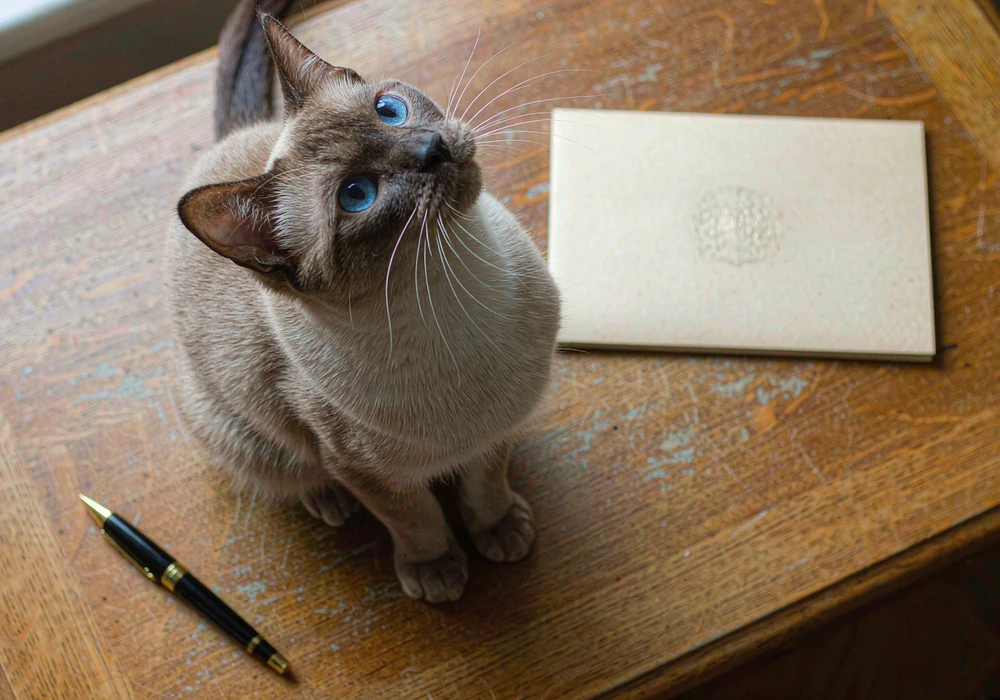
Breed classification can differ between registries. Cross-registration depends on the receiving registry’s current rules, accepted ancestry, and document review. Therefore, get confirmation before assuming that a cat registered as Colorpoint Shorthair elsewhere will be accepted as Siamese.
Missing papers do not automatically mean a cat lacks pedigree ancestry. For example, certificates can be lost, and some breeders release registration documents after an agreed condition, such as neutering. Before paying for a registered cat, verify the claimed records and put the document-delivery terms in writing. Our guide to the questions worth asking before buying a cat covers the rest of that conversation.
Step Two: Check the Cat Against the Type on Its Certificate
Appearance helps you compare breed descriptions, but it cannot prove or disprove ancestry by itself. Check any mismatch between the cat and its paperwork with the breeder or registry. These examples describe different appearances and registration contexts, not a visual test that can certify a breed.
Modern Siamese SI / SIA
Long straight wedge · flat profile · large wide-based ears · tubular body · whip tail
The modern show type emphasises long, tapering lines, a wedge-shaped head, and a slender but muscular body.
Thai TH / THA
Modified wedge · rounded cheeks · long flat forehead · spade muzzle · medium bone
Deliberately moderate and free from structural extremes.
Pointed cat without verified records Unverified
Head shape, build, and coat texture vary. A pointed coat alone does not identify a breed.
A cat may resemble a registered breed without having records that establish its ancestry.
The modern Siamese, feature by feature
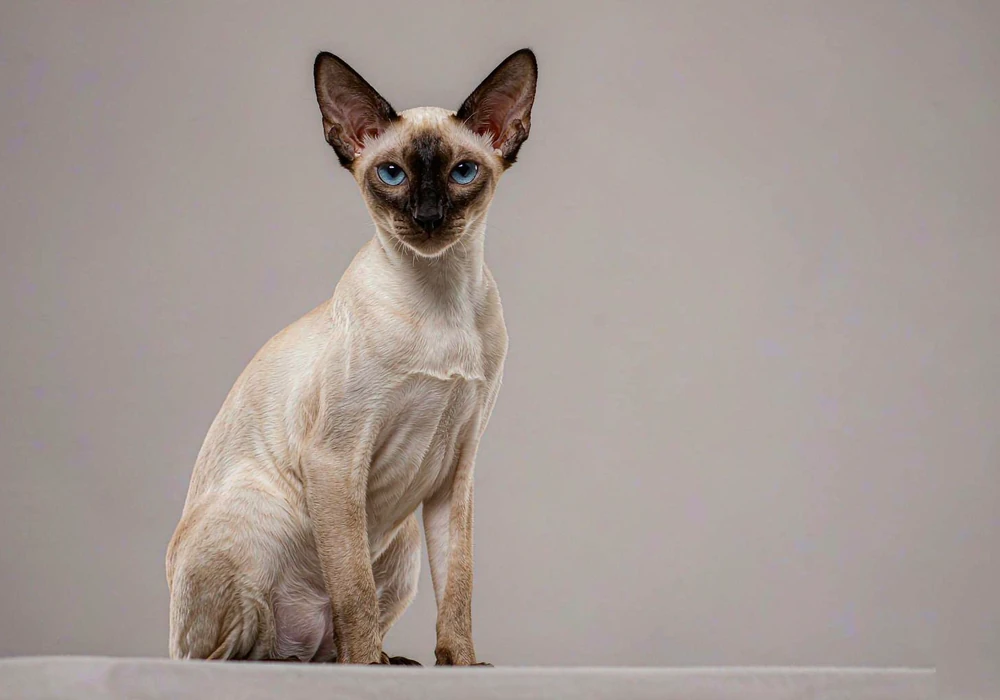
For a modern Siamese, compare front and side views with the relevant standard. The usual description includes a long, tapering wedge, large ears that continue its lines, almond-shaped blue eyes, and a long profile. The CFA Siamese standard describes these details. Use the whole description, not one feature or a camera angle, and keep show assessment separate from pedigree verification.
Next, consider the overall build: a long, slender torso, fine bone with firm muscle, slim legs, small oval paws, and a long tapering tail. In addition, the coat is short, fine, and close to the body. Do not use a fixed weight range as a breed test or a feeding target; size, sex, age, and body condition all affect the comparison.
Worth reading in full
The CFA Siamese standard lists show faults and disqualifications, including specified eye-colour, tail, bite, and white-marking issues. However, a show disqualification is not the same as proof that the cat has no pedigree ancestry.
The Thai, judged on moderation
The Thai is generally described as a more moderate type than the modern Siamese: a medium build, a softly contoured wedge-shaped head, blue eyes, and a short, close-lying coat. Exact profile, ear, and coat requirements differ between registries, so read the relevant Thai standard. A departure from the ideal show appearance does not justify relabelling a registered cat as a domestic shorthair from a photograph.
Three photographs before you form an opinion
Take a full side view with the tail visible, a front view of the face and chest, and a close-up of the flank. Shoot at the cat’s own level in natural light while it is at rest, because photos from above flatten the wedge and obscure the profile, making the structure harder to assess.
Why Color Cannot Confirm a Purebred Siamese
According to UC Davis VGL’s explanation of colourpoint restriction, variants of the TYR gene affect temperature-sensitive pigment production. The Siamese-point variant, written cs, is associated with darker colour on cooler areas such as the ears, face, feet, and tail. This explains a coat pattern, not a pedigree. The inheritance example below assumes that both parents are C/cs carriers.
The Four Point Colours in the CFA Siamese Standard
The CFA Siamese standard describes four point colours, summarised below. These are appearance descriptions for that standard, not tests of ancestry. Other registries accept different colour categories, so check the certificate and the current rules of the organisation that issued it.
| Point color | Body coat | Points | Nose leather and paw pads |
|---|---|---|---|
| Seal | Pale fawn to warm cream, shading lighter on the chest and stomach | Dense, deep seal brown | Deep seal brown, matching the points |
| Chocolate | Ivory all over, with no body shading | Warm milk-chocolate brown | Cinnamon-pink |
| Blue | Bluish-white and cold in tone, shading to white on the chest | Deep slate blue | Slate blue-grey |
| Lilac | Glacial white, with no shading | Frosty grey with a warm pinkish tone | Lavender-pink |
Nose and paw-pad colours can help you compare a cat with a written colour description, but they cannot verify its ancestry. Likewise, a white-marking rule may affect show eligibility within one registry without proving that the cat has, or lacks, a particular breed in its family tree.
Commercial breed-similarity estimates and parentage tests answer different questions. A similarity result does not establish a documented pedigree. UC Davis VGL discontinued its Cat Ancestry Test on December 16, 2022, explaining that its assay addressed geographic ancestry rather than breed composition. That limitation should not be confused with DNA testing of specific traits, health variants, or proposed parents.
What DNA testing still does well
- Parentage verification. With suitable DNA samples from the cat and proposed parents, marker tests can assess whether the named sire and dam are consistent with biological parentage. However, they do not reconstruct an undocumented family tree automatically.
- Testing for specific health variants. Targeted tests can identify particular variants such as rdAc or MPS VI variants. A clear result applies to the tested variant; it does not guarantee freedom from every inherited or acquired disease.
- Colour testing. A DNA result may clarify a colour genotype that is difficult to judge from appearance. Whether it affects a registration category depends on the issuing registry’s rules; the laboratory result alone does not determine the breed label.
Kittens, Adults, and Seniors: What Changes, and What Does Not
Age affects which features are fully developed. For this reason, a young kitten’s proportions and point colour should not be judged as though they were those of a mature cat. At every age, appearance remains separate from documentary evidence of ancestry.
Pointed kittens are usually very pale at birth, and their colour develops over the following weeks and months. However, the pace and final shade vary. Some standards allow incomplete points or other temporary kitten features, but the allowances are registry-specific. An immature mask, eye colour in development, or changing proportions cannot confirm or rule out pedigree ancestry.
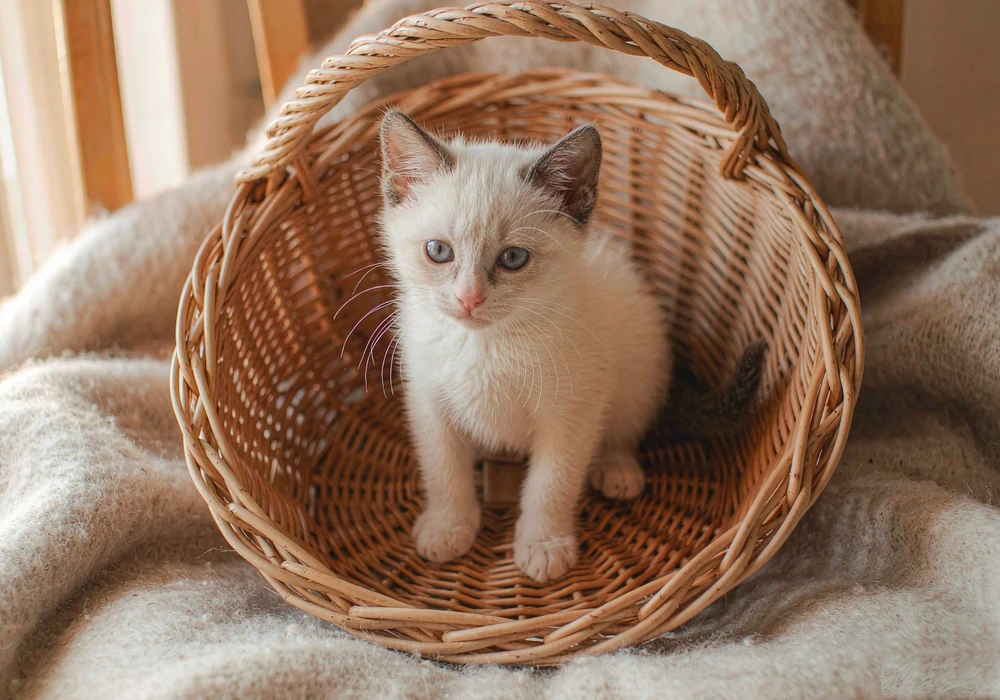
In adulthood, compare the mask, point shade, eye colour, and body contrast with the relevant standard. The CFA standard allows darker body colour in older Siamese while requiring a clear contrast with the points. Coat darkening is not a substitute for checking health, and a new change in activity, appetite, or comfort deserves veterinary attention.
| Age | Coat and development | What to check | When to contact a veterinarian |
|---|---|---|---|
| Under 12 months | Usually pale at birth; points and proportions still developing | Growth, comfort, bite, and the development of visible features | Vomiting, diarrhea, reduced eating, weakness, or unusual tiredness |
| Adult: 1-10 years | Established points; body colour can vary with age and temperature | Body condition, movement, eyes, teeth, and gums | Repeated coughing or retching, weight change, or altered appetite |
| Senior: over 10 years | The coat may darken; assess comfort and activity individually | Weight and muscle condition, mobility, dental health, and usual routines | New nighttime yowling, appetite loss, or an increase in vomiting or hairball episodes |
Why that last entry matters
A talkative breed reputation should not make you dismiss a new vocal pattern. New nighttime yowling or a marked change in voice can have several explanations, including pain or illness, and needs veterinary assessment when persistent or accompanied by other changes. Our article on what cat sounds mean explains normal vocal contexts; sound alone cannot diagnose the cause.
Step Three: Ask the Health Questions a Breeder Expects
Pedigree and family health records can help a veterinarian assess inherited risks, but registration is not a health guarantee. Therefore, ask for the actual reports, which variants or conditions were checked, and how the results relate to this kitten. A negative test for one variant does not rule out all disease.
- Progressive retinal atrophy. UC Davis VGL describes rdAc as a CEP290 variant associated with inherited retinal degeneration. Ask for the parents’ reports and, when appropriate, the kitten’s own result, with identity and parentage checked. Onset and progression vary. However, a clear rdAc result does not exclude other causes of vision loss.
- Mucopolysaccharidosis VI. In Crawley and colleagues’ 2003 study of 101 clinically normal Siamese cats, D520N was found in 23 of 202 tested alleles (11.4%). This is a sample frequency, not a disease rate or a current worldwide estimate. UC Davis VGL explains testing for the two MPS VI variants. A 1998 study reported degenerative joint disease in cats inheriting L476P from one parent and D520N from the other. Ask a veterinarian to review the complete genotypes and breeding implications rather than relying on a simple “clear” label.
- Amyloidosis. Ask about confirmed amyloidosis and unexplained early deaths in close relatives. Amyloid can affect organs including the liver and kidneys, as Merck’s veterinary guidance explains. However, family history can inform assessment but cannot confirm or exclude disease. A cat with concerning signs needs veterinary examination, not a pedigree review alone.
- Lower airway disease. Some clinical reports have included many Siamese cats, but Cornell’s feline health center notes that a breed predisposition has not been definitively proven. A small case series cannot establish the risk for all Siamese cats. Repeated coughing needs veterinary assessment; difficulty breathing needs urgent care.
- Hairballs and vomiting. Do not assume repeated vomiting or retching is normal because of a cat’s breed or coat. Seek veterinary advice if episodes become more frequent, persist, or occur with appetite, weight, activity, or stool changes. Our guidance on helping a cat with hairball problems explains what to observe, but it cannot identify the cause in an individual cat.
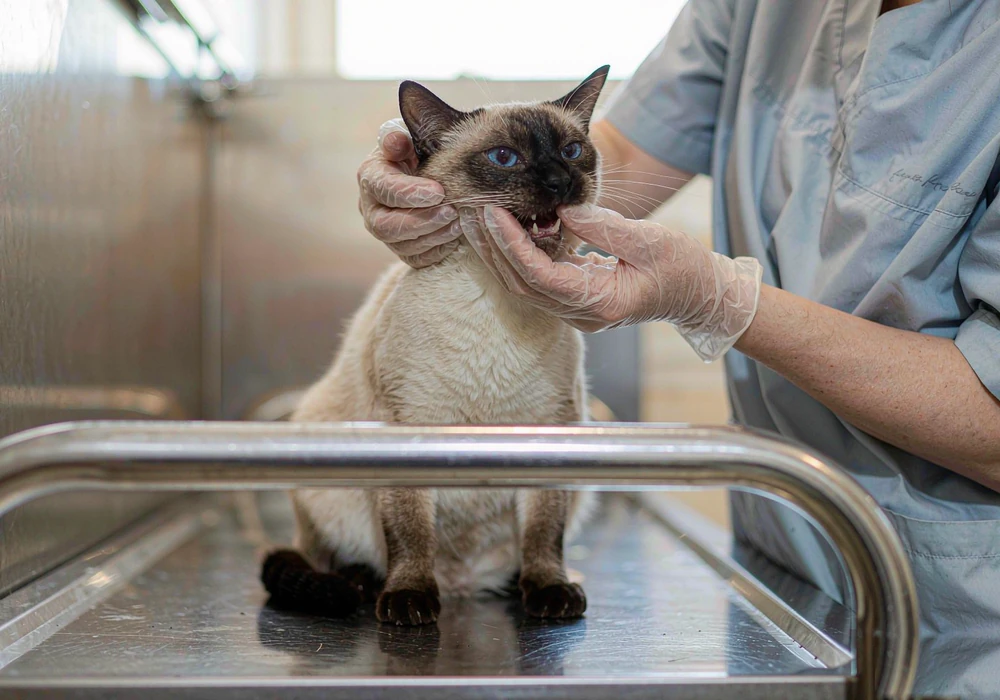
- Teeth and gums. Ask whether the kitten’s baby teeth, bite, and gums have been assessed and what follow-up is recommended. Look for retained baby teeth, discomfort, or difficulty eating rather than diagnosing a problem from head shape. Our guide to cat teeth trimming explains the difference between routine brushing and tooth shortening, including the risks of home clipping or filing.
The cough that gets mistaken for a hairball
Coughing can resemble an attempt to bring up a hairball, and it has more than one possible cause. Do not force petroleum jelly, mineral oil, food, or water into a coughing cat’s mouth: material entering the lungs can cause serious injury. Have repeated coughing assessed by a veterinarian. Seek urgent help if breathing becomes difficult.
Agree on an appropriate homing age that meets applicable law, registry requirements, and the kitten’s health and developmental needs. Ask the veterinarian and breeder about readiness rather than applying one age to every situation. Check the health records and verify any microchip number against the relevant paperwork.
Can Temperament Confirm the Breed?
Behavior cannot verify a pedigree. Siamese cats are often described as sociable and vocal, but these traits also occur in many other cats. Individual personality, health, early experiences, and the home environment all affect behavior. Following people, playing fetch, or vocalising frequently does not establish Siamese ancestry.
Some registered Siamese are quiet or reserved, while some cats without known pedigrees are active and talkative. Use behavior to understand a cat’s needs, not to certify a breed. If you are comparing typical vocal tendencies, our guide to the quietest breeds also allows for individual variation.
If Your Cat Has No Papers
Without verifiable records, the cat’s claimed Siamese pedigree remains unconfirmed; missing paperwork does not prove that no pedigree exists. Ask the breeder or registry whether records can be recovered. For a shorthaired pointed cat whose ancestry is unknown, a descriptive label such as “colourpoint domestic shorthair” can be useful without pretending to settle its family history. Plan health care around the individual cat rather than assuming that breed-associated risks are either present or absent.
You can still describe the cat’s visible features. Record coat length, point colour, head shape, body proportions, and any known background, and take clear photographs. Resemblance can guide further questions, but a round head or plush coat does not settle ancestry either. Our guide to identifying a cat’s breed from coat, shape, and records explains how to weigh those clues.
Article disclaimer: This article provides general information about Siamese identification, registration, and health questions. It does not certify ancestry, determine registration eligibility, or replace veterinary advice. Confirm current documentation requirements with the issuing registry and discuss health reports with your veterinarian. A pedigree or negative result for one DNA variant is not a guarantee of health. Seek prompt veterinary help for illness, vision changes, repeated vomiting or coughing, or a marked change in appetite or behavior; breathing difficulty requires urgent care.