
Basic cat care starts with complete cat food, fresh water, clean litter boxes, and daily play. Add grooming, safe resting places, and regular vet visits.
For a new cat, start with a quiet room and its usual food and litter. Then build a routine you can repeat. The sections below explain what to buy, how to use it, and which changes need a call to the vet.
This guide is for healthy cats that already eat solid food. Kittens, senior cats, and cats with health problems need changes to the routine. A kitten that still depends on milk needs its own feeding and care plan.
A comfortable starting point
A Safe Home Is Part of Basic Cat Care
Before your cat arrives, gather its usual food and litter, separate food and water bowls, litter boxes, a secure carrier, washable bedding, a hiding place, a scratcher, and safe toys. Ask the previous caregiver for feeding details and medical records.
Set up one room, not the whole house
Use a quiet, secure room at first. Put the litter box away from food and water, open the carrier, and let your cat come out when ready. Open more rooms as it starts eating, using the box, and exploring comfortably. Introduce unfamiliar cats gradually. For a kitten, our guide to new kittens explains room setup and introductions step by step.
Choose items that are stable, easy to reach, and easy to clean. Stainless steel bowls are durable; food-safe ceramic is another option, but replace it if chipped. Check bedding for loose threads or exposed filling. A dry cardboard box with a clear entrance can make a simple hiding place.
Make the carrier familiar. Leave it open with bedding so your cat can rest inside between trips. Before travel, check the door, clips, and air vents. Carry it with the base supported; do not rely only on the handle.
Meals that meet real needs
Food and Water Essentials for Basic Cat Care
Match the food to your cat’s life stage
Look for food labeled complete and balanced for your cat’s life stage. On U.S. labels, the nutritional adequacy statement says whether the food meets an AAFCO nutrient profile or passed an AAFCO feeding trial. AAFCO stands for the Association of American Feed Control Officials. The FDA’s guide to complete and balanced food shows what to look for.
Kittens need food suitable for growth, rather than adult maintenance. Treats, some toppers, and plain chicken or fish cannot replace a complete diet. A home-prepared main diet needs a recipe from a qualified veterinary nutrition professional. Do not add vitamins or minerals to complete food unless your vet recommends them.
Count the whole day’s food
First, ask your vet for a starting daily calorie allowance. Next, check the food’s calorie information and weigh the daily portion with a kitchen scale. Then divide it into meals suited to your cat’s age and health. Package amounts are a starting guide; kittens generally need more frequent meals than adults.
Wet food adds water to meals, while dry food is easy to weigh and use in a food puzzle. Either can be complete and balanced. If you serve both, count both toward the same daily calorie allowance. Treats and other extras should supply no more than 10% of that total, or less if your vet advises. They are optional; 10% is a limit, not a target.
Check weight and body condition, meaning how much body fat your cat carries. Ask your vet to show you how to feel the ribs and check the waist. Meal amounts may change with growth, neutering, activity, or illness. Avoid rapid weight loss, and do not put a growing kitten on an adult weight-loss diet.
Example: If your vet sets a 200-calorie daily total, treats should use no more than 20 of those calories, leaving at least 180 for complete cat food. This is an example, not a feeding target for every cat. Our guide explains how many treats to offer and how to count different snacks.
Keep water and feeding equipment clean
Keep fresh water available all the time, even if your cat eats wet food. Place it away from litter boxes and separately from food when possible. Wash food bowls and utensils after use, and clean and refill water bowls daily. A fountain is optional and needs cleaning too.
Cover and refrigerate unused wet food promptly at 40°F (about 4°C) or below, following the label. Keep dry food in its original tightly closed bag in a cool, dry place, and save the batch details. Change foods gradually when your cat is well. Avoid raw meat and unpasteurized milk because they can carry germs, including the H5N1 bird flu virus.
Comfort and cleanliness
Make Litter Boxes Easy to Use
Start with one litter box per cat, plus one extra. Put them in separate places your cat can reach easily. For one cat, two boxes in different quiet areas offer more choice than two boxes lined up together. In a home with several floors, make sure a box is within easy reach.
Size, entrance, and placement
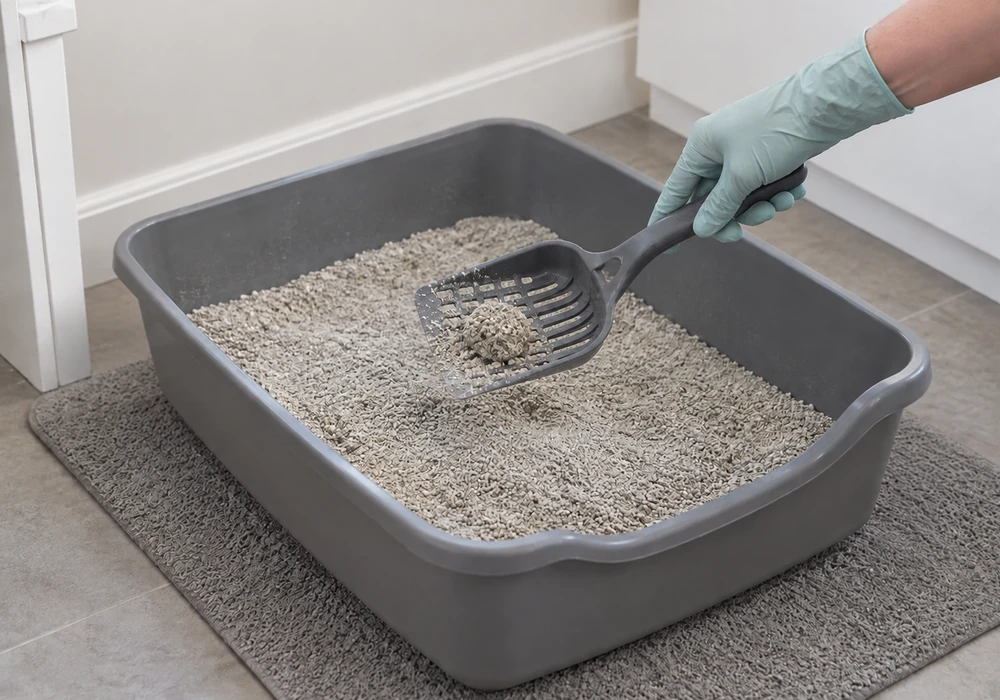
Choose a box about 1.5 times your cat’s length from nose to tail base. A low entrance helps kittens and cats that find stepping over a high side difficult. Keep boxes away from noisy appliances, food, and water, with a clear route in and out.
Start with the litter your cat already knows. Many cats prefer fine, unscented litter, but your cat’s response matters. Clumping litter makes wet areas easy to scoop; other types can work too. To test a new litter, offer it in another box and keep the familiar option available. If a kitten eats litter, supervise it and ask your vet what to use.
If you are choosing litter for a young cat, see our guide to safe litter for kittens for more on the options.
Scoop at least daily and sooner when needed. Wash the box regularly with soap and hot water, then rinse and dry it. Every one to four weeks is a starting guide; the litter type, amount of use, and your cat’s health may call for more frequent washing. Avoid strong scents and ammonia-based cleaners, and wash your hands afterward.
Notice what you remove. A change in urine clumps or stool can help you describe a problem to the vet. Shared boxes and different litters make comparisons harder. New accidents outside the box need a medical check as well as a look at the setup; do not punish your cat.
If someone in the household is pregnant or has a weakened immune system, arrange for another person to handle litter when possible and seek appropriate medical advice about precautions.
Room to be a cat
Make Time for Play, Scratching, and Rest
A game that copies hunting
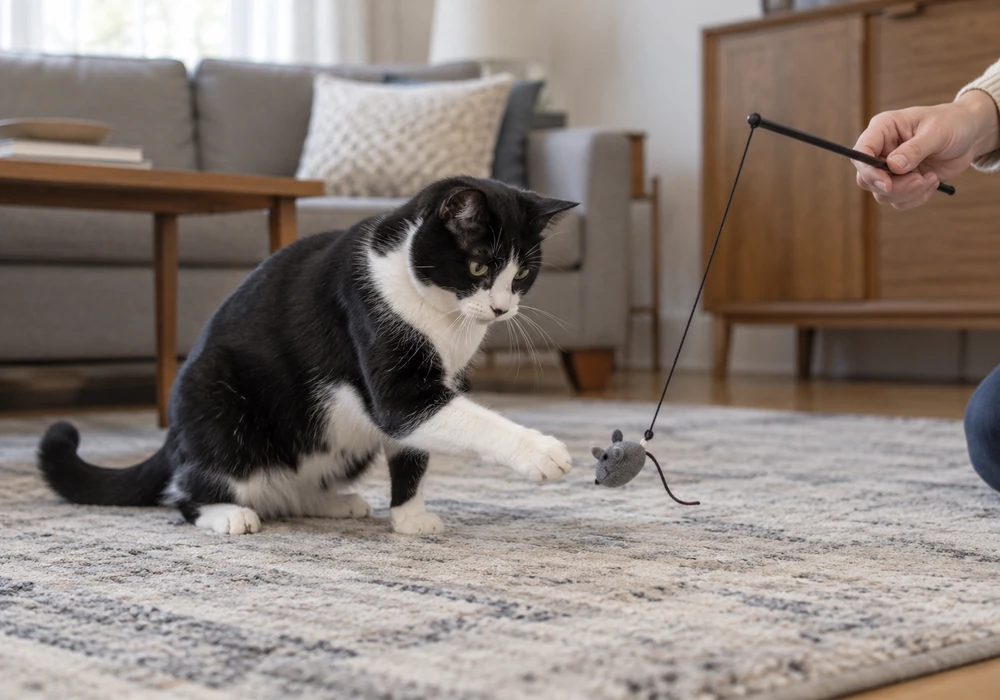
Give indoor cats chances to stalk, chase, climb, scratch, and hide. For a simple game, move a wand toy slowly along the floor, pause near a hiding spot, and let your cat chase and catch it. Keep hands and feet out of the game. Put wand toys, strings, and ribbons away afterward.
Try an easy food puzzle with a few pieces from the measured daily meal. Start with food in plain view on a shallow puzzle tray. Make it easier if your cat struggles; the puzzle should not stop it from eating enough.
Scratching posts and hiding places
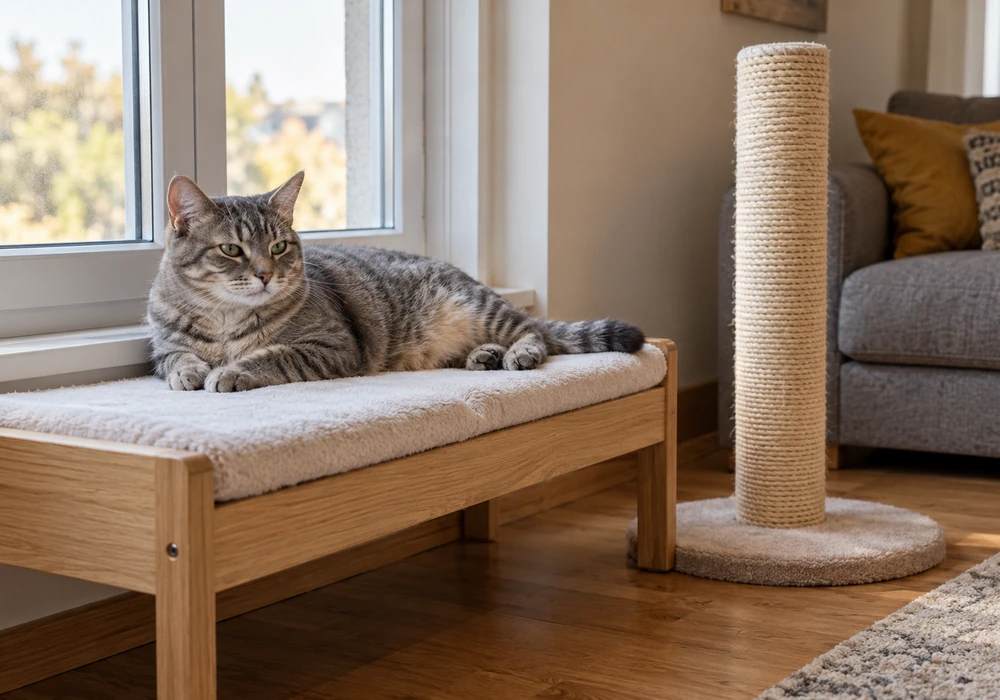
Scratching is normal. Offer a stable post tall enough for a full stretch, a flat scratching pad, or both. A cat that scratches upright may prefer a post; one that scratches rugs may prefer a flat pad. Place the scratcher near a resting spot or the area already being scratched, and check for loose rope, sharp fittings, or wobbling.
Provide quiet hiding places and resting spots your cat can reach. Let it approach and leave you freely. In homes with several cats, spread out bowls, boxes, and resting places so one cat cannot block another’s access. A second cat is not a guaranteed cure for boredom. For more ways to support a calm environment, see our guide to cat stress relief at home.
If your cat freezes, leans away, flattens its ears, or tries to leave, pause and give it room. Keep play and handling short enough that your cat can take part comfortably.
A plan beyond the first visit
Make Preventive Vet Visits Part of Basic Cat Care
The first visit and what to bring
Book a vet visit soon after adoption and bring any records. Discuss meals, weight, teeth, movement, spaying or neutering, and whether testing for feline leukemia virus (FeLV) or feline immunodeficiency virus (FIV) is needed.
The AAHA/AAFP feline life-stage guidelines recommend a full exam at least once a year, and at least every six months for senior cats older than 10. Kittens and cats with health problems often need more visits. Indoor cats still need checks for problems such as dental disease and weight gain.
Vaccines, parasites, and identification
Ask for a written vaccine schedule. Discuss protection against feline panleukopenia, herpesvirus, calicivirus, and rabies, including local rabies rules. AAHA/AAFP guidance recommends FeLV vaccination for cats younger than one year, with later decisions based on risk. Kittens need a series of doses; your vet will set the dates and boosters.
Choose parasite prevention with your vet based on your cat’s location, exposure, age, weight, and health. Indoor cats can still have parasite risks. Use products labeled for cats of the correct age and weight. Do not split doses or combine treatments without advice, and record each dose when given.
Check that your cat’s microchip is registered to you and keep the contact details current. A scanner reads the chip’s number; it cannot show the cat’s location. If your cat wears a collar, choose a cat-specific quick-release collar and check the fit.
Keep one care record. List meal amounts, medicines, treatment dates, the microchip number, clinic contacts, and a backup caregiver. Save an emergency clinic’s details before you need them, and plan for both routine costs and unexpected treatment.
Gentle care at home
Look After the Coat, Claws, and Teeth
Brush without pulling
Long-haired cats often need daily brushing or combing; short-haired cats may need less help. Work in short sessions without pulling, and check behind the ears, under the front legs, and around the back legs for tangles. Stop if your cat is uncomfortable. Tight mats need an experienced cat groomer or vet; scissors can cut skin hidden beneath them.
Most healthy cats do not need regular baths. Our guide to grooming cats explains brushing and other tasks in more detail. New changes in grooming, sore skin, ear discharge, or repeated head shaking need a vet check.
Check claws before they overgrow
Check the claws, including the small claws on the inner side of the front paws. Ask for a trimming demonstration first. The quick contains nerves and blood vessels; trim only the small sharp tip, well away from it. Stop if you cannot see where to cut safely or your cat resists.
For more on tools and technique, see our guide to cat nail trimming.
A split claw, persistent bleeding, or a claw growing into the paw pad needs professional care. Declawing is surgery, not routine grooming.
Build toward daily toothbrushing
Use a soft toothbrush and toothpaste made for cats. Start with brief, gentle touches around the lips and build up slowly. Daily brushing helps remove plaque, the film that builds up on teeth, but cannot treat disease under the gums. Do not use human toothpaste or force a sore mouth open.
Basic cat care includes noticing bad breath, red gums, dropped food, or changes in chewing. Ask for a vet exam if these appear; a cat may keep eating despite tooth pain. Do not clip or file teeth, or scrape hard buildup off at home.
For more about the risks of home tooth clipping or filing and how veterinarians assess a problem tooth, see our guide to cat teeth trimming.
Small checks that matter
Keep Everyday Hazards Out of Reach
Secure windows and balconies, protect electrical cords, and check washing machines, dryers, and reclining furniture before operating them. Store medicines, cleaners, antifreeze, needles, string, and other swallowable items safely. Keep onions, garlic, alcohol, and chocolate where your cat cannot reach them, and do not offer foods containing them. Never give human pain medicine without veterinary direction; acetaminophen, a common human pain reliever, is especially dangerous to cats.
Foods, plants, and medicines
Keep true lilies and daylilies out of the home. Leaves, flowers, pollen, and vase water can cause severe kidney injury in cats. Suspected ingestion or pollen licking needs immediate veterinary advice, even if the cat looks well. The FDA’s lily safety guidance explains the risk.
Check homemade hides, scratchers, and perches for stability, sharp edges, staples, and loose attachments. Follow mounting instructions for climbing furniture. Replace wet cardboard, damaged toys, or bedding with exposed filling. Keep cleaning products in their labeled containers, follow dilution and rinsing instructions, and never mix them.
Put the essentials on repeat
A Basic Cat Care Routine You Can Keep Up With
Share one written record
Give each task an owner. If several people help, use one shared note for meals and medicines so nothing gets doubled or missed. For example, write down that breakfast was served before another person tops up the bowl. Adjust this schedule to your cat and clean sooner when needed.
| When | What to do |
|---|---|
| Every day | Measure meals, refresh water, scoop litter, offer play and social contact, and observe eating, movement, urine, and stool. Brush teeth as tolerated and groom the coat as needed. |
| After meals | Wash bowls and utensils. Refrigerate or discard unused wet food promptly and store food according to the label. |
| During a regular weekly check | Inspect claws, bedding, toys, scratching surfaces, and carrier closures. Wash or replace items as needed; long coats may need daily attention. |
| On planned dates | Give prescribed preventive treatments, attend appointments, review weight and body condition as advised, and update identification and care records. |
When you are away, arrange for someone who knows how to care for cats to check in. Leave meal amounts, medicine instructions, and vet contacts. An automatic feeder can serve food, but it cannot check a sick cat, clean the litter box, or deal with spilled water.
Know when the routine needs help
Basic Cat Care Includes Knowing When to Call the Vet
Seek immediate care for difficulty breathing, open-mouth breathing at rest, collapse, serious injury, suspected poisoning, or repeated straining with little or no urine. Urinary blockage can be life-threatening and may look like constipation. Minimize handling when breathing is difficult, and do not force food or water.
Call promptly about a clear change in food intake, repeated vomiting, ongoing diarrhea, unusual tiredness, painful movement, new litter-box problems, or changes in thirst or behavior. Poor appetite is especially concerning in kittens and ill cats. Call when you notice the change, rather than waiting for several missed meals.
If something changes, note when it started, what your cat ate, and what you saw in the litter box. Take a photo or short video when useful, and share the details with your vet. Keep urgent care first; do not delay a call while collecting notes.
This guide reflects everyday experience keeping cats at home and does not replace veterinary advice about your own cat. A cat that stops eating, struggles to breathe, strains without passing urine, collapses, or has been exposed to lilies or human pain medicine needs a veterinary visit straight away.