
Safe litter for kittens starts with a product they can stand and dig in comfortably. If your kitten is learning to use the box or still tasting litter, choose an unscented, low-dust, non-clumping option. Suitable paper litter is a reasonable first choice; an appropriate non-clumping wood or mineral product may also work.
However, no litter is food or completely risk-free. The useful question is whether the finished product suits this kitten’s development, behavior, and daily care—not whether its main ingredient sounds reassuring.
A practical first choice: Look for a clearly labeled non-clumping product with little visible dust, no added fragrance, and a texture your kitten willingly uses. Check the actual formulation: some paper and plant-based litters do clump.
Choose Safe Litter for Kittens by Development
A kitten’s behavior matters alongside its age. Litter training commonly begins around three to four weeks, as mobility and independent elimination develop. Before then, orphaned kittens may still need help passing urine and stool under a veterinary or rescue care plan; a box cannot replace that assistance.
During early exploration, kittens may lick, mouth, or eat loose material. Therefore, keep the substrate non-clumping and watch what your kitten does. Paper pellets can still be swallowed, and a kitten that rejects hard pellets may need a softer appropriate texture.
The Best Friends kitten foster manual specifies non-clumping litter for kittens younger than eight weeks. That is a care protocol, not proof that ingestion becomes harmless on an eight-week birthday. Advice on the precise switching age varies, so consider reliable toileting, absence of litter eating, health, and product instructions together.
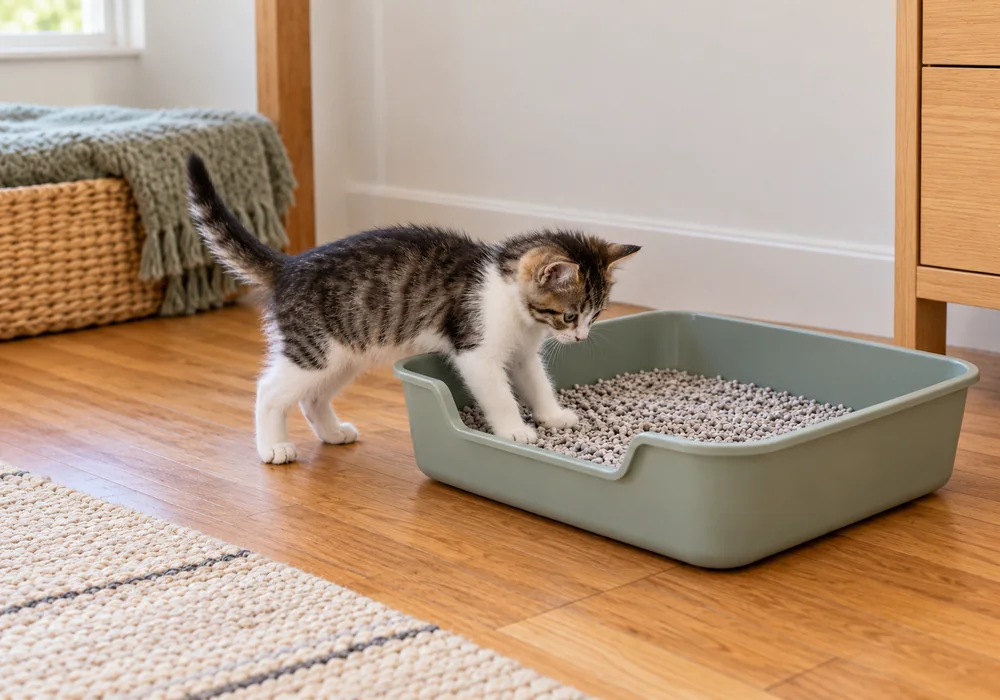
Which Materials Offer Safe Litter for Kittens?
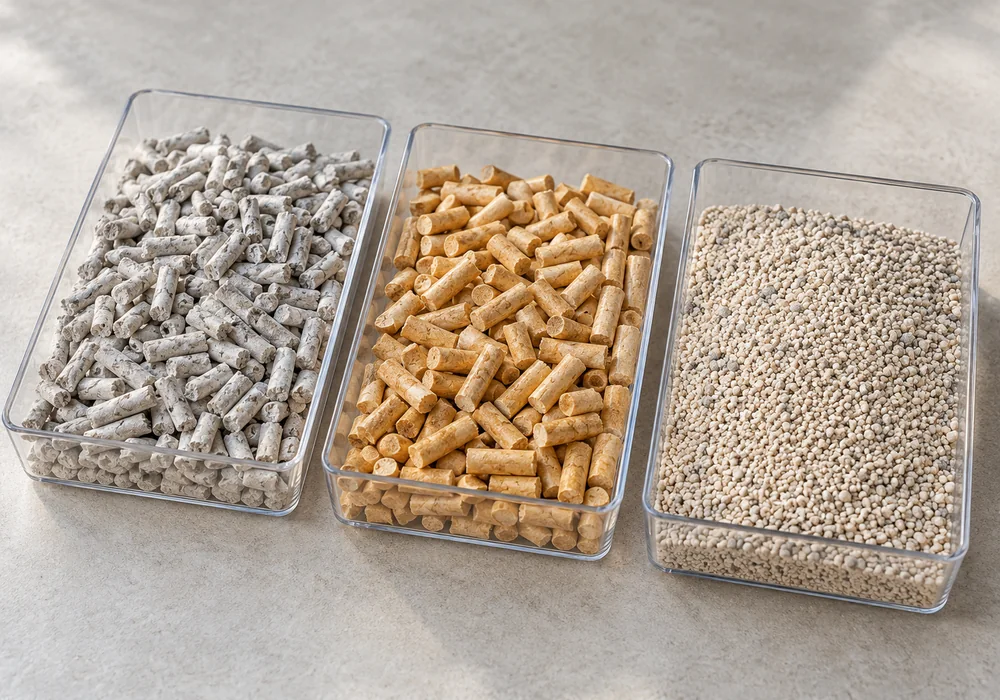
Compare the whole formulation before choosing a material. For example, two products called “paper litter” may differ in pellet hardness, dust, fragrance, and clumping. The following table describes common options; it does not rank proven injury rates.
| Material | Where it may fit | What to check |
|---|---|---|
| Non-clumping paper | A reasonable starting option for early training when its texture is accepted. | Confirm that it does not clump. Check hardness, loose dust, chewing, and how readily wet material can be replaced. |
| Non-clumping wood pellets | An alternative used in foster care when the kitten stands and digs comfortably. | Choose a specified pet-litter product. Pellets may feel hard or break into fines when wet; fuel pellets are not automatically equivalent. |
| Non-clumping mineral or clay | A diggable alternative for a kitten that prefers a finer texture. | Dust and hardness vary. Urine can spread without forming removable clumps, so full changes may be needed sooner. |
| Clumping clay | A later consideration for an appropriately assessed kitten that uses litter normally. | Postpone during early training or litter eating. Fine texture and easy scooping do not establish ingestion safety. |
| Corn, wheat, tofu, or other plant fibers | Suitability depends on the finished product rather than its food-derived name. | Many formulations clump or contain binders. Check ingredients, storage, dust, and the kitten’s response. |
| Silica gel granules | Assess the specific product’s texture, dust, additives, and instructions. | Some are non-clumping, but a “crystal” label does not establish comfort for small paws or safety if swallowed. |
Let Your Kitten’s Comfort Guide the Choice
Cats Protection’s litter guidance emphasizes individual comfort and the precaution against clumping litter for young kittens. If a suitable non-clumping product already works well, there is no need to replace it just because another material costs more or is more fashionable.
Understand What “Non-Clumping” Actually Means
Absorbency and clumping are different properties. An absorbent material takes up liquid; a clumping formulation also binds wet particles into a removable mass. In contrast, non-clumping litter may soften, swell, or fall apart without producing a firm clump.
This distinction explains both the early-training precaution and the cleaning work involved. Veterinary and shelter guidance warns that swallowing clumping litter may cause gastrointestinal problems, including a possible blockage. However, the available evidence does not provide dependable comparative blockage rates for kittens using each material.
Likewise, adult-cat preference studies do not settle kitten ingestion safety. A cat choosing a fine clumping substrate in a preference test is answering a different question from whether an inexperienced kitten should swallow it. Non-clumping litter remains a precautionary choice, not an edible substitute.
Read Past the Dust and Fragrance Claims
When choosing safe litter for kittens, inspect how the actual product behaves. Pouring, digging, and wet breakdown can release particles. A “99.9% dust-free” claim is difficult to compare without the test method and handling conditions; it does not mean zero exposure.
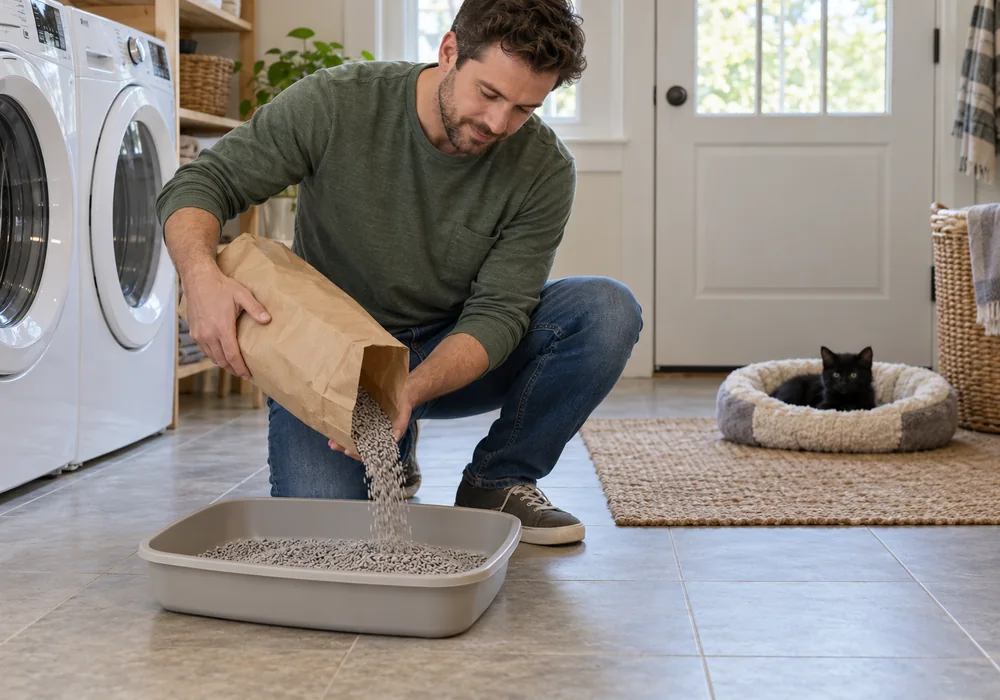
To reduce avoidable dust, pour gently from a low height while your kitten is away from the pouring area. Keep the room ventilated, remove tracked particles without raising a cloud, and reconsider a product that stays dusty during ordinary use. Do not wet the litter simply to suppress dust, because that changes its performance and hygiene.
Also, choose unscented litter rather than trying to hide waste odors with perfume. A strong smell may discourage use, while concentrated essential oils can be harmful through contact or ingestion. Persistent odor is a reason to check cleaning and the kitten’s urine or stool.
Are Silica “Crystals” the Same as Crystalline Silica Dust?
No. NIOSH lists silica gel as amorphous silica, a non-crystalline material. Therefore, a product sold as “crystal litter” should not automatically be equated with respirable crystalline quartz dust.
Even so, that distinction does not certify a litter’s dust level, paw comfort, or ingestion safety. Occupational exposure limits are not kitten safety limits. A kitten that repeatedly coughs or sneezes around the box needs assessment rather than reassurance from a label.
What to Keep Out of a Kitten’s Box
Avoid adding new hazards while looking for safe litter for kittens. In particular, skip:
- Clumping products during active litter eating. Plant-based clumping litter is not automatically exempt from this precaution.
- Homemade fragrance or essential-oil additives. A plant origin does not make a concentrated oil appropriate for paws or mouths.
- Damp, moldy, pest-contaminated, or unusually dusty material. Keep unused litter dry and retain the bag’s product and lot details.
- Unspecified substitutes. Construction powders, industrial absorbents, treated wood shavings, fertilizer-containing soil, and outdoor sand have different or unknown specifications and contamination histories.
Similarly, “natural,” “antibacterial,” and “biodegradable” describe intended ingredients or performance, not a safe swallowed amount. Ask what is actually in the product, whether it clumps, and how the manufacturer says to handle and replace it.
Introduce a Change Without Losing Reliable Box Use
First, ask the previous caregiver for the exact litter and setup. Familiarity can help a kitten settle, provided the material is appropriate. However, do not keep an implicated product available when the kitten is eating it or it is causing a clear problem.
If both products are suitable, a second accessible box can allow a comparison while keeping the accepted option available. Keep access and cleanliness comparable, and look for actual urine and stool—not just sitting or playing in the box. A gradual change may also help, but mixing non-clumping material into clumping litter does not reliably cancel its clumping properties.
Keep the box simple, as we set out in our new kitten kit: an open design, a stable base, a low entrance, and enough room to turn. About 3 cm, or 1.2 inches, is a starting litter depth, adjusted to the product and the kitten’s footing. Avoid loose liners, difficult top-entry designs, and automated boxes during early kitten care.
If the entrance is the problem, our guide to making an accessible litter box explains suitable tray and container choices. For the teaching routine, see litter training kittens. Let the kitten leave freely, and never drag its paws through the litter or punish accidents.
Keep Safe Litter for Kittens Clean Enough to Use
Even a well-chosen material becomes unsuitable when it stays wet or contaminated. Therefore, check the box frequently and remove feces promptly, at least daily. With non-clumping litter, remove identifiable wet areas and replace the contents when urine has dispersed, the material is saturated, or cleanliness cannot be restored.
In addition, empty and wash the whole box as needed. General home guidance suggests at least weekly thorough cleaning, while foster protocols may require complete changes every two to three days. These are context-dependent routines; diarrhea, several kittens, or heavy soiling calls for earlier action. Repeated topping-up does not remove contaminated litter.
Wash with an appropriate detergent, rinse, and dry before refilling. Keep kittens away during cleaning, avoid phenolic disinfectants, and never mix cleaning chemicals. If illness requires disinfection, ask the clinic for a product and procedure suited to the organism and surface.
Wash your hands afterward and keep litter tools away from food preparation. Pregnant or immunocompromised people should have someone else handle litter cleaning when possible; otherwise, use disposable gloves and wash hands carefully. Securely bag waste under local disposal rules, avoid flushing, and keep used litter out of backyard compost—even when the unused material is biodegradable.
When Eating Litter or Avoiding the Box Needs Help
Repeated litter eating deserves veterinary assessment, including when the product is paper-based or non-clumping. VCA’s guide to pica in cats explains that persistent non-food ingestion can have medical, nutritional, or behavioral contributors. It does not, by itself, diagnose a mineral deficiency.
If ingestion is suspected, prevent further access to that material while keeping an appropriate toileting option available. Call your veterinarian with the product label, approximate time, and possible amount. Do not induce vomiting or give oil, laxatives, or supplements unless specifically directed.
Get urgent veterinary advice for vomiting, poor appetite, abdominal discomfort, or weakness after ingestion. Repeated straining with little or no urine, difficult or open-mouth breathing, or collapse needs immediate veterinary care. Do not delay treatment to try another litter.
Finally, judge safe litter for kittens by the whole pattern: comfortable use, normal urine and stool, an accepted texture, and no repeated ingestion. If habits change, review the product, access, and health together; color-changing litter or a reassuring label cannot rule out illness.
This guide reflects general cat-care guidance and our own experience keeping kittens, not a clinical trial, and no product mentioned here is endorsed. Litter suitability depends on the individual animal, so treat it as a starting point rather than a substitute for veterinary advice. If a kitten eats litter repeatedly, strains without passing urine, vomits, or breathes abnormally, contact a veterinarian promptly.