
Before you adopt
If you are asking, “Should I get a kitten for my cat?” the answer is: possibly, but your cat does not automatically need one. Consider a kitten if your cat has enjoyed living with other cats, enjoys active play, and is healthy enough to cope with the change. You also need space, time, and money to meet both cats’ needs separately.
Pause if your cat is unwell, already stressed, or likely to be overwhelmed by repeated chasing and pouncing. In some homes, adopting a calm adult cat may be more suitable than adopting a kitten. In others, keeping one cat is the better choice.
Consider a kitten
Your cat has lived comfortably with other cats, still enjoys active play, and has a stable routine.
Wait and assess
Health, behavior, social history, or your ability to keep the cats apart needs more attention.
Keep a single-cat home
Your cat does well alone, and adding another cat would compromise their comfort or care.
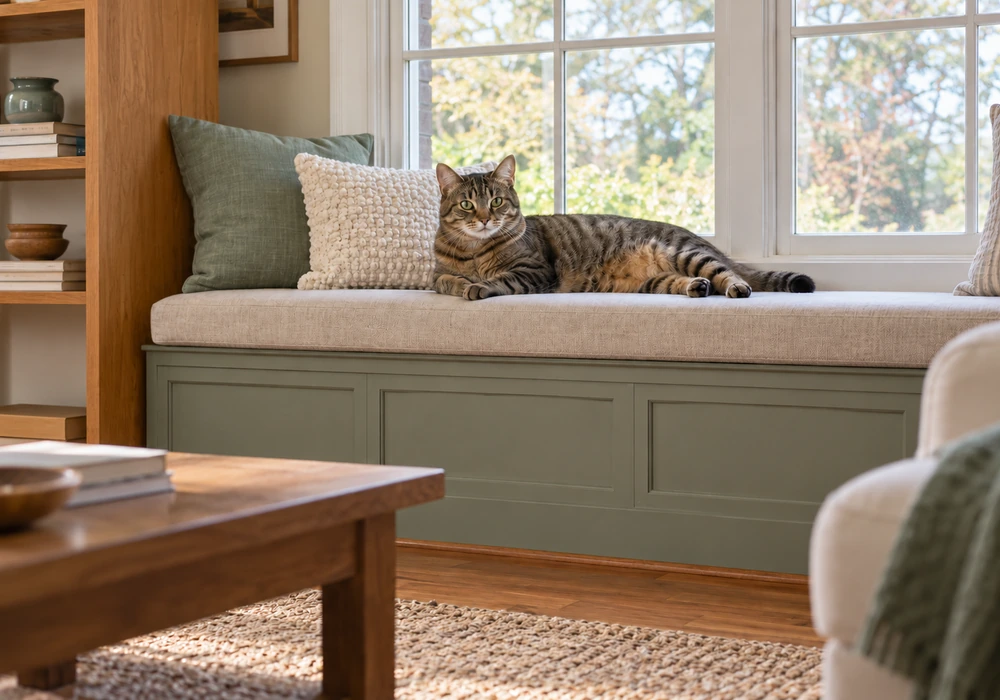
Check Your Reasons Before Adopting
Wanting another cat is a valid reason to explore adoption. It is different from knowing that your existing cat would benefit. A critical review of cats’ welfare in different-sized household groups found no consistent evidence that living with more cats is generally better or worse. The number of cats alone does not tell you whether a particular arrangement works.
Does your cat actually enjoy other cats?
Look for specific past behavior: choosing to rest near another cat, mutual grooming, or relaxed play in which both cats participate. Simply sharing a home without obvious fights tells you less. A cat may tolerate one familiar housemate yet dislike an unfamiliar kitten.
If your cat’s history is unknown, say so when speaking with a rescue or veterinarian. Do not test their reaction by arranging an unplanned face-to-face meeting. Hissing at an outdoor cat also does not provide a complete assessment of how they would live with a carefully introduced housemate.
If a previous feline housemate has died, that relationship is useful history, but it does not make a new kitten an interchangeable replacement. Keep familiar routines while you assess what your cat needs now. Changes in eating, activity, or behavior still warrant veterinary advice rather than an automatic adoption.
Are you trying to solve a new behavior change?
Following you, asking for play, or resting while you work does not by itself establish a need for another cat. New appetite changes, reduced jumping, persistent hiding, overgrooming, or increased vocalizing deserve veterinary attention before an adoption decision. These signs can have medical or behavioral causes. Find out what is causing the change before deciding that another cat will help.
Also look beyond fighting. A cat that freezes, avoids a room, or waits for another cat to leave before eating may be uncomfortable. Understanding subtle signs that your cat feels threatened helps you assess the household more accurately.
A useful first step: if your cat seems bored but is otherwise well, try more consistent interactive play, accessible resting places, and time together. Reassess what changes before adding a kitten to your household.
Compare the Needs of Kittens, Adult Cats, and Senior Cats
Age matters because activity, physical ability, and daily routines can differ. It is not a compatibility test on its own. The Feline Veterinary Medical Association’s guidance on considering another cat recommends weighing temperament, age, play drive, health, and social experience together.
| Your resident cat | What to weigh | What that means for adoption |
|---|---|---|
| A kitten | Play style, size, health, and experience with other kittens. | A compatible kitten may provide shared play, but both still need supervision, separate care, and a gradual introduction. |
| An adult cat | Actual activity level and past cat relationships, rather than age alone. | A kitten may be worth considering for a playful adult cat that is comfortable around other cats. A quiet adult may find kitten play intrusive. |
| A senior cat | Pain, mobility, medical needs, sleep, and access to familiar places. | Be especially cautious. Address health concerns first and consider whether any new cat would reduce their comfort. |
A kitten can repeatedly invite play when an adult wants to rest. You must be willing to provide the kitten’s play sessions and prevent unwanted pursuit. Your resident cat should not have to hide all day to avoid becoming the kitten’s play partner.
When considering getting a kitten for an older cat, check everyday access before focusing on friendship. Can the older cat reach food, litter, and a comfortable bed without being chased or making a difficult jump? A high shelf is not a useful escape if reaching it hurts.
For example, imagine two adult cats of the same age. One regularly seeks energetic play and previously groomed and rested with another cat. The other prefers brief, quiet games and consistently avoids feline visitors. Their ages give you the same information, but their individual histories suggest different adoption choices. A kitten may be worth considering for the first cat. The second cat’s history gives you more reason to keep a single-cat home. Neither history guarantees a future relationship.
Do not use a kitten as a plan to make a senior cat more active. Protect the older cat’s comfort and predictable care. A quiet adult newcomer also needs assessment; being older does not guarantee a suitable match.
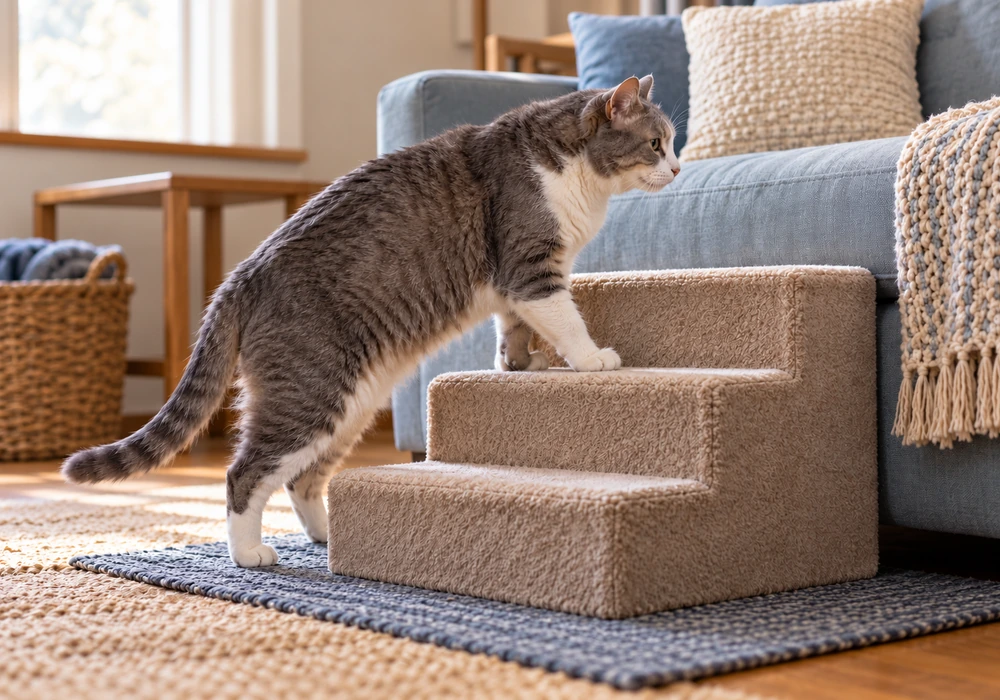
Choose the Individual Cat, Not Just an Age, Sex, or Breed
When choosing a second cat, ask how the particular kitten behaves around cats. Does the kitten take breaks during play? Does the kitten repeatedly pursue a cat that moves away? What does the foster caregiver observe after the initial excitement has passed?
A kitten’s behavior is still developing, so no one can promise their adult personality. An adult living in foster care may have a longer, more useful history of interactions with other cats. That can make an adult worth considering when a kitten’s activity is a poor fit.
Sex and breed do not provide a dependable matching formula. Ask your veterinarian about appropriate spay or neuter planning, then focus on observed behavior, health, and the needs of both individuals. Being affectionate toward people does not establish that a cat enjoys living with cats.
Use questions about a prospective cat’s history and household fit to get concrete examples and health records. “Good with cats” is a starting point, not enough detail to predict life with your resident cat.
Would adopting two kittens protect your existing cat?
Two compatible kittens may play together, but that does not guarantee they will leave an older cat alone. It also creates a three-cat household with greater care costs and more relationships to manage. Do not add a second kitten solely as a solution to a mismatch with the first.
Likewise, “single kitten syndrome” should not be treated as a diagnosis proving that every kitten needs another kitten. Ask about the individual youngster’s social experience and needs instead of making a decision from a label.
Can Your Home Support Both Cats Separately?
Before bringing home a kitten, picture a day when the cats cannot share a room comfortably. Could both still eat, drink, rest, play, and use a litter box without being forced together? This practical test matters more than hoping they will eventually become inseparable.
Check space and access
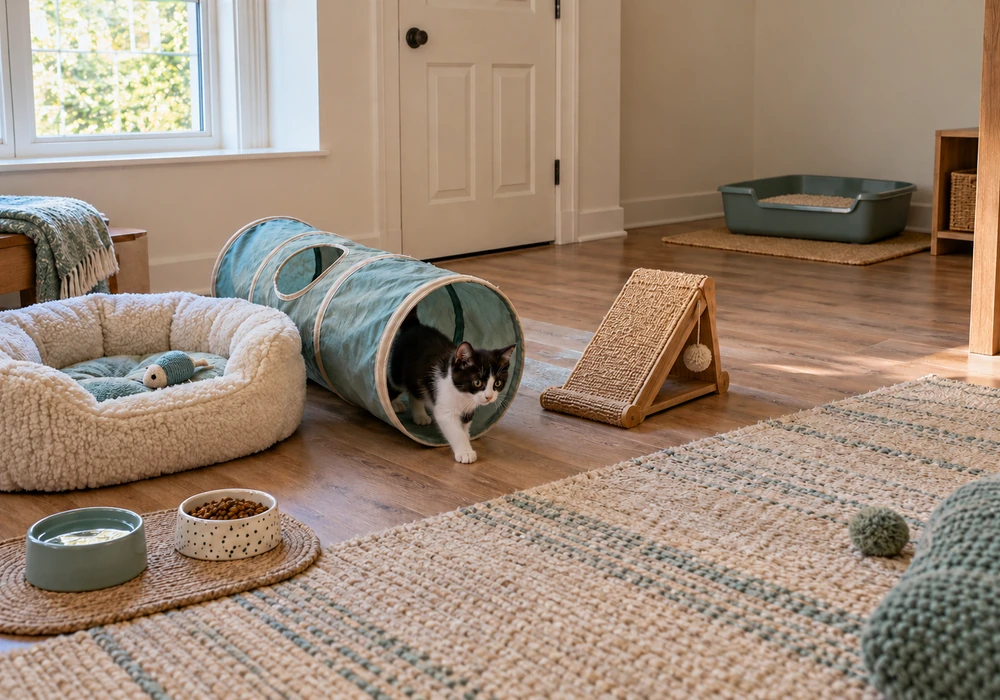
- A secure separate room: you need a kitten-safe room with a solid door for the initial separation, with the kitten’s own essentials.
- More than one route to essentials: distribute feeding, drinking, resting, scratching, and toileting areas so one cat cannot control access to everything.
- Enough litter boxes: for two cats, the usual starting recommendation of one per cat plus one extra means three boxes. Spread them out; a row of boxes in one place does not provide separate access.
- Separate meals when needed: plan how the kitten will receive suitable growth nutrition without stealing the adult’s food or losing their own meals to the adult.
- Accessible retreats: both cats need places to rest and avoid contact, with routes suited to their mobility.
The 2024 AAFP intercat tension guidelines emphasize recognizing subtle conflict and arranging the environment to reduce it. The existing guide to reducing stress and resource competition at home explains the practical setup in more detail.
Check your time and budget
Count more than adoption fees and an extra bowl. Allow for food, litter, preventive care, veterinary visits, emergency care, and suitable arrangements when you travel. You may need to maintain separate spaces longer than expected.
Time matters too: the kitten needs play and care, while your resident cat still needs familiar attention and routines. If a move, frequent travel, or another major household change makes this difficult, waiting is a reasonable decision.
Be Ready for a Gradual Introduction and an Uncertain Outcome
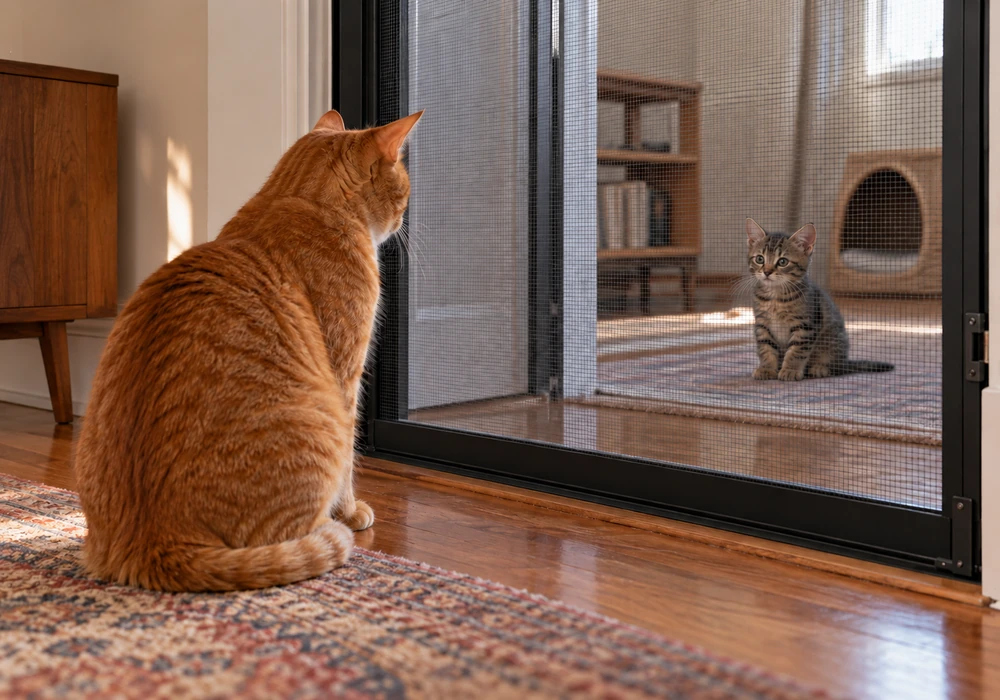
Deciding to adopt a kitten means being prepared to keep the cats apart and introduce them gradually. Arrange recent veterinary checks, discuss testing for contagious disease and parasite control, and review vaccination needs before contact. Follow your veterinarian’s plan for the kitten’s age, history, and health rather than assuming one universal isolation period fits every household.
The FelineVMA’s step-by-step introduction guide starts with health checks and a separate transition room, then builds contact gradually. Progress depends on the cats’ comfort, not a deadline. A rushed first meeting is not a useful test of whether the match can work.
Before adopting, agree who will handle daily care and supervision. Ask the rescue or other provider about support if difficulties arise, and whether a foster-to-adopt arrangement is available. A short trial cannot guarantee a lasting relationship, and early uncertainty is not a reason to force contact.
Plan for peaceful coexistence as a possible outcome. Cats do not have to cuddle or groom each other to live comfortably. However, persistent blocking, one-sided chasing, hiding, or changes in eating and litter habits need attention. Separate safely if tension develops and ask your veterinarian or a qualified feline behavior professional for help; do not make them “fight it out.”
Once you have decided the match is reasonable, preparing for a kitten’s first days at home covers the arrival routine. If the arrangement continues to compromise either cat’s welfare despite appropriate help, use the support plan agreed before adoption rather than prolonging the situation indefinitely.
Article disclaimer: This article offers general guidance on choosing a feline companion and planning a multi-cat home. It cannot predict whether two individual cats will get along and does not replace an individual veterinary or behavioral assessment. If either cat becomes unwell, stops eating, is injured, or shows persistent or worsening distress, seek veterinary advice promptly. Do not use a new kitten as a treatment for illness or a sudden behavior change.