
The simplest cat treats you can make at home start with one plain ingredient. A little cooked egg yolk, a few moist chicken pieces, or a thin smear of pumpkin puree can offer a change of taste without a complicated recipe. The trick is to prepare the food safely and keep each serving small.
This guide covers five options—egg yolk, cucumber, pumpkin, chicken, and cod—with steps for preparing each one, checking portions, and storing leftovers. Choose an ingredient your cat already tolerates, or introduce a new one as a tiny taste.
Cat Treats You Can Make at Home: Ingredients and Safety
These ideas are primarily for healthy adult cats. Each is an optional extra, rather than a meal or supplement. Cats need a specific balance of nutrients; plain meat, vegetables, and egg do not supply that balance, even when mixed together.
The veterinary-authored VCA cat-treat guide advises staying below 10% of daily calories. Count every extra together, including commercial treats, food toppers, and food used for medication. Fit them within the day’s total intake; the limit is a ceiling, not a target. Our guide to how many treats a cat can have works through the same allowance for every kind of extra.
For example: if your veterinary team sets a total of 200 calories a day, treats should contribute fewer than 20. If other extras already account for 8 calories, any additional treats must stay below 12. This illustrates the calculation, not your cat’s calorie requirement.
Ask your veterinarian before adding foods to a prescribed diet, weight-management plan, or food-allergy trial. During a food trial—a controlled diet used to investigate reactions—even a small unapproved treat can interfere with the results.
Set out: clean utensils, a shallow serving dish, small covered food containers, and a food thermometer for chicken or fish.
Batch size is not serving size. The amounts listed below make a preparation batch, not one serving. Introduce only one unfamiliar ingredient at a time, beginning with a tiny taste.
Leave out: onion, garlic, leeks, chives, and seasoning powders containing them. Do not use bones, shell fragments, raw animal foods, alcohol, or raw yeast dough. These recipes need no added sugar, sweeteners, salt, or fat.
Soft crumbs
1. Fully Cooked Egg-Yolk Crumbs
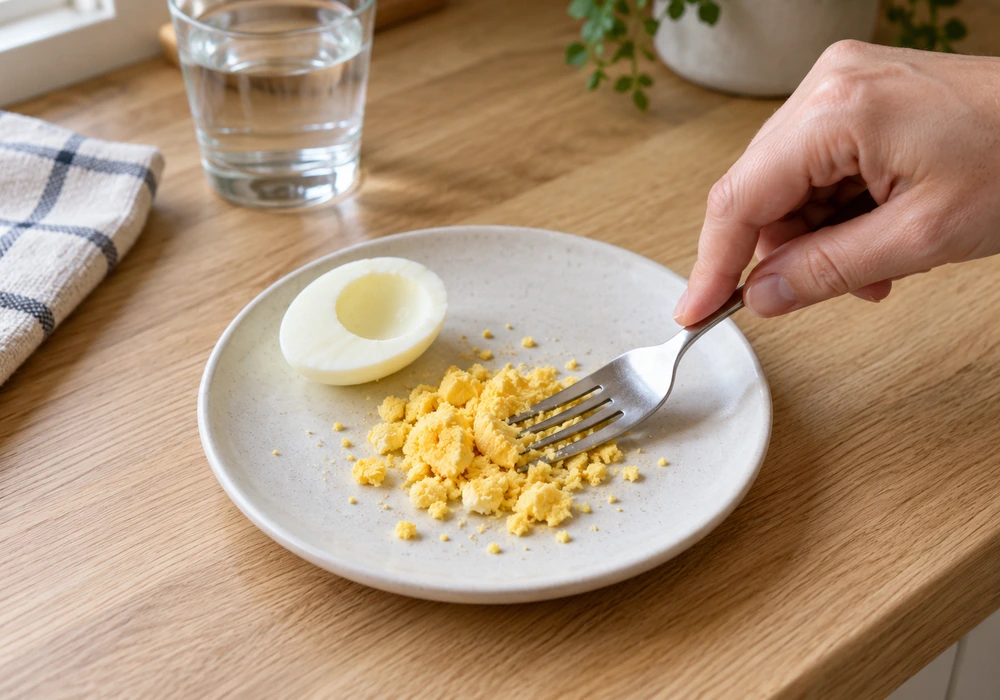
Cooked yolk is easy to mash for a cat that enjoys egg. It contains fat as well as protein, so keep the portion small even when the crumbs look light and fluffy.
For a small batch: 1 egg; a few drops of plain drinking water if needed. Your cat receives only a small part of the cooked yolk.
- Hard-boil the egg. Cook until both the white and yolk are firm throughout. A runny center is not suitable for this preparation.
- Peel and separate. Cool enough to handle, remove all shell, and put the yolk on a clean plate.
- Mash a little with a fork. Make loose, fine crumbs. Add a few drops of water if they are dry; avoid packing them into a dense ball.
- Offer a cooled pinch. Use a shallow dish and put the clean remainder in the refrigerator promptly.
Keep it plain: no butter, oil, milk, salt, or seasoning. Do not add crushed shell. A whole yolk is not a default serving, and there is no nutritional need to offer egg every day.
Make less work for yourself: if you are already cooking an egg, reserve a little plain, fully cooked yolk before preparing the rest for your own meal.
Fresh and finely prepared
2. A Tiny Taste of Cucumber
Some cats investigate cucumber; others walk away. Either response is fine. PDSA’s cat-feeding guidance lists cucumber and pumpkin among foods that can be offered in very small quantities as occasional treats.
What you need: a small piece of fresh cucumber. Prepare only a little when you need it.
- Wash before peeling. Rub the cucumber under running water, then dry it with a clean towel. Do not wash it with soap.
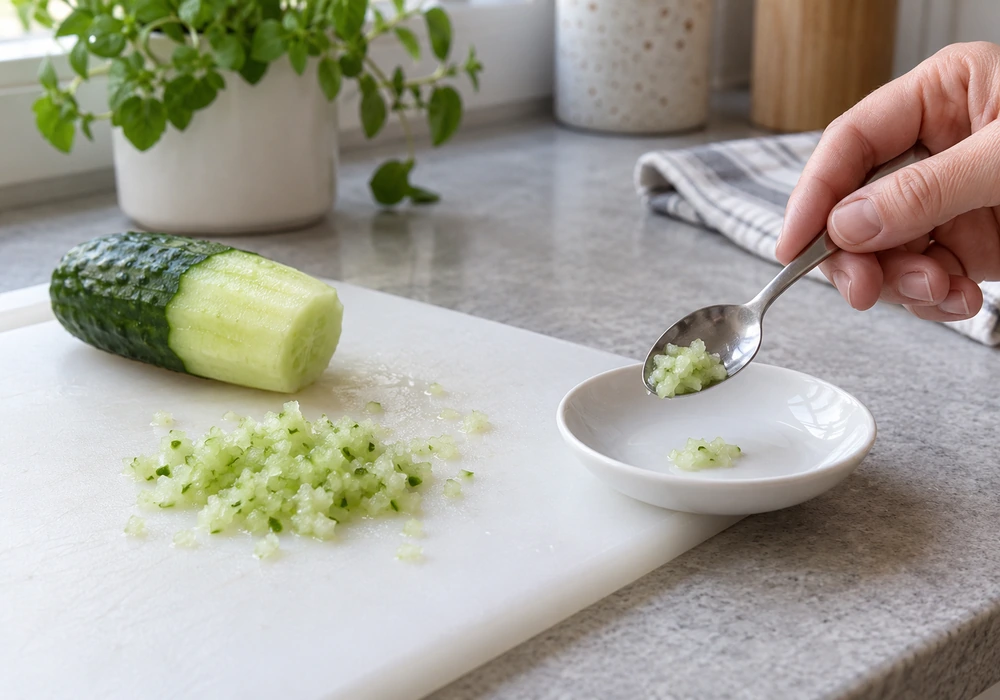
- Peel the piece you will use. Finely grate or mince the flesh. Remove firm, mature seeds and tough pieces so the texture is easy to manage.
- Serve a tiny pinch separately. Let your cat investigate it on a dish without mixing it into the normal meal. Supervise eating and stop if your cat is uninterested.
Peeling helps avoid tough strips of skin; it does not mean cucumber peel is poisonous. Skip thick rounds, long ribbons, pickles, relish, and cucumber dressed with salt or sauce.
What to expect: cucumber offers a different texture, not an essential nutrient source. A tiny taste supplies too little water to treat dehydration, and its low calorie content does not make large servings appropriate.
Smooth enough for a small smear
3. Plain Pumpkin Puree
Soft pumpkin can be mashed into a smooth puree and offered on its own or as a light food topper. Use plain pumpkin, without the ingredients that turn it into a pie, soup, or side dish.
For a small batch: about 3½ oz (100 g) of cleaned pumpkin flesh and plain water. Alternatively, use a little canned pumpkin whose ingredient list contains only pumpkin.
- Prepare fresh pumpkin. Wash the outside, then remove the skin, seeds, and stringy center. Use fresh, food-grade pumpkin, not an old carved decoration.
- Cook until soft. Cut into pieces and steam or simmer in plain water until easily mashed.
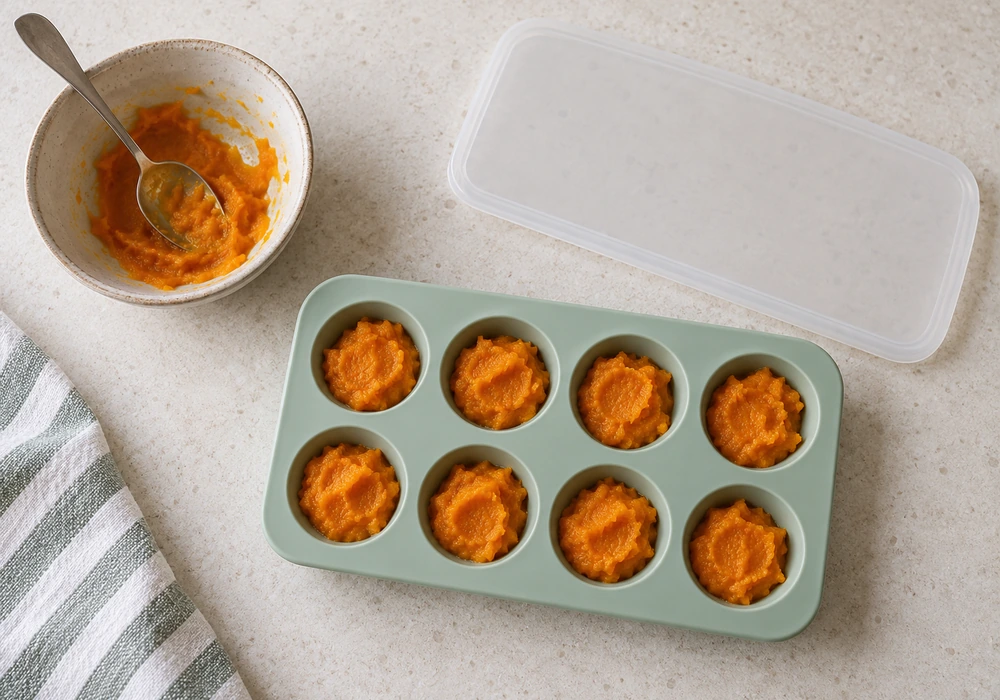
- Drain and mash. Use a clean fork or blender to make a smooth puree. Check for any remaining skin or seed fragments.
- Cool and offer a thin smear. If your cat tolerates it, a small spoon-tip portion can be an occasional extra. Divide and chill the clean remainder promptly.
Read canned labels carefully: pumpkin pie filling may contain sugar and spices. Broth, stock cubes, cream, and butter do not belong in this preparation.
Is pumpkin a digestive treatment? It contains fiber, the part of plant food that resists normal digestive breakdown. The amount and type matter, and pumpkin’s concentration varies with preparation. A tiny treat is not equivalent to a measured veterinary fiber product.
A veterinarian may recommend pumpkin for a particular cat, but these tasting portions are not treatment doses for constipation or diarrhea. Repeated straining, vomiting, blood, poor appetite, or unusual tiredness needs veterinary advice. Our guide to when cat diarrhea needs a vet sets out which digestive signs cannot wait.
Small rewards for short practice sessions
4. Moist Chicken Pieces
Among the cat treats you can make at home, plain cooked chicken is convenient when you want several tiny rewards. Cut the cooked meat into short, soft pieces rather than long, dry shreds.
For a small batch: about 1¾ oz (50 g) of raw, skinless, boneless chicken breast. Choose plain meat without brine, marinade, breading, or added seasoning.
- Poach the chicken plain. Place the meat in a small saucepan, add enough water to cover it, and bring to a gentle simmer. Cook without oil or seasonings.
- Check the center. The thickest part must reach 165°F (74°C), measured with a food thermometer. A fixed cooking time or white-looking flesh is not a reliable check.
- Cool on a clean plate. Shred, then cut across the fibers to make short, fine pieces. A few drops of water can soften a dry serving.
- Set aside the practice portion. Divide that amount into tiny rewards and refrigerate the rest, rather than repeatedly dipping into the whole batch.
For example, a small reward can follow a brief, comfortable paw touch during cat nail-trimming practice. Reward willing participation and pause if your cat pulls away; food is not a reason to continue uncomfortable handling. The same approach works for cat teeth-trimming practice.
Diet check: chicken can cause food reactions in some cats. If it is excluded from your cat’s prescribed food trial, choose the reward your veterinary team has approved.
Soft, loose flakes
5. Plain Cooked Cod Flakes
Cod breaks into soft flakes after cooking. It can be an occasional choice for a cat that tolerates fish, provided you inspect the flesh carefully for bones.
For a small batch: about 1¾ oz (50 g) of plain fresh or frozen cod fillet. Thaw frozen fish in the refrigerator. Avoid salted cod, smoked fish, breaded fish sticks, and sauces.
- Poach in plain water. Put the fillet in a small saucepan and add enough water to cover it. Bring to a gentle simmer and cook until the center reaches 145°F (63°C), checked with a food thermometer.
- Cool and separate the flesh. Remove the skin and flake the fish on a clean plate under good light.
- Check the entire serving for bones. Look and feel for pin bones—the fine bones that may remain in a fillet. Cooking does not remove them. Choose another treat if you cannot inspect the fish reliably.
- Offer a few small, loose flakes. Keep the rest covered and refrigerated. Avoid squeezing flakes into a large ball or offering hard, home-dried pieces.
Keep the serving small: a cat may eagerly ask for more fish, but the same allowance still applies. Cod alone is not a balanced meal.
How to Portion Cat Treats You Can Make at Home
There is no single teaspoon amount that suits every cat or all five foods. Body size, calorie needs, the ingredient’s calories per gram, and the rest of the day’s extras all affect the portion. A pinch or smear is a starting taste, not a daily feeding prescription.
For repeat servings, use calorie information that matches the actual food and preparation. Divide the calories allocated to that treat by its calories per gram to calculate the portion weight. If you cannot estimate it reliably, use a few pieces of complete cat food from the day’s measured ration instead.
Set out one small allowance and share it with everyone who gives treats. Several people offering “just a little” can easily turn a snack into an extra meal. Reduce extras if your cat starts leaving normal meals or gaining unwanted weight.
For a fully weaned kitten that is growing normally and chewing comfortably, ask your veterinary team about suitable ingredients and amounts; the adult calorie example above does not automatically apply. Our kitten-treat guide covers readiness and suitable textures, while our kitten-food guide explains how to check that the main diet is complete and balanced for growth.
Storing Cat Treats You Can Make at Home
Treat these preparations as fresh, perishable foods. Cooking does not make them safe to store at room temperature.
Wash your hands with soap and water for at least 20 seconds before and after preparation. Keep raw meat and its utensils away from cooked food, and transfer finished treats to clean dishes.
| Check | What to do |
|---|---|
| Cooking | Whole egg: white and yolk firm. Chicken: 165°F (74°C). Cod: 145°F (63°C). Cool the serving before feeding. |
| Refrigeration | Keep at 40°F (4°C) or below in clean, covered containers labeled with the ingredient and preparation date. |
| Time before chilling | Refrigerate perishables within 2 hours, or within 1 hour when the surrounding temperature is above 90°F (32°C). |
| Spare portions | Freeze clean spare chicken, cod, or pumpkin portions promptly. Thaw in the refrigerator until soft before serving. Freezing does not reliably kill all harmful germs. |
| Served leftovers | Discard food left on the serving dish when the session ends. Do not return licked food or utensils to the clean supply. |
The cooking temperatures and chilling limits above follow the FDA’s household food-handling guidance. They are handling limits, not permission to leave a used serving out for two hours.
A practical small-batch plan: prepare only enough to use over the next 24–48 hours and freeze suitable spare portions promptly. This is a conservative planning choice, not a tested shelf life for these recipes. Grate cucumber fresh, prepare only a little yolk, and discard food if its storage history is uncertain. Smell and appearance alone cannot establish safety.
Take each serving out with a clean utensil, keep the main supply chilled and out of your cat’s reach, and wash dishes after use. If you reheat cooked leftovers, bring them to 165°F (74°C), then cool before feeding. Reheating cannot rescue spoiled or improperly stored food.
Cat Treats You Can Make at Home: Common Questions
What if my cat refuses the treat?
If normal meals and behavior are unchanged, simply stop offering it. Keep unfamiliar foods separate from the main meal so one disliked ingredient does not spoil the whole dish. Do not withhold meals to make your cat hungry enough to try it.
Should I add flour, oats, or a binder?
These cat treats you can make at home need no flour, oats, or other binder. Soft crumbs, fine pieces, flakes, and puree can be served directly. Adding a binder changes the calorie content and storage needs without turning the treat into a complete meal. If you would rather bake something, our natural cat biscuit guide covers oven-made treats.
Can I combine the ingredients?
Start with each unfamiliar ingredient separately so you can see what your cat accepts and tolerates. There is no need to offer all five. Combining foods your cat tolerates still requires the same small total allowance.
What if my cat vomits or develops loose stool?
Stop the new food and record the ingredient, amount, and timing. A reaction after a treat does not by itself prove an allergy. Contact your veterinarian for repeated vomiting, blood, unusual tiredness, continuing digestive signs, or reduced interest in normal meals.
Stop and seek help for difficulty eating. Coughing, gagging, repeated food dropping, or trouble chewing needs attention. Breathing difficulty, a suspected blockage, or collapse is an emergency; do not force food or water into the mouth.
Do not assume litter-box straining needs pumpkin. Repeated attempts with little or no urine, pain, or marked distress can indicate a urinary emergency. Seek urgent veterinary care rather than waiting for a food change to work.
This guide draws on published veterinary and food-safety guidance and on years of living with cats; it is general information, not a veterinary prescription and not advice about your own cat. Treats suit healthy adult cats unless your veterinarian says otherwise, and they never replace a complete diet. Stop the new food and contact a veterinarian if a cat vomits repeatedly, has blood in the stool, strains in the litter box, breathes with difficulty, or collapses.