
If you are looking for the most loyal cats, start with the behaviors that matter to you: greeting you, seeking you out for play, or resting nearby. Eight breeds to consider are the Burmese, Siamese, Balinese, Oriental Shorthair, Ragdoll, Maine Coon, Birman, and Chinese Li Hua. The profiles below describe their commonly reported temperaments and care needs, followed by a note on Sichuan Jianzhou cats for readers adopting in China.
Some cats seek frequent play and attention, while others prefer resting beside you rather than sitting on your lap. Breed descriptions can help you narrow your search. However, meeting the cat and learning about its behavior at home will give you a clearer idea of whether it suits your household.
Eight Affectionate Cat Breeds to Consider
Use the table to compare common breed descriptions with your own preferences. Do you want a cat that regularly seeks attention, or one that is content to rest nearby? Before deciding whether to adopt or buy, read our guide to questions to ask when buying a cat for the information and records to request.
| Breed | Typical Temperament | What to Consider |
|---|---|---|
| Burmese | Affectionate and interested in people | Needs regular attention and interactive play |
| Siamese | Social, playful, and often vocal | Consider whether frequent meowing suits your household |
| Balinese | Active, affectionate, and interested in people | Needs regular play and coat care |
| Oriental Shorthair | Curious, social, and energetic | Provide play, climbing space, and quiet resting places |
| Ragdoll | Gentle and often relaxed | Needs regular coat care; preferences for being held vary |
| Maine Coon | Friendly and playful; often stays near family members | Allow for a large adult size and regular combing |
| Birman | Affectionate, gentle, and often quiet | Ask about grooming needs and how much attention the cat seeks |
| Chinese Li Hua | Described as gentle and even-tempered | Check the cat’s background; tabby markings alone do not prove breed identity |
What does the research tell us? In a 2021 study by Mikkola and colleagues, researchers analyzed owner questionnaires covering 4,316 cats in Finland. The sample included 56 breeds and mixed-breed cats, which were organized into 26 groups. The Siamese/Balinese group had the highest average score for sociability toward people in that sample. Some breeds were combined, and the researchers did not compare individual pairs of breeds to test for statistically significant differences. The study measured sociability, not loyalty or the strength of attachment to an owner. Ragdolls, Maine Coons, Birmans, and Li Hua cats are included here for their described temperaments, rather than a loyalty score from that survey. Li Hua and Jianzhou cats were not assessed as separate groups.
Burmese: Affectionate and People-Oriented
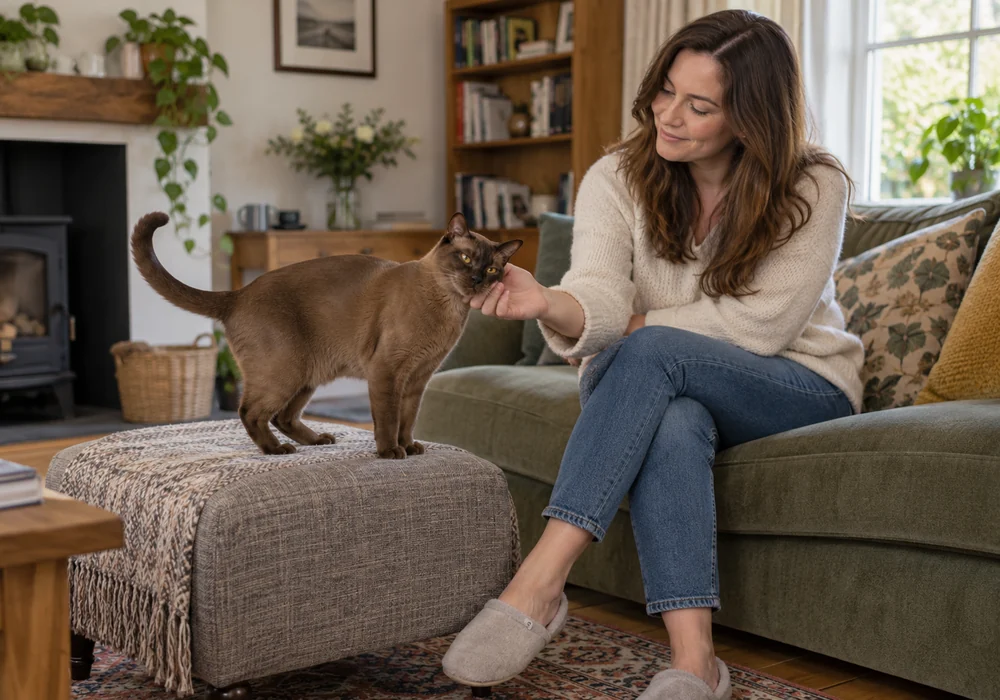
Burmese cats often seek out their owners and take an interest in daily household activities. They may join you on the sofa, watch you cook or work, or ask you to play. The CFA’s Burmese breed profile describes an affectionate, people-oriented cat with a compact, muscular body and a short coat.
A Burmese may suit you if you enjoy a cat that regularly asks for attention. If you want a more independent pet, ask carefully about the cat’s usual routine. For example, how does it behave when its owner is nearby but busy, and does it relax after play or petting?
Siamese: Vocal, Playful, and Social
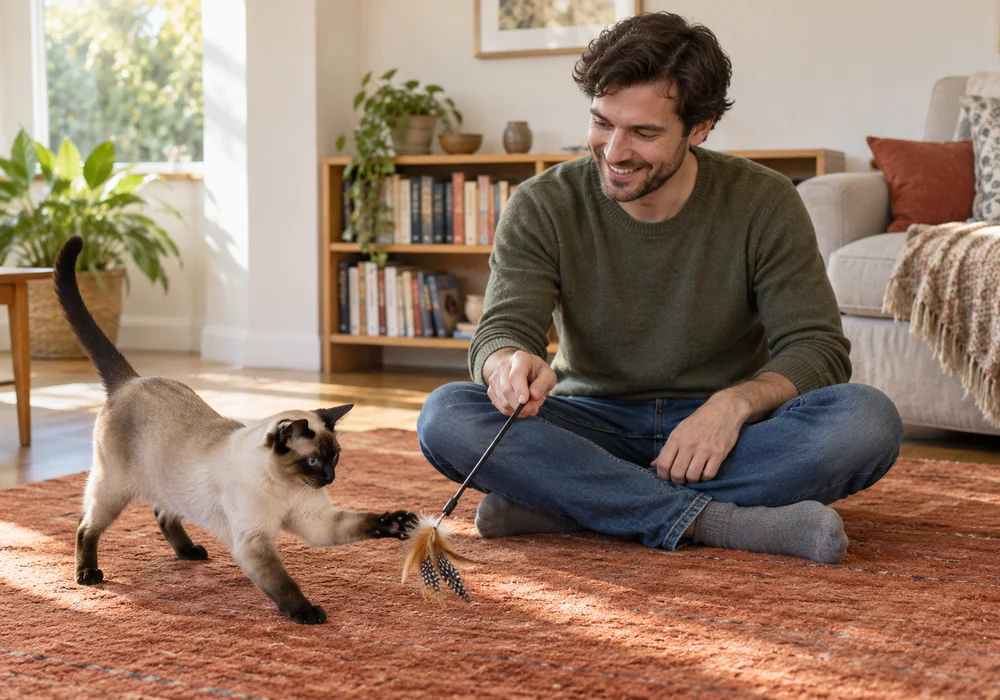
Siamese cats are known for being vocal, playful, and interested in people. Many enjoy interactive games and respond readily to attention. If you are considering a pedigree Siamese, our guide to verifying a purebred Siamese explains how registration records, pedigrees, and breed standards help you assess the breeder’s claims.
Frequent meowing does not, by itself, show that a cat has a stronger bond with its owner. Ask how often the cat vocalizes, what usually prompts it, and whether it settles after play. If a quiet home is important to you, consider those habits before choosing. A sudden increase in meowing or yowling should be discussed with a veterinarian, especially if other behavior changes occur.
Balinese: Playful and Affectionate
Balinese cats are often described as active, affectionate, and eager to interact with people. Like Siamese cats, many enjoy play and attention. Their silky coats are longer than those of Siamese cats, and their tails are plumed.
The CFA’s Balinese breed profile describes a voice that is often softer than the Siamese’s, although a Balinese can still meow frequently. The Finnish study grouped Siamese and Balinese cats together, so it does not provide separate sociability scores for the two breeds. Ask about the cat’s energy level and how it responds to combing. Our guide to long-haired cat breeds explains common coat-care needs.
Oriental Shorthair: Curious and Social
Oriental Shorthairs are commonly described as active, affectionate, and curious. They may investigate new objects, follow people around the house, or return repeatedly for play. Their short coats are usually straightforward to care for, but they still need regular activity and attention.
Think about your workday as well as your free time. Ask what the cat does while someone is working, cooking, or talking on the phone. It should also have quiet places to rest undisturbed. A cat that enjoys human attention does not necessarily get along with other cats, so ask about its previous experiences with them. Our guide to house cat breeds can help you compare other options for your home.
Ragdoll: Often Calm and Affectionate
Ragdolls are often described as gentle and affectionate. A calm adult may suit someone who enjoys having a cat nearby during quiet activities. However, their large size and semi-long coats require practical planning, including regular checks for tangles and equipment suited to their adult size.
Do not assume that every Ragdoll will go limp or enjoy being picked up. Some like being held, while others prefer being petted while sitting or lying beside you. A gentle temperament does not mean a cat will tolerate unlimited handling. Stop petting or holding the cat if it stiffens or tries to move away. Our guide to Ragdoll cat characteristics explains their coat patterns, size, and grooming needs.
Maine Coon: Friendly and Playful
A friendly Maine Coon may follow family members around the house, join in play, or choose a resting place near them. Some enjoy sitting on a lap, while others prefer a nearby chair or sofa. Both can be normal ways for a cat to spend time with its owners.
Plan for the Maine Coon’s adult size when choosing a carrier, litter box, scratching post, and resting platforms. Regular combing is also important. When meeting a cat, ask how it responds to grooming and being picked up, and where it usually settles after play. Our guide to Maine Coon cats covers growth, weight ranges, and equipment suited to their size.
Birman: Gentle, Affectionate, and Often Quiet
Birmans are often described as gentle, affectionate, and relatively quiet. A Birman that enjoys resting near people or joining gentle games may suit someone who prefers a less vocal cat. However, some Birmans are talkative, so ask about the cat’s usual behavior.
Being quiet does not tell you how strongly a cat is attached to its owner. Likewise, a gentle temperament does not mean it wants to be petted all the time. Ask whether the cat approaches for attention, enjoys sitting on a lap, and remains comfortable when petting pauses. Its silky, semi-long coat still needs regular checks and combing. Our guide to quiet cat breeds compares breeds commonly described as less vocal.
Chinese Li Hua: A Shorthaired Cat From China
The Chinese Li Hua, also called Dragon Li, is associated with China’s native brown mackerel-tabby cats. Historical CFA breed material describes a sturdy, muscular cat with a short coat and a gentle, even temperament. Its history as a working cat is part of its background, but hunting ability does not indicate how affectionate it will be.
When meeting a Li Hua, notice whether it approaches willingly, enjoys interactive play, and relaxes near familiar people. Ask about its behavior at home rather than relying on its appearance. Brown tabby markings alone do not establish Li Hua ancestry. The World Cat Congress records CFA’s decision to stop registering Li Hua cats in 2015, so historical registration should not be confused with current CFA recognition.
Sichuan Jianzhou Cats: A Local Adoption Option
You may also encounter the name Sichuan Jianzhou when looking at cats for adoption in China. It is a regional cat name and should not be treated as a guarantee of a particular pedigree or personality.
Get to Know the Cat Before Adopting
If a cat is described as Jianzhou-type, ask what that name means in the listing and what is known about its background. Information from a previous home or foster home is more useful for judging compatibility than a regional label alone.
Ask whether the cat approaches people for petting, enjoys daily play, or chooses to rest nearby. Also ask how it reacts to visitors and whether it has lived comfortably with other cats. These observations help you understand the cat you may adopt.
For local adoption, an adult cat with a well-documented history can be a useful option. Compare its known needs and usual routine with the home and care you can provide.
Choose a Cat That Fits Your Daily Life
When searching for the most loyal cats, start with the type of interaction you enjoy. If you like active play and frequent meowing, consider meeting Burmese, Siamese, Balinese, or Oriental Shorthair cats. If you prefer a quieter home, ask about adults already known to be less vocal, including Ragdolls, Maine Coons, and Birmans. Use the same approach with Li Hua and locally adopted cats: learn about the cat’s actual behavior. Coat length does not tell you how active or affectionate it will be.
Next, consider your schedule and household. If you are away for long or unpredictable periods, arrange reliable care and daily interaction; choosing a sociable breed cannot replace that care. Supervise children and teach them to let the cat move away. Also allow time and effort for play, grooming, cleaning, transporting the cat, and veterinary visits.
Ask Specific Questions About the Cat’s Behavior
- Approach: Does the cat seek attention from familiar people, visitors, or both?
- Petting: Does it enjoy sitting on a lap, resting nearby, or only brief strokes?
- Daily routine: When does it usually play, sleep, and ask for attention?
- Time alone: What has been observed when its owner is away?
- Children and other cats: Has it lived with them, and how did it respond?
What Does “Loyal” Mean in Cats?
People often use “loyal” to describe several different qualities in cats. Sociability means a willingness to interact with people. Affection can include rubbing against you, seeking petting, or resting beside you. Attachment is a bond with a familiar person who may provide comfort and security. These qualities can overlap, but they describe different aspects of behavior.
A cat can greet visitors and still have a close bond with its owner. Another may prefer resting in the next chair rather than on a lap. Following someone can reflect curiosity, a familiar routine, or the expectation of food. Look at the cat’s behavior over time instead of treating a single action as a test of loyalty.
Watch for signs of distress during absences. Persistent meowing or yowling, destructive behavior, or urinating or defecating outside the litter box needs assessment. Note when it happens and speak with your veterinarian, since both medical and behavioral problems may be involved. General cat stress relief measures may help make the home more comfortable, but a new or persistent problem still needs professional assessment.
Can Adult Rescue Cats Form Close Bonds?
Yes. Adult cats and cats without pedigrees can form close bonds with people. A cat in foster care may already have someone who can describe its normal routine, preferred types of contact, and behavior when left alone. This information can help you choose a compatible pet.
A shy first meeting does not tell you everything, especially in an unfamiliar shelter. Ask how the cat behaves when it feels safe and relaxed. After adoption, allow time to settle in rather than expecting immediate affection.
“Domestic shorthair” and “domestic longhair” generally describe coat length in cats without an established pedigree. Tabby markings or a fluffy tail do not identify a breed or predict affection. Our guide to identifying cat breed traits explains what appearance and background records can tell you.
How to Build a Strong Bond With Your Cat
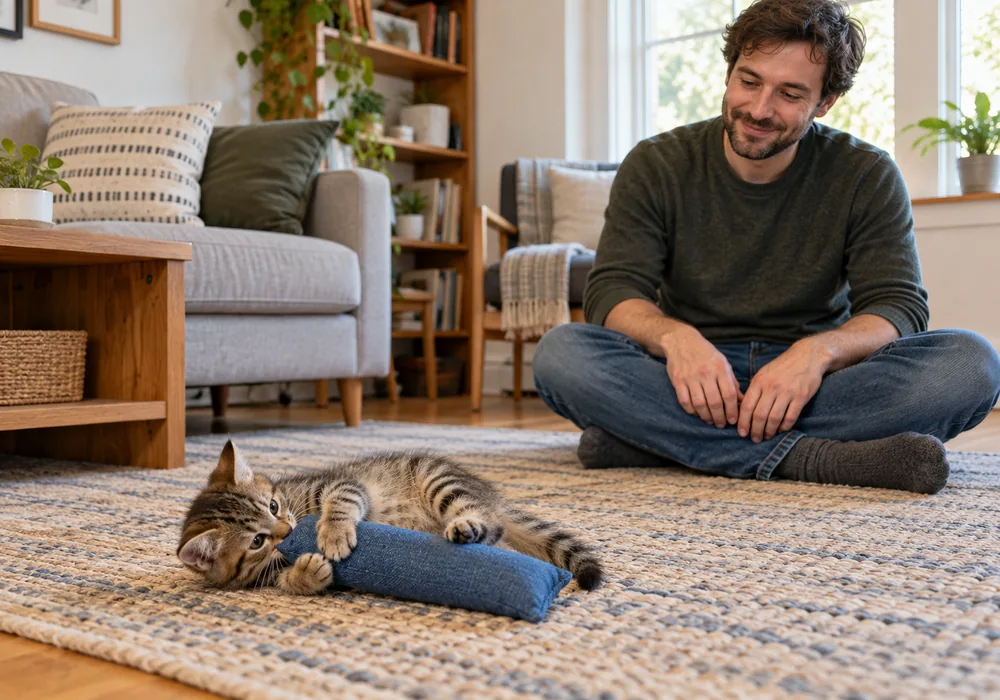
Support your relationship with consistent routines and positive interactions. Give your cat opportunities to play, explore, rest, and choose when to approach you. The aim is to help it feel comfortable and secure, rather than dependent on constant attention.
- Let the cat approach. Offer petting it already enjoys, then pause to see whether it wants more.
- Respect its limits. Stop petting or holding the cat if it stiffens or tries to leave. Cats Protection’s guide to petting a cat explains how to recognize and respect these preferences.
- Provide for normal cat behavior. Offer hiding places, scratching surfaces, suitable play, and easy access to food, water, litter boxes, and resting areas.
- Introduce care gradually. Help your cat get used to handling through short, rewarded practice sessions. Our guide to grooming cats explains how to introduce a brush and recognize discomfort.
Review Health Records Before Choosing a Cat
Ask for veterinary records and relevant test reports showing the cat’s identity, the test performed, its date, and the result. For Ragdolls and Maine Coons, discuss hypertrophic cardiomyopathy (HCM), a heart disease characterized by thickening of the heart muscle. Cornell’s Feline Health Center explains HCM screening and diagnosis. A negative DNA test does not rule out all HCM, because each genetic test checks only the variant or variants included in that test.
For Burmese cats, ask about inherited hypokalemia, a disorder that can cause episodes of low blood potassium and muscle weakness, and whether relevant testing has been done. Do not give potassium supplements without veterinary advice. These are examples rather than a complete screening list. Your veterinarian can recommend checks based on the cat’s breed and history, and our overview of cat health offers more information about routine care and health records.
Questions About the Most Loyal Cats
Are Male Cats More Affectionate Than Female Cats?
Sex alone is not a reliable guide to how affectionate a cat will be. Its observed behavior, social experience, health, and comfort in your household are more useful than a general rule about males or females.
Do Affectionate Cats Bond With Only One Person?
Some cats prefer one familiar person, while others interact comfortably with several family members. Greeting visitors or resting with someone else does not mean the bond with you has weakened. A close bond does not require the cat to avoid everyone else.
How Long Does It Take for a Cat to Form a Bond?
Different cats need different amounts of time to settle in and form a bond. Signs of growing comfort may include approaching voluntarily, playing, eating normally, or resting nearby. Keep routines consistent, and let the cat decide when to approach and how much petting it wants. Seek veterinary advice for persistent fear, poor appetite, or an abrupt behavior change.
This article provides general information about cat breeds, behavior, and choosing a pet. Breed descriptions and research averages cannot predict an individual cat’s personality or health, and this information does not replace veterinary advice. Seek urgent veterinary care for labored breathing. Contact your veterinarian promptly about a sudden loss of appetite, a new or marked increase in meowing or yowling, repeated urination or defecation outside the litter box, or an abrupt change in behavior or activity.